

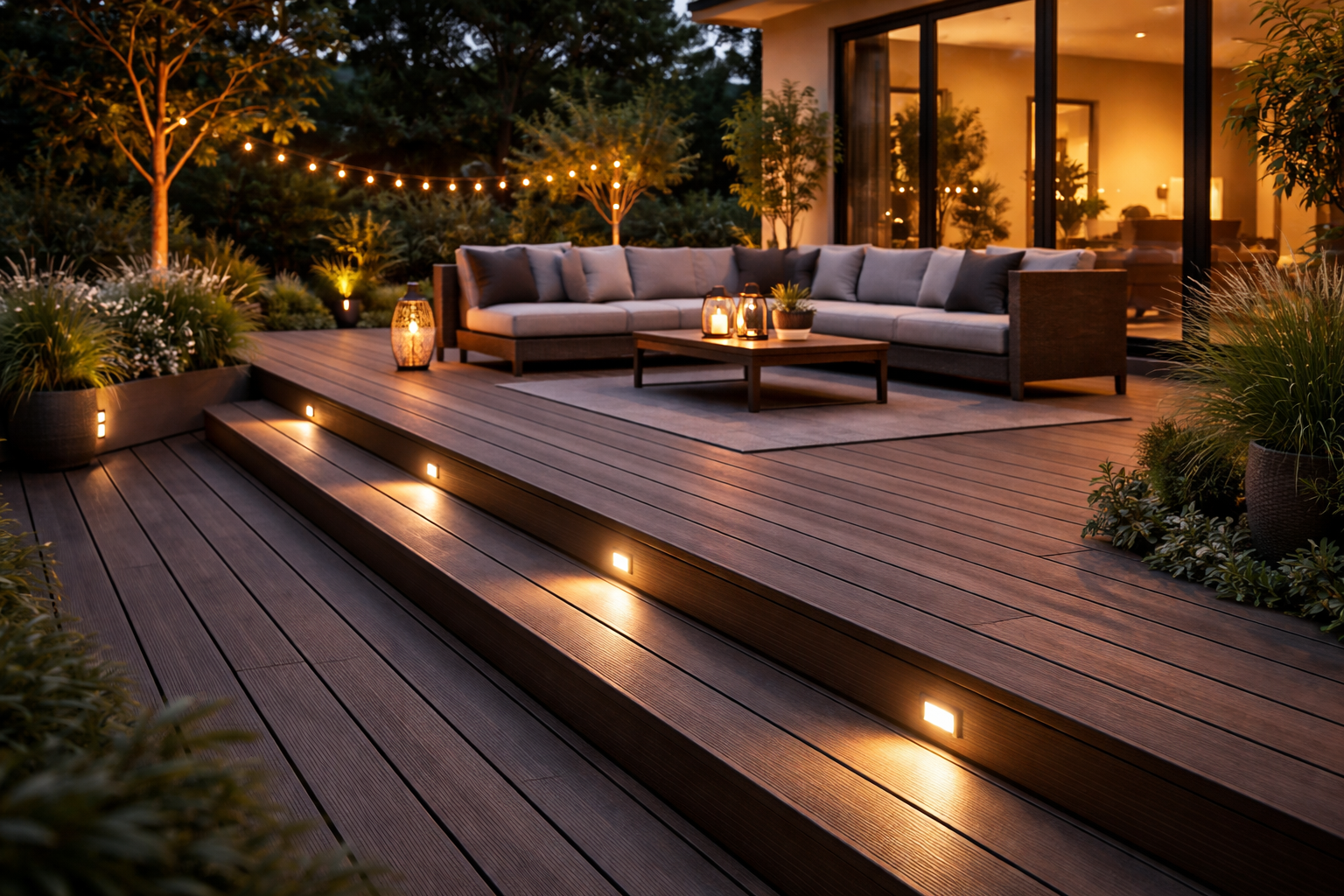
 Looking to give your outdoor space a quick glow-up? Solar deck lights are a fantastic way to boost your home’s curb appeal without touching your electric bill. They soak up the sun’s power all day, giving you clean, free energy to light up your nights. It’s an instant upgrade that makes your deck shine, and you’re doing a little something good for the planet, too. If you want more charm with less hassle, solar deck lights could be just what you need.
Key Takeaways
- Installing solar deck lights is a breeze. You can get them set up in no time, with no messy wires or need for an electrician.
- Going solar is a win for the environment. By using the sun’s energy, you’ll shrink your carbon footprint and cut down on your electricity costs.
- These lights are super low-maintenance. A quick wipe-down every few months and swapping the batteries every couple of years is all it takes to keep them shining bright.
- Just remember to think about brightness and placement. They work best in sunny spots and might not be the best fit for lighting up a huge area.
- You’ll save money in the long run. Since they run on free solar power, they cost way less to operate than traditional wired lights.
Solar Deck Lights: Key Benefits
Easy Installation
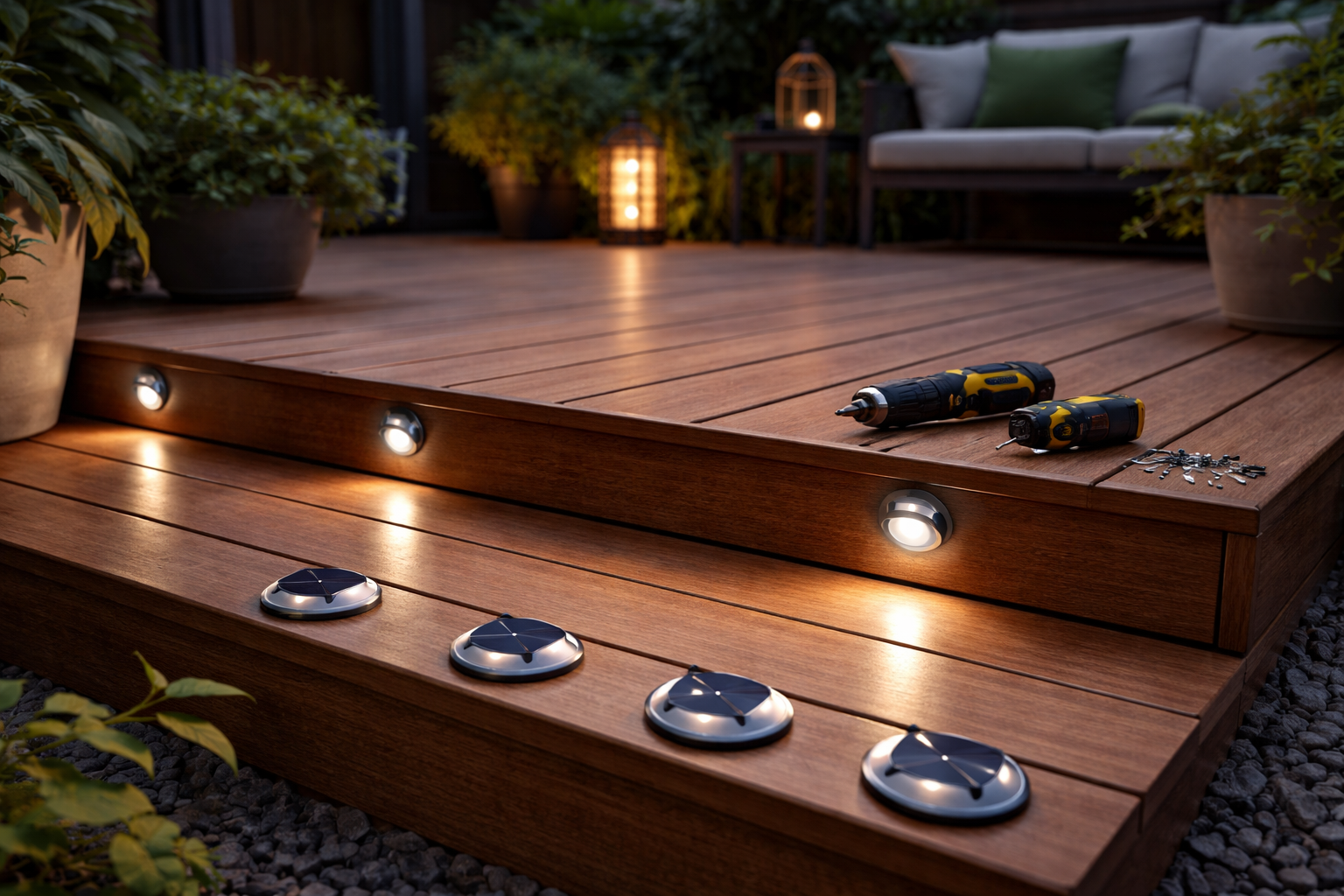
Want to upgrade your deck without a major project? Solar deck lights make it simple. Forget about dealing with complicated wiring or hiring a pro. Most models just snap or screw right into place, so you can be done in minutes and enjoying your new ambiance almost instantly.
Here’s a quick comparison of how installation stacks up:
|
Type of Lighting |
Installation Steps |
|---|---|
|
Wired Post Cap Lighting |
Plan wiring when building your deck or fence. |
|
Solar Post Cap Lighting |
Pick weatherproof models with batteries you can change. |
If your deck or fence is already built, solar is definitely the easiest route. There’s no need to tear up boards or dig trenches. Just pick your spots and mount the lights where you need them.
Tip: Wired deck lights are best if you’re planning a new build from scratch. But for a quick update or easy upgrade, you can’t beat solar lighting.
You’ll save a ton of time and skip the hard labor. Installing wired lights can take hours and requires special tools, while setting up solar lights is often a matter of minutes.
|
Type of Lighting |
Installation Time |
Complexity |
|---|---|---|
|
Solar Deck Lights |
Quick and easy, minutes |
Simple, no wiring needed |
|
Wired Deck Lights |
Hours |
Hard, needs a professional |
Eco-Friendly Features
Solar lights are a great way to care for the planet. Since they run on the sun’s energy, you won’t see your electric bill—or your carbon footprint—go up. Because they’re solar-powered, they work completely off the grid, so you’re not burning any fossil fuels. It’s a simple way to make your deck brighter and a whole lot greener.
Installing solar deck lights seriously cuts down on carbon emissions. Take the Sunlike 30W light, for example; it saves roughly 13.4 pounds of CO2 every single year. Imagine the impact if you add a few more lights—you’ll be helping out even more.
Plus, these lights are often made with recyclable or biodegradable materials. That means less waste in landfills and less harm to the environment. You get to enjoy a beautiful outdoor space while doing your part to keep the earth clean.
Note: Choosing solar-powered lights is a win for nature, helping to protect local plants and wildlife. It’s a choice you can feel good about every time you step outside.
Convenience And Automation
Solar lights are all about making life easier. You don’t have to worry about flipping switches or remembering to turn them off. Most solar deck lights come with built-in sensors that automatically turn on at dusk and off at dawn. You get reliable light every night without lifting a finger.
A lot of today’s solar-powered options even have smart features. Some use light-adjusting technology to dim or brighten as needed, while others have motion sensors that activate when you walk by. You can even find lights that connect to your smart home system for total remote control.
Here’s a quick look at some common features:
- Fully automatic on/off with light sensors
- Adjustable brightness settings
- Motion detection for added security
- Real-time energy monitoring
- Smart home system compatibility
The result is a safer, more welcoming outdoor area. Your solar lights handle all the work, so you can just sit back and relax.
Low Maintenance
Solar deck lights are incredibly easy to care for. You won’t be fussing with wires or changing bulbs all the time. Most models use rechargeable batteries that you can replace, and they typically last anywhere from 1 to 5 years. NiMH batteries usually give you 1-3 years, while lithium-ion batteries can last up to 5 years with proper care.
As for cleaning, you really only need to do it every few months. If you live in a dusty area, a quick wipe-down each month will help keep them shining bright. If the lights start to dim, just swap out the batteries—it’s a simple job that doesn’t require any special skills.
- NiMH batteries: 1-3 years
- Lithium-ion batteries: 3-5 years or more
- Clean every 2-3 months (monthly if it’s dusty)
- Change batteries every 2-3 years for best performance
Tip: A quick clean and battery check now and then will keep your solar lights glowing brightly all year long.
In the end, you’ll spend a lot less time on maintenance and a lot more time just enjoying your deck. These lights let you relax and soak up the ambiance without the hassle.
Drawbacks Of Solar Deck Lights
Lower Brightness
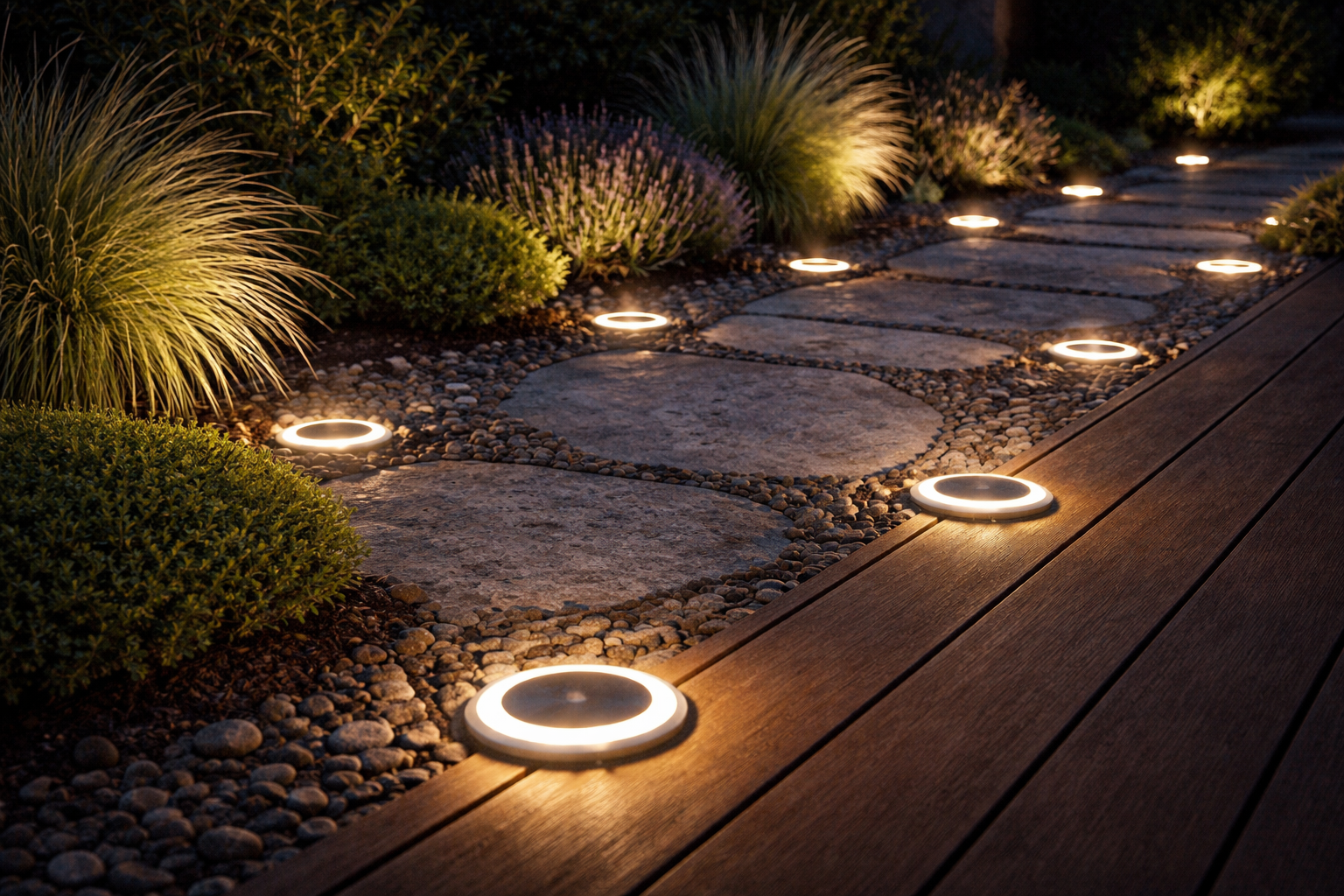
One thing you’ll probably notice is that solar deck lights aren’t as bright as traditional wired lights. If you’re looking for a stadium-level glow, solar probably isn’t the way to go. Most fully charged solar lights put out around 30 lumens, while wired options can hit 200 lumens or more, lighting up your space much more effectively.
|
Lighting Type |
Average Lumen Output |
Notes |
|---|---|---|
|
Solar Deck Lighting |
30 lumens |
Based on full charge |
|
Low-Voltage Deck Lighting |
200+ lumens |
Consistent, bright, customizable |
That said, brightness does vary. Some solar models offer as little as 5 lumens, while others can reach up to 250. For purely decorative purposes, lower lumens are perfectly fine. But for safety—especially along pathways and stairs—you’ll want to look for lights with at least 30 lumens.
- Solar deck lights: 5 to 250 lumens
- Decorative lighting: lower lumens are okay
- Safety lighting: at least 30 lumens
- Pathways and stairs: minimum 30 lumens
The other catch is consistency. Wired lights give you the same steady brightness every night. Solar lights, on the other hand, can appear dim if they haven’t soaked up enough sun during the day.
Weather and Sunlight: The Big Factors
Solar deck lights rely on the sun to do their job. If you’re in an area with a lot of cloudy weather, your lights might not get a full charge. A little rain can actually help by cleaning off the panels, but if your lights aren’t waterproof, too much moisture can cause damage.
- Overcast days mean weaker charging and dimmer light.
- Rain cleans panels but risks harming lights that aren’t sealed.
Living above 45° latitude or somewhere with tough winters brings another challenge: shorter days. You might only see six hours of sun. Snow and ice can cover the panels, and constant cloud cover makes it really tough for your solar lights to power up.
Battery Life Isn’t Forever
Solar deck lights store their energy in batteries, which typically last one to five years. How long yours holds up depends on the local weather and how you maintain them. Using the lights every single night will wear the battery down quicker.
As batteries degrade, your lights won’t stay on as long. They slowly lose their ability to hold a full charge. Even if you don’t use them much, batteries still age. You’ll probably need to swap them out every few years to keep things running smoothly.
Pro Tip: Keep an eye on your lights. If you notice they’re not lasting as long, it’s likely time for a new battery.
Where You Put Them Matters
Placement is key for solar lights. They really need six to eight hours of direct sun daily. Tucking them under trees or close to a building will hurt their performance, as shade blocks the sunlight they crave.
- For the best results, solar lights need direct sun.
- Wired deck lights are a sure bet for shaded spots.
- Nearby trees or structures can really lower their output.
- Sometimes, just moving them to a sunnier spot does the trick.
If your deck is mostly shaded, you might need supplemental lighting. Wired lights don’t have this limitation—you can put them anywhere, and they’ll deliver consistent light every night.
Cost & Value Of Solar Deck Lights
Initial Price Range
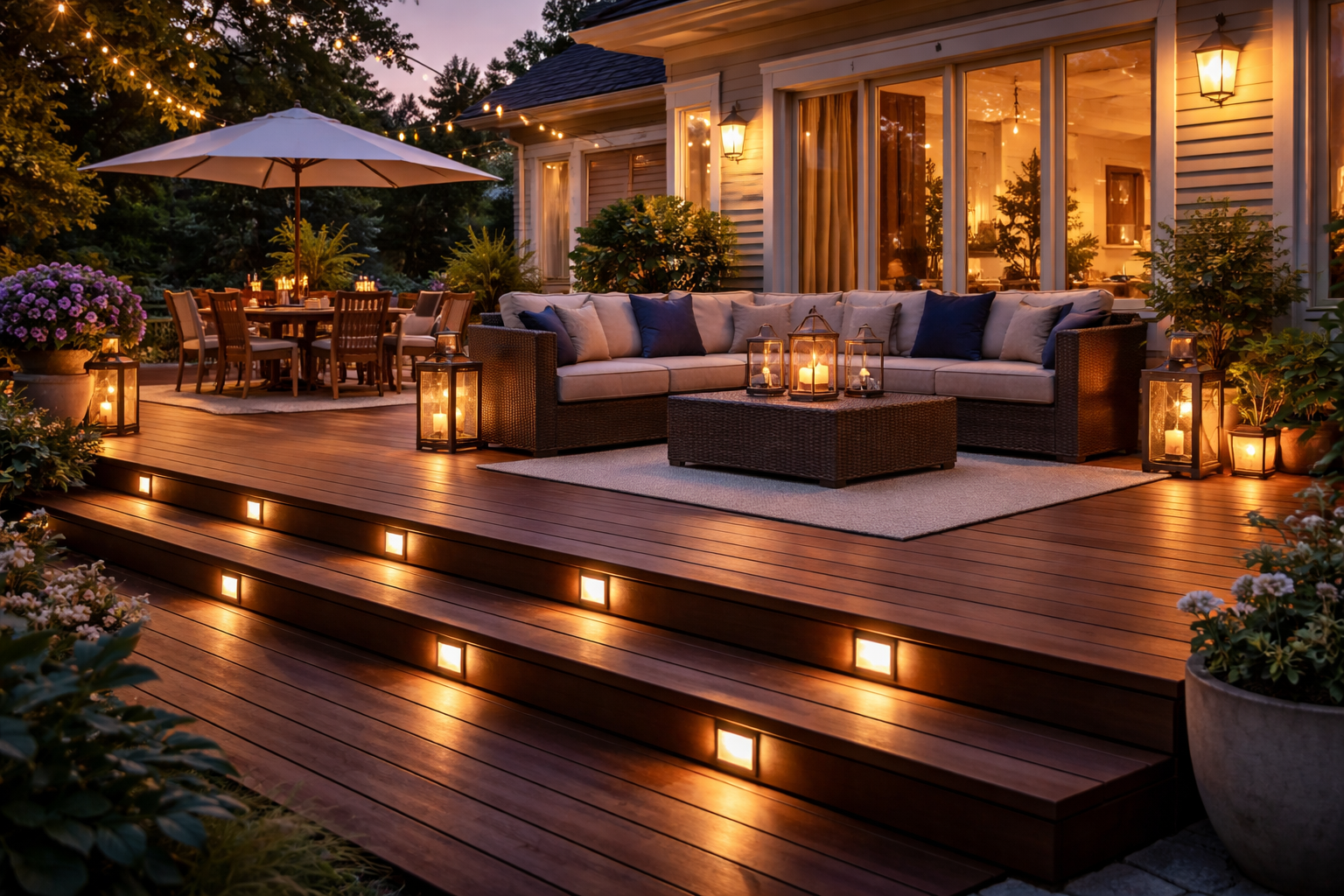
So, you’re probably asking, “How much do solar deck lights cost?” Well, the basic models are pretty affordable, usually running between $20 and $50. If you want something fancier, you could be looking at $50 to $250 per light. Now, wired deck lights are a different story—they’re much pricier from the start. For a full setup, you might pay anywhere from $500 to $3,000 or even more. And don’t forget, wired lights also require professional electrical work, which adds to the bill.
|
Type of Lighting |
Price Range |
|---|---|
|
Solar Deck Lights |
$20–$50 |
|
Wired Deck Lights |
$500–$3,000 or more |
|
Type of Light |
Cost per Fixture |
Installation Complexity |
|---|---|---|
|
Solar Deck Lights |
$50 – $250 |
Simple |
|
Wired Deck Lights |
$100 – $200 |
Requires electrical work |
That’s why solar deck lights save you money right away. You skip the cost of wiring and hiring an electrician altogether.
Long-Term Savings
Where solar deck lights really shine is with long-term savings. Since they run on solar power, you won’t see a bump in your electricity bill. Wired lights, on the other hand, use power every single night, which adds up. Over five years, the total cost for solar lights—including battery replacements—is typically around $400 to $800. For wired lighting, when you factor in electricity, you’re looking at $1,200 to $2,500.
|
Light Type |
5-Year Total Cost |
|---|---|
|
Solar Deck Lights |
$400 – $800 (including replacements) |
|
Wired Deck Lights |
$1,200 – $2,500 (including electricity) |
|
Feature |
Solar Deck Lights |
Wired Deck Lights |
|---|---|---|
|
Electricity Costs |
None |
Yes |
|
Battery Replacement |
Occasional |
|
|
Efficiency |
Varies, generally low |
Low-voltage LED options available |
You’ll enjoy those savings for years to come without stressing about rising energy costs.
Maintenance Costs
Taking care of solar deck lights is a breeze. You’ll just need to wipe off the panels now and then, check for any damage, and swap out the batteries every couple of years. It’s rare you’d ever need to call a pro. Wired lights demand more attention. You have to inspect the wiring, replace bulbs, and sometimes you’ll need an electrician for repairs.
|
Type of Light |
Maintenance Cost (Average) |
Battery Replacement Frequency |
Battery Replacement Cost |
|---|---|---|---|
|
Solar Deck Lights |
$1000 |
Every 5-7 years |
$1000 |
|
Wired Deck Lights |
$800 |
|
|
- Solar deck lights require minimal upkeep and hardly ever need a professional.
- Wired lights often need expert repairs, which can get costly.
Pro Tip: Keep your solar panels clean and change the batteries when they start to dim. It’s an easy way to keep your lights bright and avoid unexpected expenses.
In the end, you’ll spend less time and money maintaining solar lights. You can just relax and enjoy your deck without worrying about big bills or constant fixes.
Solar Deck Lights Vs. Wired Lighting

Performance Comparison: Solar vs. Wired Deck Lights
When it comes to lighting up your deck, solar deck lights and wired lights are two totally different animals. Wired lights are super bright and super reliable—they give you a powerful, steady beam that illuminates your entire space. They work perfectly in shady spots and on cloudy days, so you never have to stress about trees or weather blocking the light.
Solar deck lights, on the other hand, create a soft, cozy glow. They’re perfect for setting a warm, inviting mood in your yard. If you’re after a calm, relaxed atmosphere, solar is the way to go. That’s why people love using solar landscape lights along garden paths and in flower beds—they provide a gentle light that makes your outdoor space magical at night.
- Wired lights: Bright, steady, and dependable.
- Solar deck lights: Soft, cozy, and ideal for relaxing.
- Solar landscape lights: Gentle illumination for gardens and walkways.
Installation Differences
Wondering which type is easier to install? Let’s break it down.
|
Feature |
Solar Deck Lights |
Wired Deck Lights |
|---|---|---|
|
Installation Complexity |
Quick and easy, no wiring required |
More complex, requires electrical wiring |
|
Best for New Installations |
Not ideal for initial builds |
Easier to install during initial construction |
|
Retrofitting Existing Decks |
Ideal for retrofitting without wiring |
Challenging for existing structures |
Solar deck lights are a breeze—most just snap or screw right into place without any special tools or an electrician. Solar landscape lights are just as simple; you basically just push them into the ground. Wired lights are a bigger project. They take more time, require you to run wires, and you’ll probably need a pro to help. If your deck is already built, going with solar deck lights or solar landscape lights is the much simpler choice.
Quick Tip: Choose solar deck lights or solar landscape lights for a fast upgrade. Save wired lights for when you’re building a brand new deck.
Which Is Best For You?
Your best choice depends on what you’re looking for. Solar deck lights and solar landscape lights run on free sunlight, saving you money on your bills and helping the planet. Wired lights have a higher upfront cost, but they’re incredibly bright and work reliably every single night. If easy setup and low maintenance are your top priorities, then solar deck lights and solar landscape lights are your best bet.
|
Feature |
Solar Deck Lights / Solar Landscape Lights |
Wired Deck Lights |
|---|---|---|
|
Installation |
Easy, no wiring |
Needs wiring, more complex |
|
Energy Efficiency |
Uses solar energy, saves money |
Uses grid power, higher bills |
|
Cost |
Lower over time |
Higher up front |
|
Light Intensity |
Soft, ambient glow |
Bright, focused illumination |
|
Weather Dependence |
Needs sunlight |
Works in any weather |
|
Design Options |
Limited variety |
Many styles available |
Solar landscape lights are fantastic for adding charm to gardens and lighting up walkways safely. They’re incredibly user-friendly. But if you need super strong illumination or want a wider variety of styles and designs, wired lights might be the better option for you.
Keep in Mind: Solar deck lights and solar landscape lights are easy to install and energy-efficient. Wired lights offer more power and design options, but they require more work to put in.
Real-Life Use Of Solar Deck Lights

Real User Experiences with Solar Deck Lights
Ever wonder how solar deck lights actually work out for folks? Plenty of users report that these lights make their deck feel cozier and a lot safer. One homeowner mentioned that their solar lights let them enjoy late-night conversations outside, while another said their kids feel much more secure walking on the deck after dark. In reviews, people often rave about the simple setup and how little maintenance they need. Some users note that if you choose a sturdy model, the lights can hold up through rain and snow. Others point out that you’ll get the best performance if you just wipe the panels off now and then.
Here’s what users tend to love the most:
- No wiring or mess when you install them.
- A soft, welcoming glow that makes outdoor spaces feel inviting.
- Seeing their monthly electric bills go down.
- How easy it is to clean them and swap the batteries.
- Great performance when they’re placed in a sunny spot.
“I installed solar deck lights along my stairs, and now my guests never trip at night,” one reviewer shared.
Best Practices for Solar Deck Light Placement
If you want your solar deck lights to shine bright and last for years, where you put them is key. Here are some simple, effective tips to get the most out of your setup.
Maximize Sunlight & Performance
Since these lights run on the sun, positioning is everything for a good charge.
- Install lights where they’ll get direct, full sunlight for most of the day.
- Angle the solar panel to face south—it catches more rays that way.
- Keep them away from spots that are usually shaded by trees, roofs, or walls.
- For walkways, spacing lights about 6 to 8 feet apart is a good rule of thumb for safety.
- Highlight steps, sharp turns, or decorative features to improve visibility and style.
- Don’t be afraid to play with different mounting heights to create interesting shadows and effects.
Maintenance for Longevity
A little routine care goes a long way in extending the life of your lights.
- Wipe off the solar panels regularly to clear away dust, pollen, and dirt.
- Check the batteries every few months and swap them out when they don’t hold a charge like they used to.
- In snowy climates, it’s a good idea to move or cover your lights during winter to prevent damage from ice and heavy snow.
Stick with these practices, and you’ll enjoy a beautifully lit deck for seasons to come, with a lot less hassle and maintenance.
Solar deck lights offer easy installation, low operating costs, and an eco-friendly lighting solution. Just keep in mind they might not be as bright as wired options, and their performance depends on sunlight and weather. Before you decide, ask yourself:
- Does my deck get enough consistent sunlight to charge the lights properly?
- Do I need lights rated for water and temperature resistance in my local climate?
- Can they withstand the specific conditions in my area, like heavy rain, wind, or salty sea air?
Look for models with strong waterproof ratings and durable construction. If you want a simple, green way to light up your outdoors, solar deck lights can be a brilliant choice. Go with what fits your needs and then just relax and enjoy your space!
FAQ
How long do solar deck lights last?
Typically, you can expect 2 to 5 years of use. You can often extend that lifespan by keeping the panels clean and replacing the rechargeable batteries when needed. A bit of care helps them shine bright for many seasons.
Can solar deck lights handle rain and snow?
Many are built with waterproofing, but you should always check the IP rating in the product specs. For harsh winters with lots of snow and ice, it’s safest to bring them indoors for storage to prevent damage.
Do Solar Deck Lights Work in Shady Areas?
To charge properly, solar deck lights really need direct sunlight. If they’re stuck in the shade, you’ll probably notice they aren’t as bright and won’t last as long once the sun goes down. For spots that don’t get much sun, wired lights are often a more reliable choice.
Will Solar Deck Lights Brighten a Large Outdoor Space?
Solar deck lights provide a nice, soft glow that’s perfect for accent lighting. They’re great for illuminating smaller areas like steps, railings, or a cozy deck. But if you’re trying to light up a big backyard or patio, you might need a whole lot of them. For larger-scale lighting, wired fixtures are usually the way to go.
How to Keep Your Solar Deck Lights Working Their Best
A little basic care can make a big difference in how well your lights perform. Here’s what you should do:
- Wipe off the solar panels every couple of months to clear away dust and dirt.
- Swap out the rechargeable batteries every year or two.
- Always position the lights where they’ll get the most sun during the day.
- Give them a quick check for any damage after bad weather or heavy storms.
|
Tip |
Why It Matters |
|---|---|
|
Clean panels |
Brighter lights |
|
Change batteries |
Longer life |
|
Sunny placement |
Better charging |


