Think flip-flops in a storm—bad idea. Get the scoop on IP67 vs IP65 outdoor lighting before your park or resort flickers into chaos.
You wouldn’t wear flip-flops in a thunderstorm, right? So why slap outdoor step lights into place without knowing the difference between IP67 vs IP65 outdoor lighting? These little numbers might look like techy gibberish, but they’re the thin line between glowing brilliance and total burnout when the weather turns sour.
We’ve seen it too often: city park walkways flickering out mid-season, resort steps going dark after one storm—costing thousands to fix and giving maintenance crews gray hairs overnight. “If your fixtures aren’t rated for what Mother Nature throws at ‘em, you’re just playing whack-a-mole,” warns Jenna Harper, Senior Engineer at MG Lighting (2024 Facilities Report).
Here’s the kicker: not all “waterproof” lights are created equal. Some shrug off rain like ducks in a pond; others tap out after a garden hose ambush.
So before you bulk-buy that sleek new batch of path markers or stair uplights—buckle up. This guide breaks down what those cryptic ratings really mean for performance in real-world messes like puddles, pressure washers, and sandy sidewalks.
Key Insights for IP67 vs IP65 Outdoor Lighting
- Ingress Protection Ratings: IP67 provides protection against temporary submersion, while IP65 is designed to safeguard against water jets but does not hold up to flooding.
- Environmental Considerations: When selecting lighting for areas with heavy rainfall exposure or dust, consider IP67 for maximum waterproofing and dust-tight performance.
- Durability Factors: Both IP ratings ensure protection against environmental factors, but higher ratings (like IP67) also offer enhanced longevity in adverse conditions.
- Regulatory Compliance: Always ensure chosen fixtures meet local building code adherence and international safety standards to avoid costly installation issues later.
Understanding IP Ratings: What They Mean for Outdoor Lights
Quick heads-up—this guide breaks down what those IP numbers on your lights really mean, especially when choosing between IP67 vs IP65 outdoor lighting.

The Ingress Protection Rating System Explained
- IP code is a two-digit standard that defines how well a product resists solid and liquid intrusions.
- The first digit refers to solid particles like dust; the second deals with liquid resistance, such as water.
- Based on the IEC standard, these ratings help you know if your outdoor lights are ready for harsh environments.
When comparing IP67 vs IP65 outdoor lighting, it’s all about understanding what kind of exposure your setup will face. If you’re mounting fixtures near sprinklers or under eaves, knowing the difference could save you serious time and money.
Complete Dust Tight Sealing: Why It Matters
Think of it this way:
• An IP6X rating means total protection from dust—zero entry. That’s what “dust tight” really means.
* Dust isn’t just dirt; it can mess with internal circuits, reduce brightness, and shorten lifespan.
* For places with heavy winds or construction debris, high solid ingress protection is non-negotiable.
With both IP65 and IP67 offering level “6” for solids, you’re covered either way. But if your light’s going into a dusty warehouse or desert zone? That tight seal makes all the difference.
Multi-Directional Water Spray Defense for Outdoor Illumination
According to Statista’s Q2/2024 Smart Lighting Report, over “72% of outdoor lighting failures stem from improper water sealing.”
So let’s break this down:
- IP65 resists low-pressure water jets from any angle—perfect for rain or hose spray.
- IP67, on the other hand, can be submerged up to one meter briefly—ideal near pools or flood zones.
- Both offer strong weather protection, but only one handles immersion.
Choosing between them depends on where you’re installing. Wall-mounted porch light? Probably fine with IP65. Ground-level garden spotlight? Better go with IP67.
The Importance of Local Building Code Adherence
Local rules aren’t just red tape—they’re safety blueprints.
- Some cities require specific levels of electrical compliance, especially near wet zones like patios or bathrooms.
- Ignoring these codes could void insurance claims or delay inspections.
- Always check if your municipality mandates permits for certain types of outdoor installations.
For example, California Title 24 requires energy-efficient exterior lighting that also meets minimum ingress ratings depending on exposure risk—especially relevant when weighing IP67 vs IP65 outdoor lighting options.
Getting compliant isn’t just about ticking boxes—it’s about keeping people safe and systems reliable.
IP67 vs IP65 Outdoor Lighting: Which Is More Waterproof?
A quick breakdown of how IP65 and IP67 outdoor lighting stack up when it comes to water protection, durability, and long-term performance.

Comparing Temporary Submersion Protection Levels
- IP67 lights can be dunked underwater — briefly. Think accidental flooding or a puddle party.
- IP65, on the other hand, keeps out splashes and sprays but can’t handle being submerged.
- The key difference? Protection level, depth, and how long the gear stays wet.
Grouped comparison:
- Water ingress resistance:
- IP65 – Resists jets and splashes.
- IP67 – Withstands full-on dips under water.
- Depth rating & duration:
- IP67 = Up to 1 meter for about half an hour.
- IP65 = Zero submersion tolerance.
So if you’re installing step lights near pools or low areas prone to flooding, go with something rated at least IP67. That extra layer of waterproofing is worth it.
Powerful Water Jet Resistance: How It Works
Ever blasted grime off your patio with a pressure washer? That’s the kind of abuse an IP65-rated light can take without blinking.
✔️ Built to resist high-pressure sprays from any direction.
✔️ Ideal for outdoor kitchens, driveways, or commercial spaces where cleaning is intense.
✔️ Designed with tight seals that block entry from even narrow-angle nozzles.
According to a recent study by Intertek Research (2024), “Outdoor fixtures rated at IP65 showed zero internal moisture after repeated exposure to directional water jets at pressures exceeding industry standards.”
That means you can hose down your walls or rinse off your garden path without worrying about short-circuiting your lighting setup — as long as it’s marked with that sweet IP65 badge.
Performance in Heavy Rainfall Exposure: A Closer Look
When skies open up and rain pours down hard, both ratings perform well — but there are subtle differences that matter:
| Feature | IP65 | IP67 |
|---|---|---|
| Rainproof Capability | High | Very High |
| Flood Tolerance | Low | Moderate |
| Long-Term Durability | Good | Excellent |
| Maintenance Needs | Occasional | Minimal |
Short takes:
- For daily rainstorms? Both hold their own.
- Flash floods or standing water? Only one winner — go with the deeper defense of an IP67-rated fixture.
- Long rainy seasons? Expect fewer issues over time with better-sealed units like those rated at IP67.If you’re planning installations in monsoon-prone zones or coastal areas, don’t gamble—choose lighting that won’t give out when soaked.
Corrosion-Resistant Aluminum Housings for Longevity
It’s not just about keeping water out—it’s about what happens over years of exposure. Here’s why aluminum housings matter:
💡 Material strength & resilience:
- Powder-coated finishes resist scratches and peeling.
- Engineered alloys fend off rust even in salty air zones.
🛠️ Weatherproofing benefits:
- No warping during seasonal shifts.
- Maintains structural integrity under UV stress.
🧰 Use cases where it shines:
- Coastal boardwalks
- Mountain cabins
- Industrial yards
MG Lighting makes some seriously tough gear using these corrosion-resistant materials — so if you’re investing once and want it to last through all kinds of weather abuse, this is the way to go.
From casual backyard setups to high-end architectural installs, choosing between IP67 vs IP65 outdoor lighting isn’t just technical—it’s practical. Think location. Think exposure level. Then pick the right armor.
Common Misconceptions Around IP Ratings Explained
Understanding IP ratings can be tricky, especially when comparing options like IP67 vs IP65 outdoor lighting — let’s bust some myths and keep your fixtures protected.

Dispelling Myths: Does a Higher IP Rating Mean Better Durability?
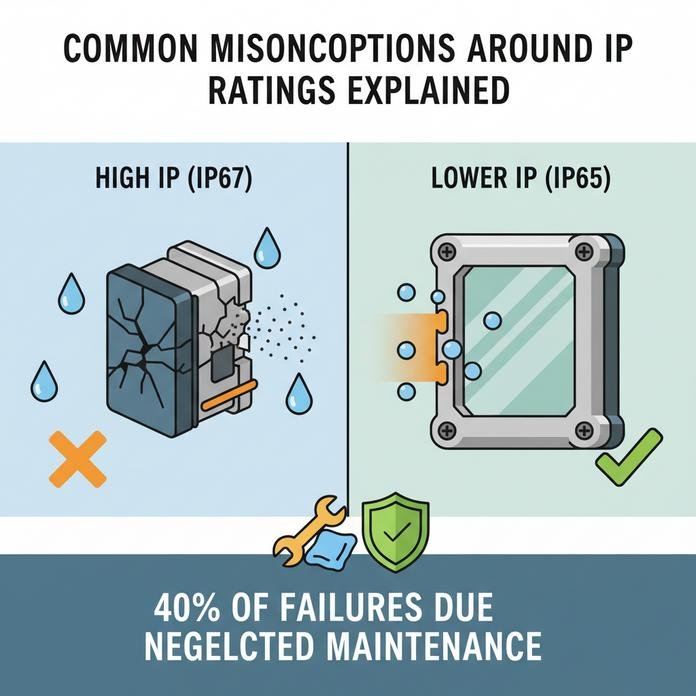
A higher IP rating doesn’t always mean a product is tougher or more long-lasting—it just means it can block out more stuff like dust or water. People often confuse ingress protection with overall durability, but those are two different beasts.
For example, an IP67-rated light might survive a dunk in water, but if it’s made from cheap materials, it could still crack under pressure or UV exposure. Meanwhile, an IP65 fixture, built with high-quality housing and better impact resistance, might last longer outdoors despite its lower rating.
So don’t just chase numbers—check the build quality too.
Regulatory Compliance: International Safety Standards and IP Ratings
When you’re shopping for outdoor lights—especially comparing specs like IP67 vs IP65 outdoor lighting—you’ve gotta think beyond waterproof ratings and focus on global safety rules too.
Here’s how international standards come into play:
- IEC 60529 Classification
- Defines the exact meaning behind each digit in an IP rating
- Ensures consistency across manufacturers worldwide
- Electrical Safety Certifications
- Products must meet specific thresholds before hitting markets
- Includes insulation checks, grounding integrity, etc.
- Market Access & Product Certification
- Many countries won’t even allow imports without proper compliance
- Third-party testing labs validate against regulatory frameworks
| Standard | Governing Body | Required For | Applies To |
|---|---|---|---|
| IEC 60529 | IEC | Global Sales | All electronics |
| UL1598 | UL | U.S. Market | Luminaires |
| EN60598 | CENELEC | EU Market | Lighting units |
Choosing certified lighting from brands like MG Lighting ensures your setup ticks all the boxes—not just on paper but legally too.
The Role of Maintenance in Ensuring IP Rating Integrity
Even top-tier fixtures lose their edge if you don’t keep them in check—especially when we’re talking about differences between IP67 vs IP65 outdoor lighting setups exposed to sun, rain, wind… you name it.
• Gaskets dry out over time; that weakens the seal. * Dust buildup around seams can compromise fitment. * UV rays degrade plastics faster than you’d think. * Screws loosen during seasonal temperature swings—and boom! Water gets in.
According to a late-2024 report by TÜV Rheinland, over 40% of failed outdoor luminaires lost their original rating due to neglected maintenance rather than manufacturing flaws.
So here’s your cheat sheet:
- Wipe down lenses every season.
- Check that all screws are tight—not stripped.
- Replace worn-out seals annually.
- Keep logs of inspections if you’re managing commercial setups.
Whether you’re rocking an IP65-rated floodlight or going full tilt with an IP67 spotlight, staying on top of upkeep is what keeps those lights shining bright—and safe—for years to come.
FAQs about IP67 vs IP65 Outdoor Lighting
How does the ingress protection rating system guide outdoor project decisions?
- Acts as a map to match light durability with local weather intensity.
- 🌀 Defines resistance to dust and particle ingress; crucial for parks or building facades under high wind conditions.
- ① Public park illumination projects draw confidence from such ratings, easing long-term operational cost savings calculations.
A well-understood rating lets every planner visualize how lights will stand up to coastal saltwater spray or heavy rainfall exposure before installation day even arrives.
Why is complete dust tight sealing critical for large parking lot lighting designs?
Short description + bullet structure: In wide asphalt areas where vehicles stir dirt endlessly, LEDs battle more than just darkness — they face abrasion by micro particles too.
• Complete dust tight sealing protects internal electronics in high-power LED floodlights selection across extreme temperature variations.
• Reduces maintenance frequency needs and supports easy access for component replacement efforts under preventative maintenance programs.
IP67 vs IP65 outdoor lighting: which fits low-ground recessed solutions facing flooding risks?
Multi-column overview:
| Protection Level | Typical Defense Type | Common Application Area |
|---|---|---|
| IP65 | Powerful water jet resistance & multi-directional water spray defense | Street and roadway illumination networks |
| IP67 | Temporary submersion protection during heavy rainfall exposure | Recessed ground lighting solutions near walkways |
Subtle difference but decisive outcome—one survives sprays; one endures short-lived underwater challenges that appear after rainstorms racing through pedestrian walkway lighting installations.
Can corrosion-resistant aluminum housings prolong fixture life in coastal settings?
When salt meets air, ordinary metal yields fast. Coastal saltwater spray tests this truth daily along seaside boulevards lined with pole mounted area lighting units.
★ Corrosion-resistant aluminum housings shield inner components while weatherproof powder-coated finishes defend external frames from humidity attacks.
★ Together with UV-stabilized polycarbonate diffusers or impact-resistant glass lenses choices, life expectancy stretches far beyond average warranty cycles.
What influence do local building codes have on street and roadway illumination networks?
- Regulatory compliance shapes brightness limits and direction control demanded by dark sky regulations.
- Local building code adherence ensures energy-efficient street lighting lamps meet international safety standard conformity parameters.
Such legal contours form a stage where beauty of visibility meets responsibility toward energy efficiency standard certifications embraced by municipalities nationwide.
In mixed-weather regions, are both IP67 and IP65 cost-effective options?
Natural combination of structures:
1️⃣ Projects experiencing seasonal shifts between mild sun and torrential downpours can safely rely on both protections—avoiding over-spending yet assuring safe operation across public park paths or decorative bollard lighting fixtures lines.
☀ Short summary: Choosing wisely between these two ratings balances performance reliability against budget limitations while sustaining minimal cleaning schedule demands that support human comfort from summer twilight to winter cloudbursts alike.