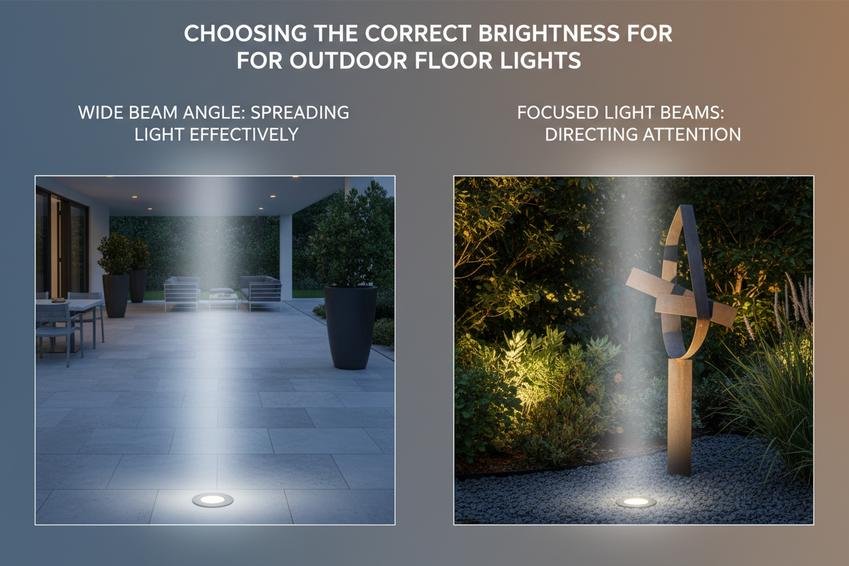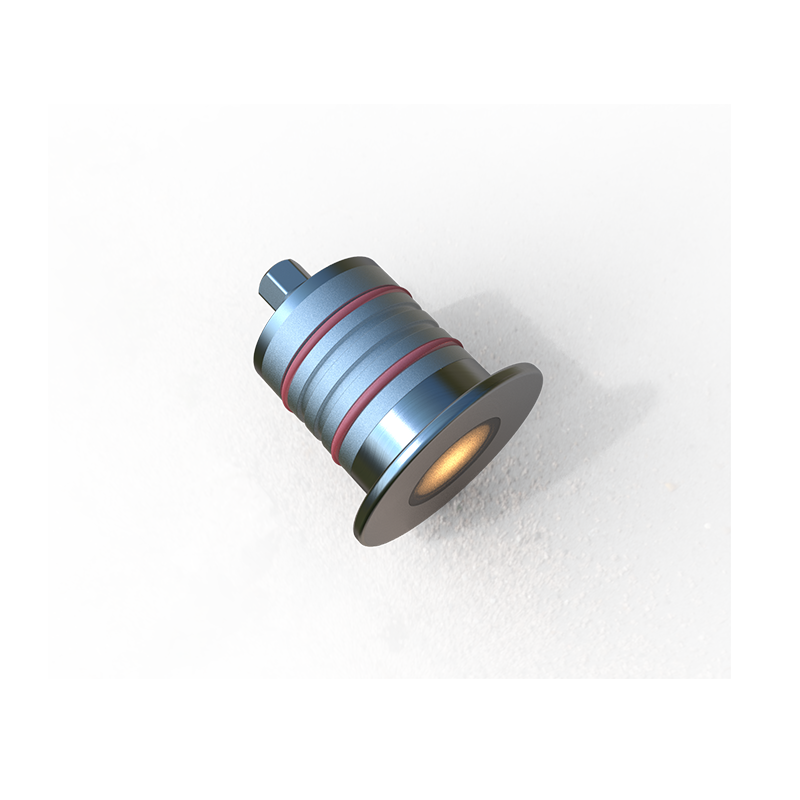
When in ground lights miss their mark, elegance turns to chaos—place them right and your building becomes a nighttime masterpiece.
In ground lights can make a building whisper elegance—or shout for the wrong reasons. One inch too close to the wall and you’ve got harsh stripes; too far out and the whole façade looks washed out, like stage makeup under bad theater lights. Contractors know the headache: callbacks, complaints, blown budgets.
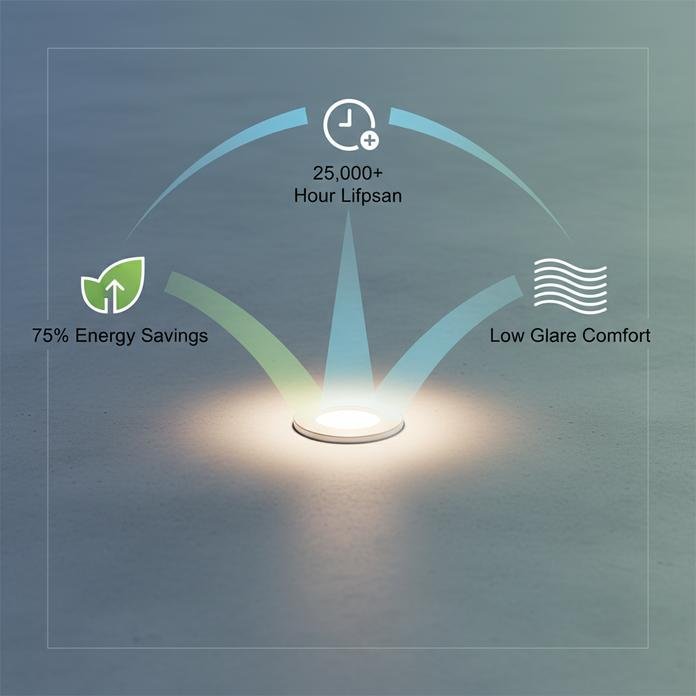
The U.S. Department of Energy notes LEDs use at least 75% less energy than incandescent lighting—placement decides if you actually see that payoff.
Wall grazing is drama; wall washing is calm confidence. Pick the wrong move and your project feels off-key. Pick the right one, and the structure practically tells its own story after dark.
Radiant Rhythms: Quick Answers for In Ground Lights
→ Grazing vs Washing: Grazing uses narrow-beam LEDs close to textured walls for dramatic shadows, while washing employs wide-beam fixtures set farther out to deliver smooth, even façade illumination.
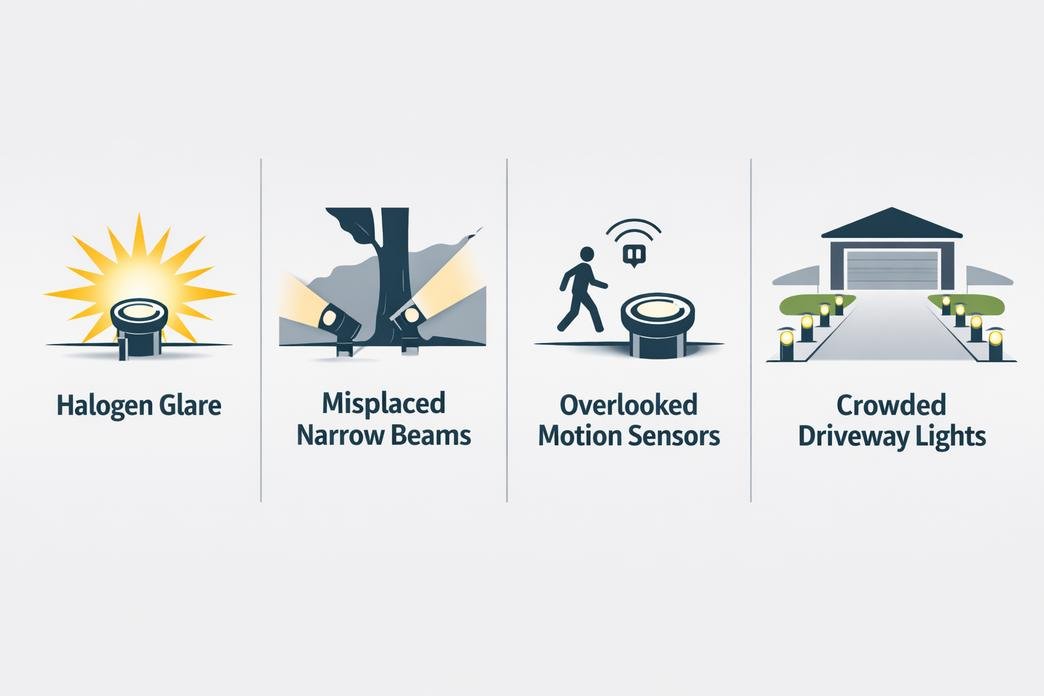
→ Common Pitfalls: Avoid harsh halogen glare, misplacing narrow-beam accents, overlooking solar motion sensors, and crowding drive-over lights too close to the driveway surface.
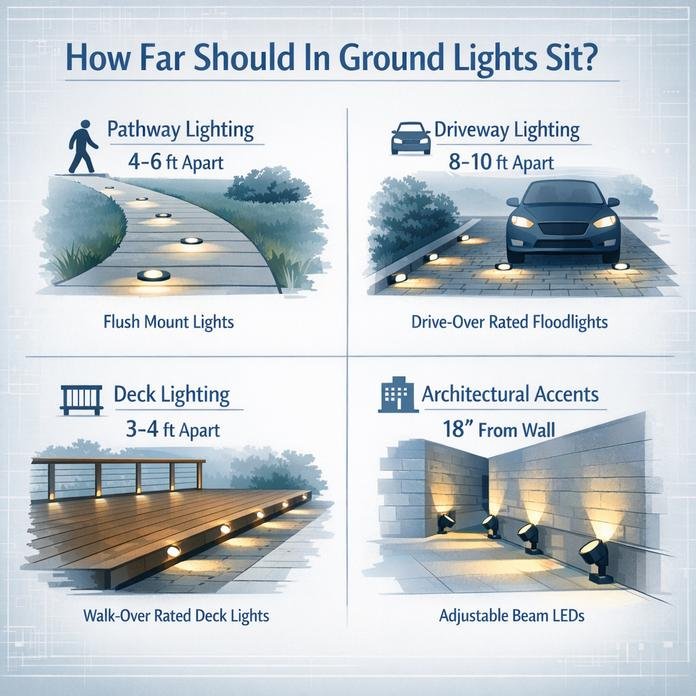
→ Optimal Distances: Space pathway flush mounts 4–6 ft apart; set drive-over rated floodlights 8–10 ft apart; align walk-over deck lights every 3–4 ft; position adjustable-beam accents 18 in from the wall.
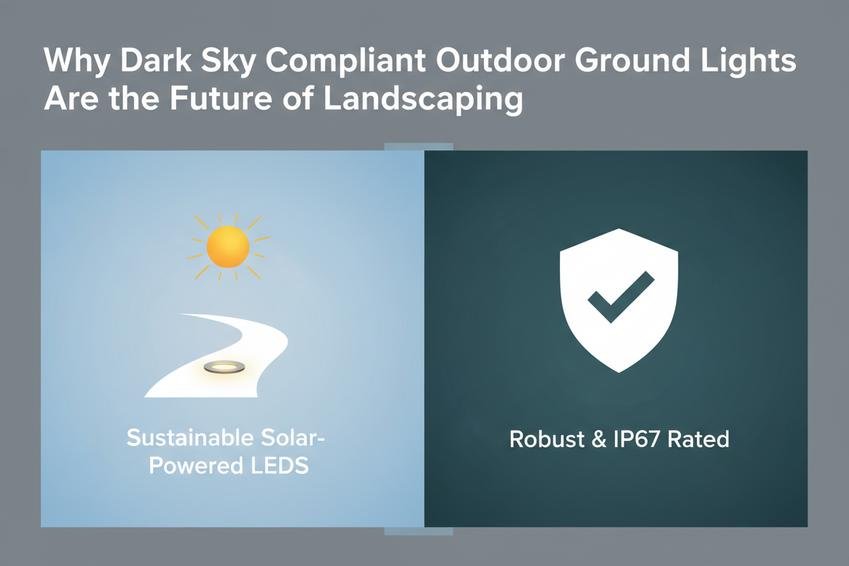
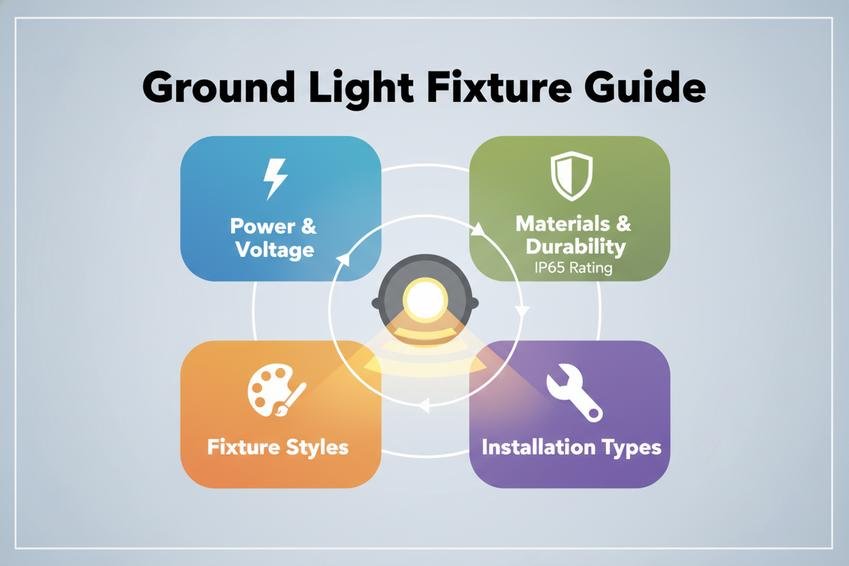
→ Fixture & Features: Choose LED fixtures with IP67/UL/CE ratings, tempered glass lenses, anti-glare trims, adjustable beams, and waterproof, dimmable or smart-control options.
→ Energy Efficiency: Leverage LEDs’ 75% lower power draw, plus Energy Star and RoHS compliance, to ensure sustainable, long-lasting landscape and architectural lighting.
In Ground Lights Grazing Vs. Washing Methods
Smart placement of in ground lights changes everything. The difference between grazing and washing isn’t subtle—it shapes mood, depth, and how people feel walking through a space.
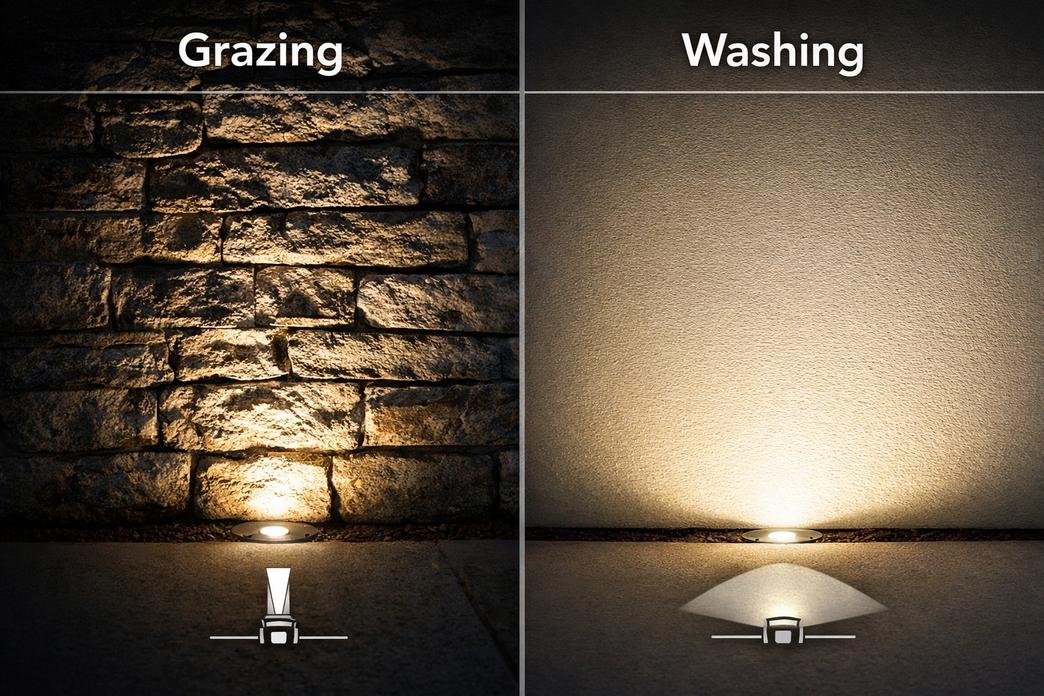
Grazing
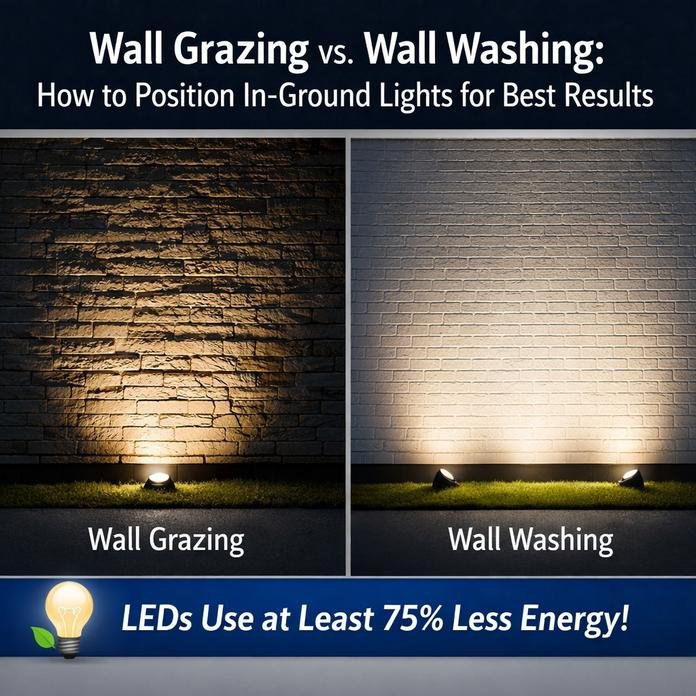
With in ground lights, grazing is all about accentuation and bold texture.
- Placement logic1.1 Close proximity to vertical surfaces1.2 Narrow beam angles (10°–25°)1.3 Recessed trim to reduce glare
- Visual outcome2.1 Strong shadows forming across stone or brick2.2 High contrast for a dramatic effect2.3 Clear surface relief and accentuation
- Fixture strategy3.1 IP67 recessed in ground lights3.2 Anti-glare shields3.3 Spot-style LED chips
When ground lights are tucked tight against a wall, the beam skims upward. That skim is where the magic happens. Every crack, ridge, and groove pops. This style works beautifully for rough façades, timber slats, or stacked stone. Many designers lean toward MG Lighting for precision optics that keep the beam tight and controlled. If the goal is depth and edge, grazing with in ground lighting delivers.
Washing
Washing with in ground lights feels calmer. Less drama. More balance.
• Wider beam spreads
• Distant placement from walls
• Smooth, even coverage
1) Position fixtures farther from façades.
2) Use flood or wide beam LEDs.
3) Adjust tilt for uniformity.
4) Add dimming for soft ambient light.
The result? Even illumination with minimal shadow play. Instead of highlighting texture, washing smooths everything out. It supports larger architectural features without stealing attention. Think hotel entries, garden walls, long pathways.
Good washing depends on spacing. Too close and shadows creep back in. Too far and brightness drops.
✓ Wide beam
✓ Balanced output
✓ Waterproof housing
Ground lights set back from the wall spread smooth light upward in a gentle fan. The mood shifts instantly. It’s relaxed. Inviting. When planning outdoor projects with in ground lights, washing is the go-to for clean lines and consistent brightness across surfaces.
Both techniques rely on quality in ground fixtures. The difference is distance, beam spread, and intention. Choose grazing for bold shadows and texture punch. Choose washing for glow, uniformity, and quiet confidence.
4 Common Mistakes In Ground Lights Positioning
Poor placement of in ground lights can wreck the vibe fast. Let’s fix the common slip-ups before your outdoor lighting turns awkward.
Using Halogen Floodlights Without Anti-Glare Shield in Garden Lighting
When in ground lights rely on halogen floodlights without an anti-glare shield, the glow gets harsh. It’s not cozy garden lighting—it’s eye strain.
- Main issue
- Wrong light source
- Halogen runs hot
- Weak glare control
- Impact on outdoor illumination
- Blinding hotspots
- Washed-out plants
- Short bulb life
Better move:
- Swap to LED for ground light systems
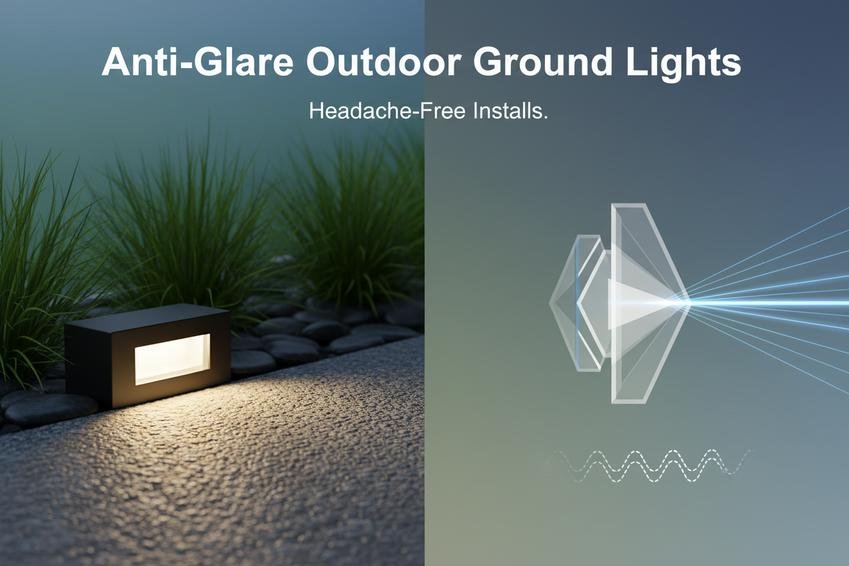
- Add shielded trims
- Keep beam below eye level
Good in ground lighting feels soft. Not like a stadium.
Misplacing Recessed Narrow Beam LEDs for Architectural Accents
Bad lighting placement ruins architectural accents. With recessed LEDs, beam math matters.
- Fixture positioning checklist
- Beam logic
- 10°–20° narrow beam for columns
- 30°+ for textured walls
- Distance rule
- 1/3 wall height from base
If in ground lights sit too close:
- Over-bright base
- Dark upper wall
- Lost uplighting drama
For in ground light layouts:
- Adjust beam angle
- Test at night
- Fine-tune before sealing
Outdoor in-ground lighting should sculpt, not flatten.
Overlooking Solar Motion Sensor Features on Pathway Lighting
Skipping motion sensor features on solar lights wastes potential.
Core elements for smart pathway lighting using in ground lights:
- Energy side
- Solar panel size
- Battery capacity
- Safety side
- Quick automatic activation
- Strong security lighting spread
- Placement side
- Edge of outdoor pathways
- Avoid shade zones
Quick wins:
- Pick high-lumen solar ground lights
- Check waterproof rating
- Angle panel south-facing
Modern in ground lights with sensors boost energy efficiency and feel way safer at night.
Installing Aluminum Walk-Over Rated Lights Too Close on Driveways
Crowding walk-over rated lights causes glare patches in driveway lighting.
Spacing logic for aluminum fixtures and ground lights under vehicle traffic:
- Distance planning
- Minimum 1.5–2m installation distance
- Match beam spread
- Surface effect
- Concrete reflects more
- Asphalt absorbs light
Too tight?
- Overlapping hotspots
- Uneven brightness
- Driver discomfort
For in ground lights on driveways:
- Use wide beams
- Keep steady fixture spacing
- Test at night with a parked car
Smart in ground lighting feels balanced, not busy.
How Far Should In Ground Lights Sit?
Smart spacing keeps in ground lights bright, safe, and good-looking without wasting fixtures or power.
Pathway Lighting: Space Polycarbonate Flush Mounts 4–6 Feet Apart
For smooth pathway lighting, spacing matters more than most folks think. Use polycarbonate flush mounts and keep spacing at 4–6 feet apart for even glow.
- Measure the walkway width.1.1 If under 4 feet wide → set in ground lights at 4 feet apart.1.2 If wider → stretch to 5–6 feet apart.
- Check beam spread of your ground lights.
- Adjust to avoid shadow pockets.
Too tight feels cluttered. Too far apart leaves dark gaps. Well-placed in ground lights create a calm, safe path without overdoing it.
Keep 8 to 10 Feet Between Aluminum Drive-Over Rated Floodlights
Driveways need muscle. Choose aluminum, drive-over rated floodlights and maintain spacing of 8–10 feet between each unit.
• 8 feet for narrow drives
• 9 feet for standard two-car widths
• 10 feet for wide entries
Then fine-tune:
- Confirm vehicle load rating.
- Center each in ground light along tire paths.
- Test nighttime coverage.
Properly spaced in ground lights prevent harsh glare while keeping turning zones visible. Quality housings, like those from MG Lighting, handle weight and weather without drama.
Align Stainless Steel Walk-Over Rated Deck Lights Every 3–4 Feet
Deck edges look sharp with stainless steel, walk-over rated deck lights set 3–4 feet apart in clean alignment.
Here’s a simple layout flow:
- Mark corners.1.1 Start 6 inches from stair edges.1.2 Keep equal feet apart along boards.
- Snap a chalk line for straight alignment.
- Install and dim-test at night.
Short runs? Tighten to 3 feet apart. Long spans? Stick near 4. Evenly spaced in ground lights add mood and safety without turning your deck into a runway.
Set Bronze Adjustable Beam LEDs 18 Inches from Wall for Architectural Accents
For architectural accents, place bronze, adjustable beam LEDs about 18 inches from wall surfaces. That distance from wall shapes the light.
Follow this grouped setup:
- Decide effect:1.1 Grazing → narrow beam, closer to 16–18 inches.1.2 Washing → wider beam, up to 20 inches.
- Aim upward slowly.
- Step back and review texture.
Well-positioned in ground lights highlight stone, brick, or siding without harsh streaks. Dial in angle and distance, and your outdoor walls instantly level up.
FAQs about In Ground Lights
What’s the difference between grazing and washing with in ground lights?
Grazing and washing create completely different moods on a wall:
- Grazing (dramatic, textured)
- Recessed or Adjustable Beam LED fixtures
- Narrow Beam or Spotlight optics
- Installed about 18 inches from the surface
- Ideal for Architectural Accent on stone or brick
- Washing (soft, even glow)
- Floodlight or Wide Beam LEDs
- Positioned farther from the wall
- Smooth light spread for Landscape Illumination
For both styles, choose Stainless Steel or Aluminum housings that are Waterproof, IP67 Rated, and UL Listed to handle outdoor exposure.
How far apart should in ground lights be placed along pathways?
Comfort and rhythm matter in Pathway Lighting.
- Standard spacing: 4–6 feet apart
- Light source: LED or Solar for energy savings
- Mounting: Flush Mount or Recessed
- Beam angle: Wide Beam or Asymmetric for smoother spread
Polycarbonate or Tempered Glass lenses with Anti-Glare design reduce eye strain. Energy Star and CE Certified fixtures keep performance consistent while walking at night feels natural—not patchy or harsh.
Why are anti-glare features so important in garden areas?
Glare ruins a peaceful Garden Lighting scene. Anti-Glare design works on three levels:
- Comfort – Softer output from LED or Halogen sources
- Safety – Clear visibility without harsh hotspots
- Atmosphere – Warm, Dimmable light feels inviting
Floodlight optics paired with Waterproof, RoHS Compliant housings ensure durability. Bronze or Brass trims add character while protecting the beam from shining directly into the eyes.
What materials work best for driveway installations?
Driveway Lighting faces pressure—literally.
Recommended setup:
| Element | Best Choice |
|---|---|
| Housing | Aluminum or Stainless Steel |
| Mounting | Drive-Over Rated |
| Lens | Tempered Glass |
| Light Source | LED (long life) |
| Certification | IP67 Rated, UL Listed |
Spacing typically runs 8–10 feet apart. Strong materials prevent cracking, while Floodlight or Wide Beam patterns maintain visibility for vehicles at night.
How do motion sensor solar in ground lights improve safety?
A quiet path suddenly lights up—comfort instaantly rises.
- Solar LED with Motion Sensor activates only when needed
- Smart Control reduces wasted energy
- Waterproof, CE Certified housing withstands rain
- Ideal for Pathway Lighting and Deck Lighting
Color Changing options add personality, while Dimmable settings keep the glow subtle until movement is detected.
Can walk-over rated deck lights handle heavy foot traffic?
Yes—if built correctly.
- Material strength
- Stainless Steel or Brass trims
- Tempered Glass lens
- Mounting type
- Walk-Over Rated
- Recessed or Flush Mount
- Lighting effect
- Warm LED or Fiber Optic
- Narrow Beam for accents, Wide Beam for coverage
- Dimmable for relaxed evenings
Installed every 3–4 feet, these fixtures balance safety and mood, transforming Deck Lighting into a calm, grounded experience without sacrificing durability.