Choosing between battery operated and hardwired stair lights sounds simple until you start looking at wiring access, installation cost, brightness, maintenance, and where the lights will actually be used. The right choice depends less on which option is “better” and more on your staircase type, power access, lighting expectations, and how permanent the installation needs to be.
This guide compares battery operated vs hardwired stair lights pros and cons in a practical way, so homeowners, contractors, and lighting buyers can decide which stair lighting solution fits indoor stairs, outdoor steps, decks, hallways, basements, and commercial projects.
Quick Comparison: Battery Operated vs Hardwired Stair Lights
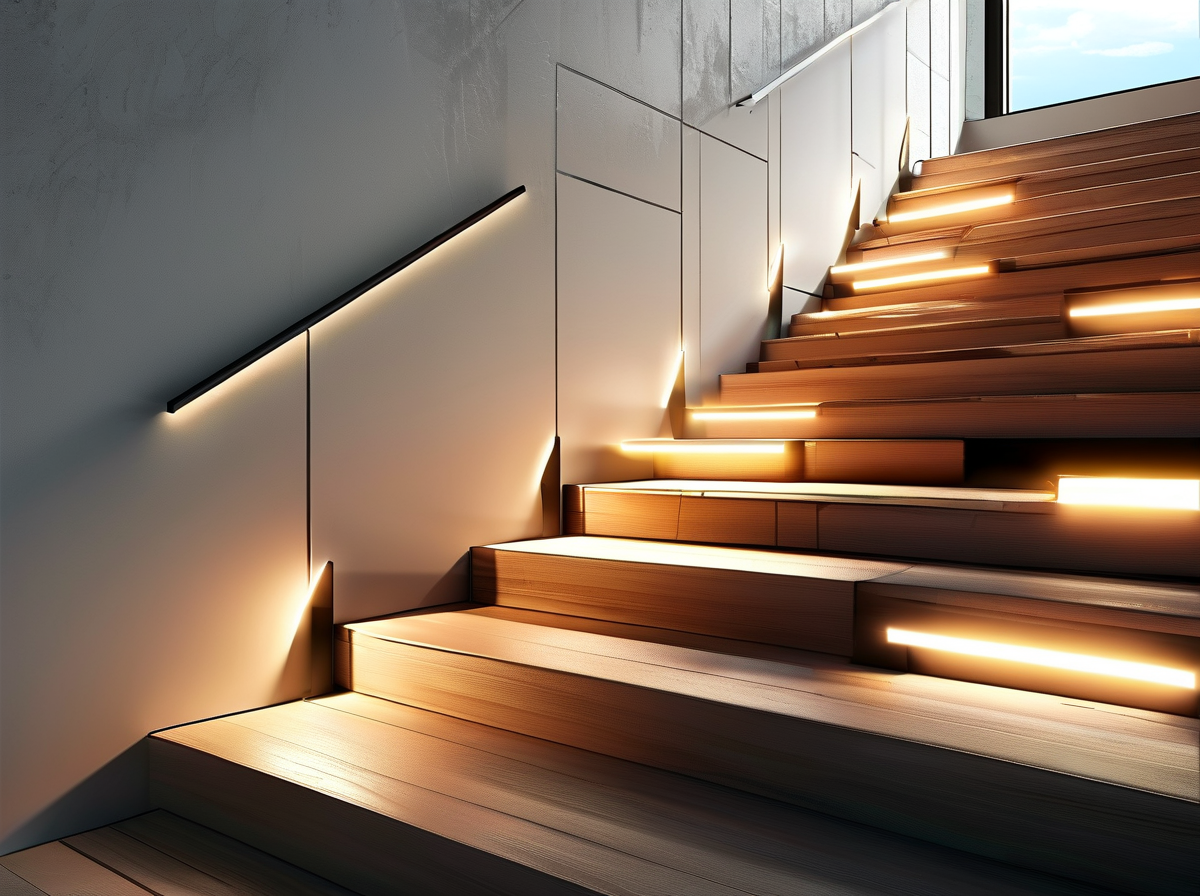
Battery operated stair lights are usually easier to install because they do not require electrical wiring. They are useful for finished homes, rental properties, temporary lighting, or areas where opening walls is not practical. Hardwired stair lights connect directly to the electrical system, making them more reliable for long-term, high-traffic, and professional installations.
| Factor | Battery Operated Stair Lights | Hardwired Stair Lights |
|---|---|---|
| Installation | Fast, usually DIY-friendly | Requires wiring and often an electrician |
| Power source | Replaceable or rechargeable batteries | Household or low-voltage power supply |
| Maintenance | Battery charging or replacement needed | Low maintenance after installation |
| Brightness consistency | May drop as battery drains | Stable brightness |
| Best for | Retrofits, rentals, quick upgrades | New builds, remodels, outdoor steps, commercial areas |
Pros of Battery Operated Stair Lights
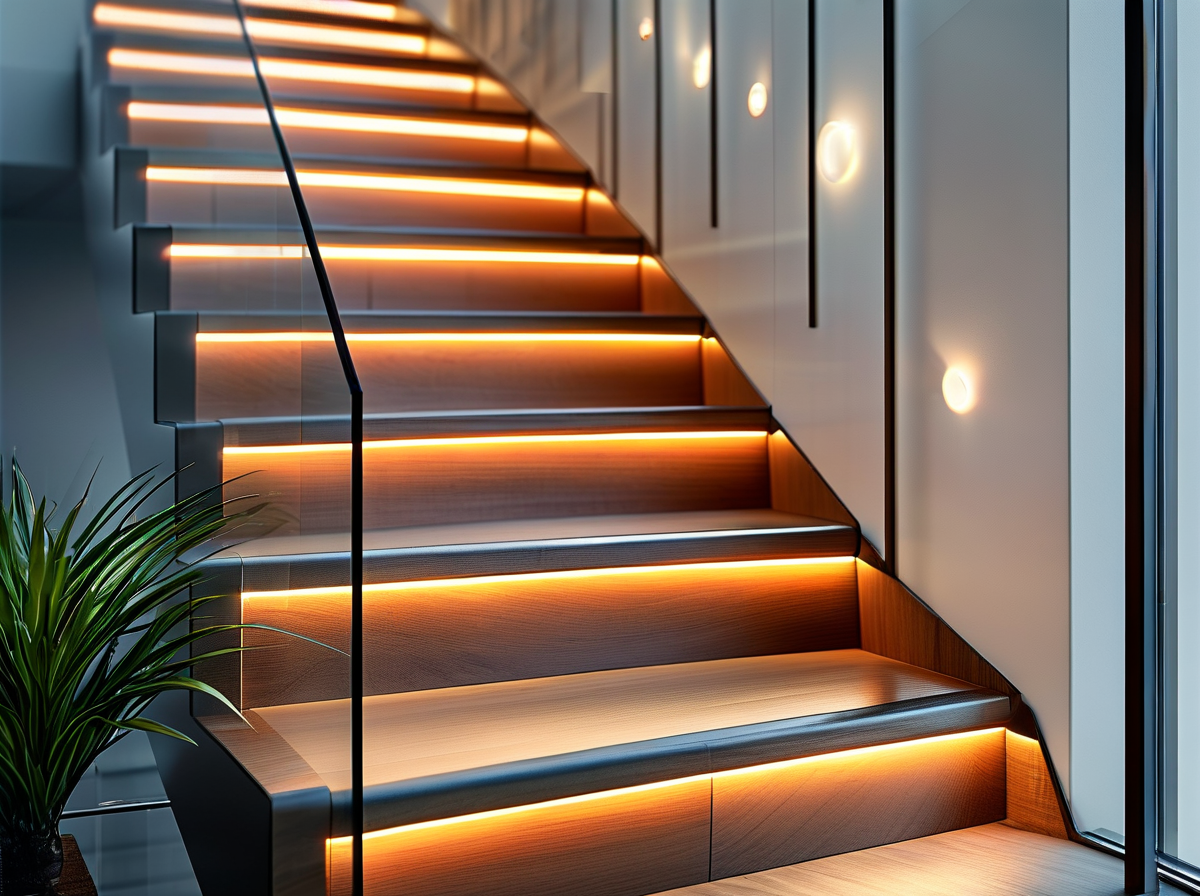
The biggest advantage of battery operated stair lights is convenience. They can often be mounted with screws, adhesive pads, or simple brackets, which makes them attractive for homeowners who want safer stairs without cutting drywall or running cables.
- Easy installation: No electrical box, transformer, or wall opening is usually required.
- Good for finished spaces: They work well when stairs are already built and wiring access is limited.
- Flexible placement: Lights can be repositioned if the first layout does not look right.
- Lower upfront cost: DIY installation can reduce labor costs.
- Useful during power outages: Some battery lights continue working when the main power is off.
Battery models are especially useful for closets, basement stairs, short indoor stair runs, rented homes, and low-traffic areas where professional wiring would be too expensive for the benefit gained.
Cons of Battery Operated Stair Lights
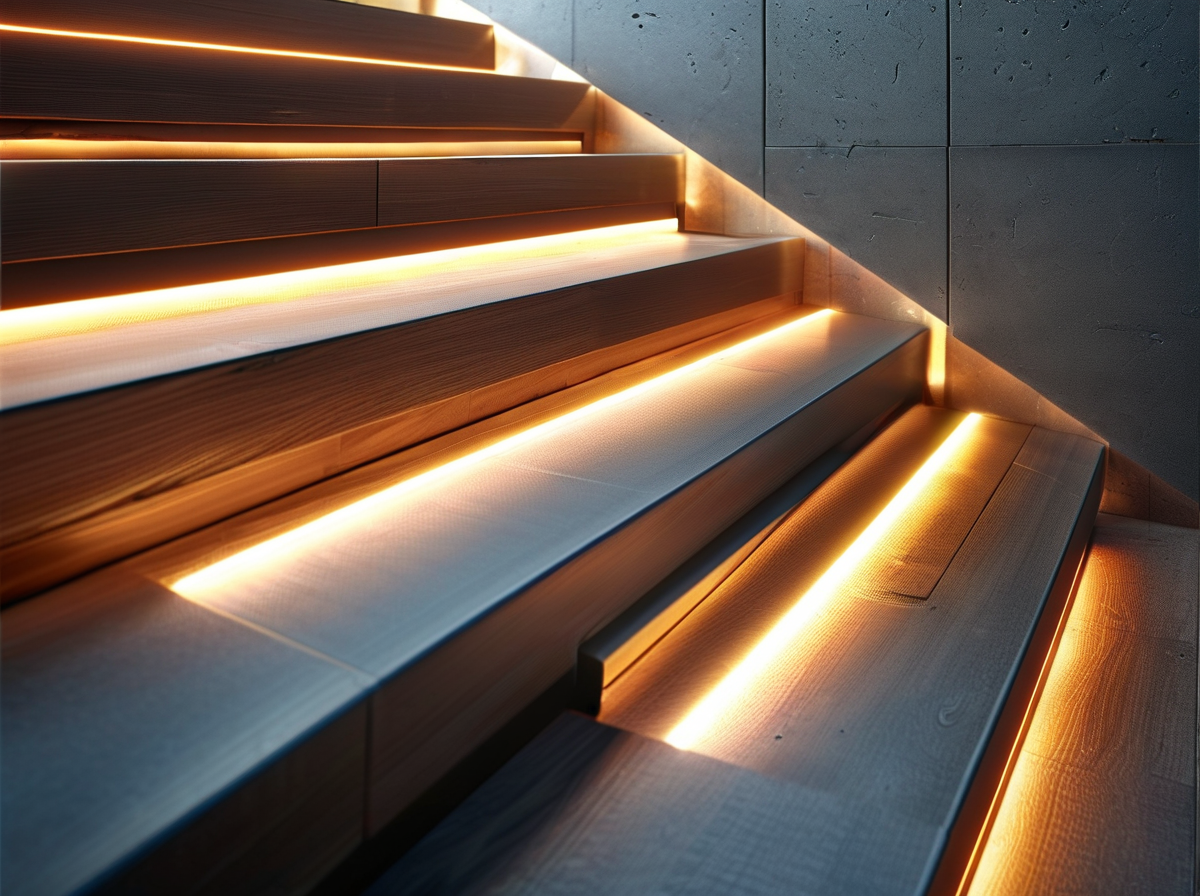
The main downside is ongoing maintenance. Batteries must be replaced or recharged, and performance can decline over time. If several stair lights are installed, maintaining all of them can become annoying, especially in busy homes or commercial spaces.
- Battery maintenance: Users need to check power levels and replace or recharge batteries.
- Lower output in many models: Compact battery lights may not provide the same brightness as wired fixtures.
- Inconsistent brightness: Light output can weaken as batteries drain.
- Shorter product lifespan: Low-cost battery lights may not be designed for years of continuous use.
- Weather limitations: Outdoor battery units need strong waterproofing and reliable sealing.
For stairs used every night, especially outdoor steps, battery lighting can become less convenient than it first appears.
Pros of Hardwired Stair Lights
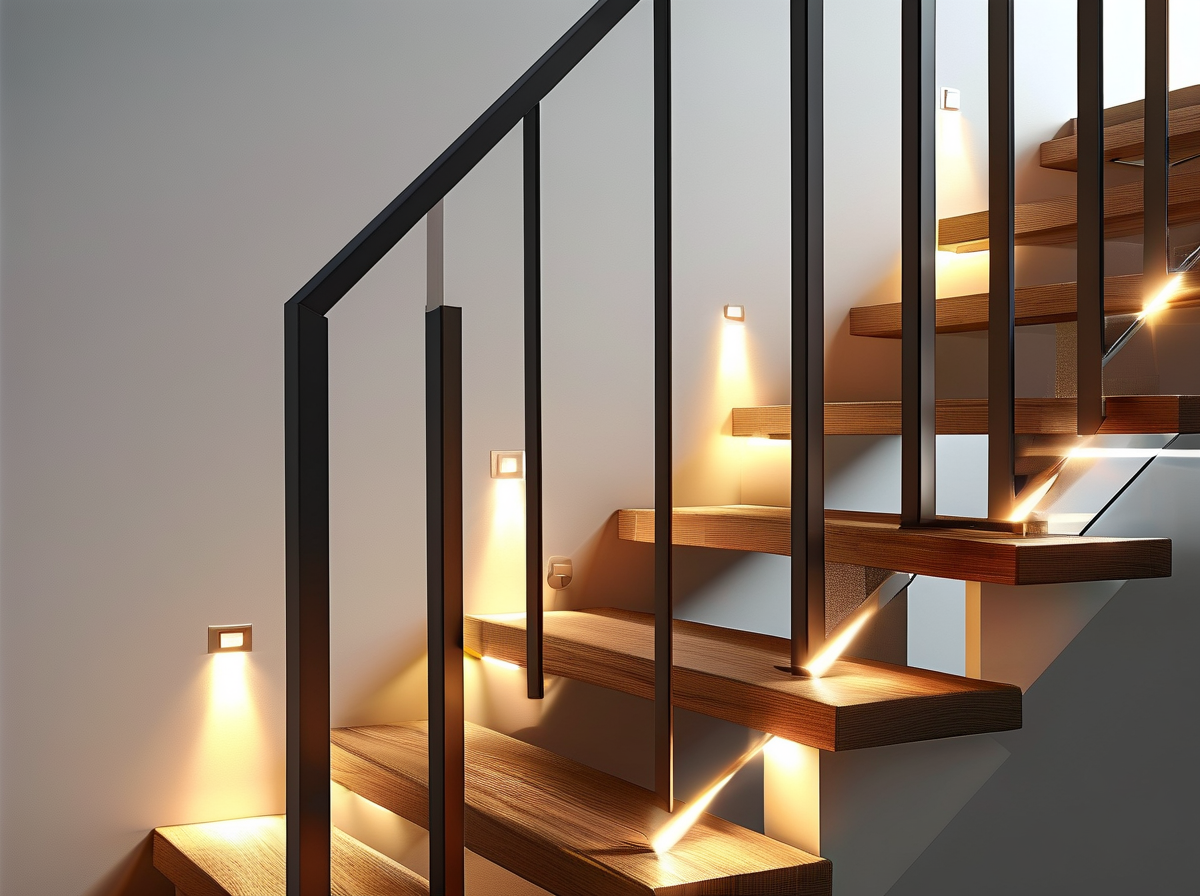
Hardwired stair lights are the stronger choice for permanent projects. Once installed, they provide consistent power, cleaner integration, and a more professional appearance. This is why they are common in new construction, hotel stairs, villas, exterior steps, decks, and landscape lighting systems.
- Stable power: Brightness remains consistent without battery drain.
- Cleaner design: Fixtures can be recessed into walls, risers, or side panels.
- Better for automation: Hardwired systems can connect to wall switches, sensors, timers, dimmers, or smart controls.
- Lower long-term maintenance: No battery replacement schedule is needed.
- More suitable for outdoor and commercial use: Quality hardwired fixtures are usually more durable and reliable.
If the stairs are part of a renovation or new build, hardwired lighting usually creates a better final result and a more premium look.
Cons of Hardwired Stair Lights
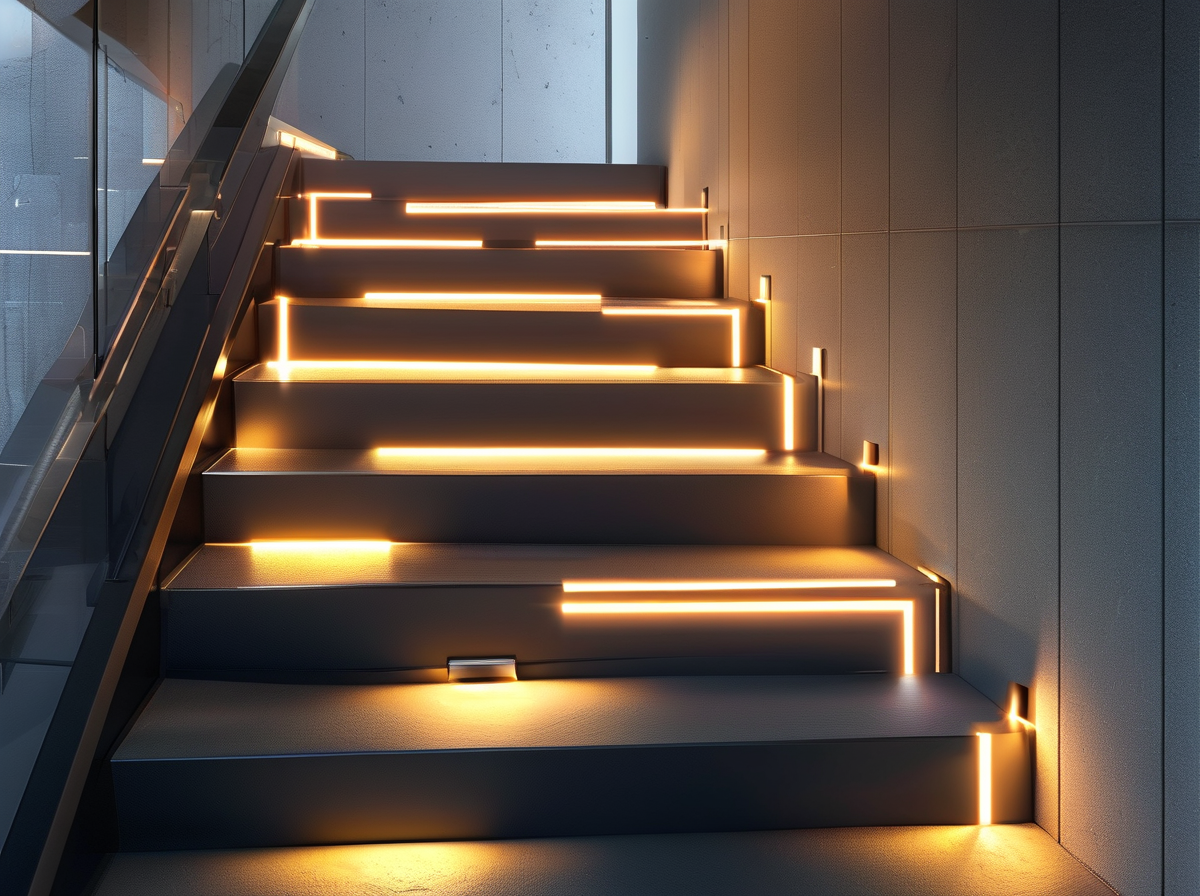
The tradeoff is installation complexity. Hardwired stair lighting requires planning, cable routing, driver or transformer placement, waterproofing for outdoor areas, and sometimes professional electrical work.
- Higher upfront cost: Labor and wiring materials increase the initial budget.
- More planning required: Fixture spacing, mounting height, voltage, and switch position should be decided before installation.
- Harder to change later: Moving a recessed hardwired light can require wall repair.
- Not ideal for every retrofit: Finished stairs may be difficult or expensive to wire cleanly.
For small temporary upgrades, hardwired stair lights may be more than the project needs. But for serious long-term lighting, the extra installation effort is often worth it.
Which Option Is Better for Indoor Stairs?
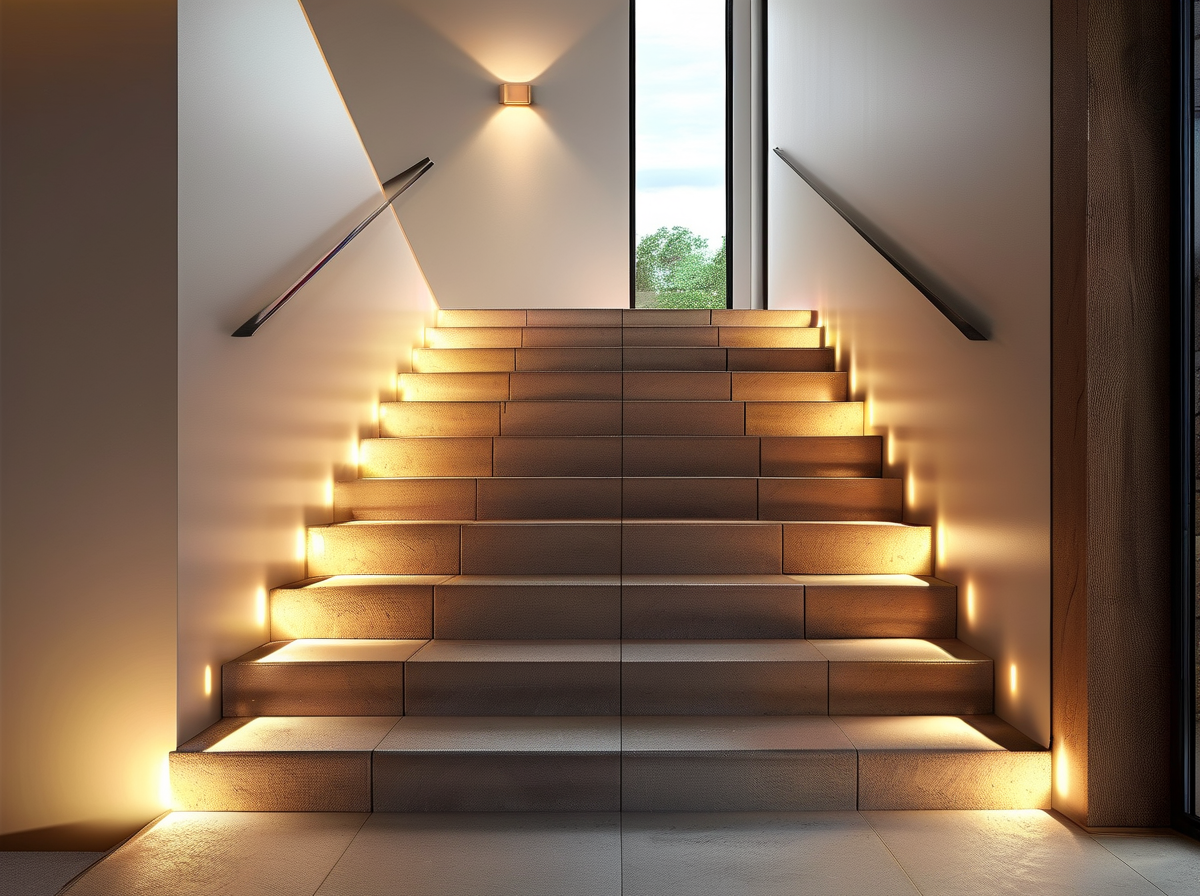
For indoor stairs, battery operated lights are best when you need a fast safety improvement without construction. They are practical for apartments, older homes, basement stairs, and places where drilling or wiring is not desirable.
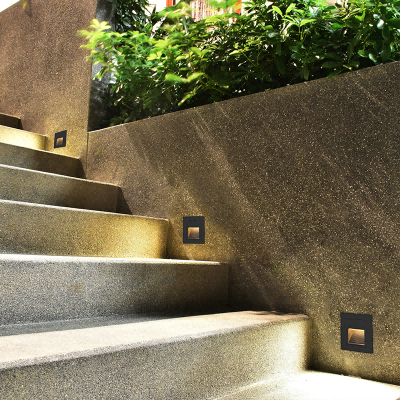
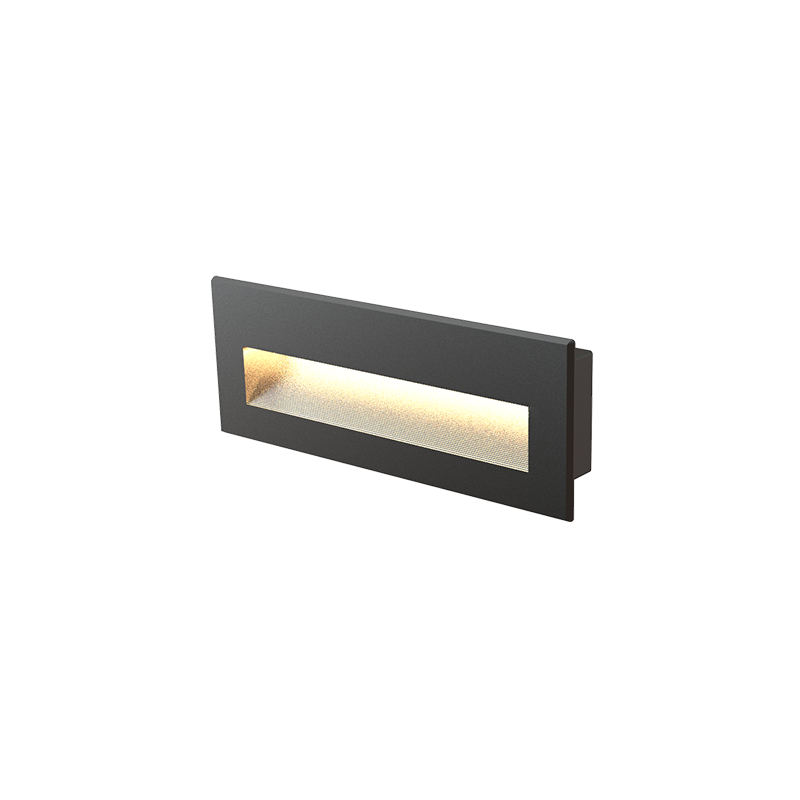
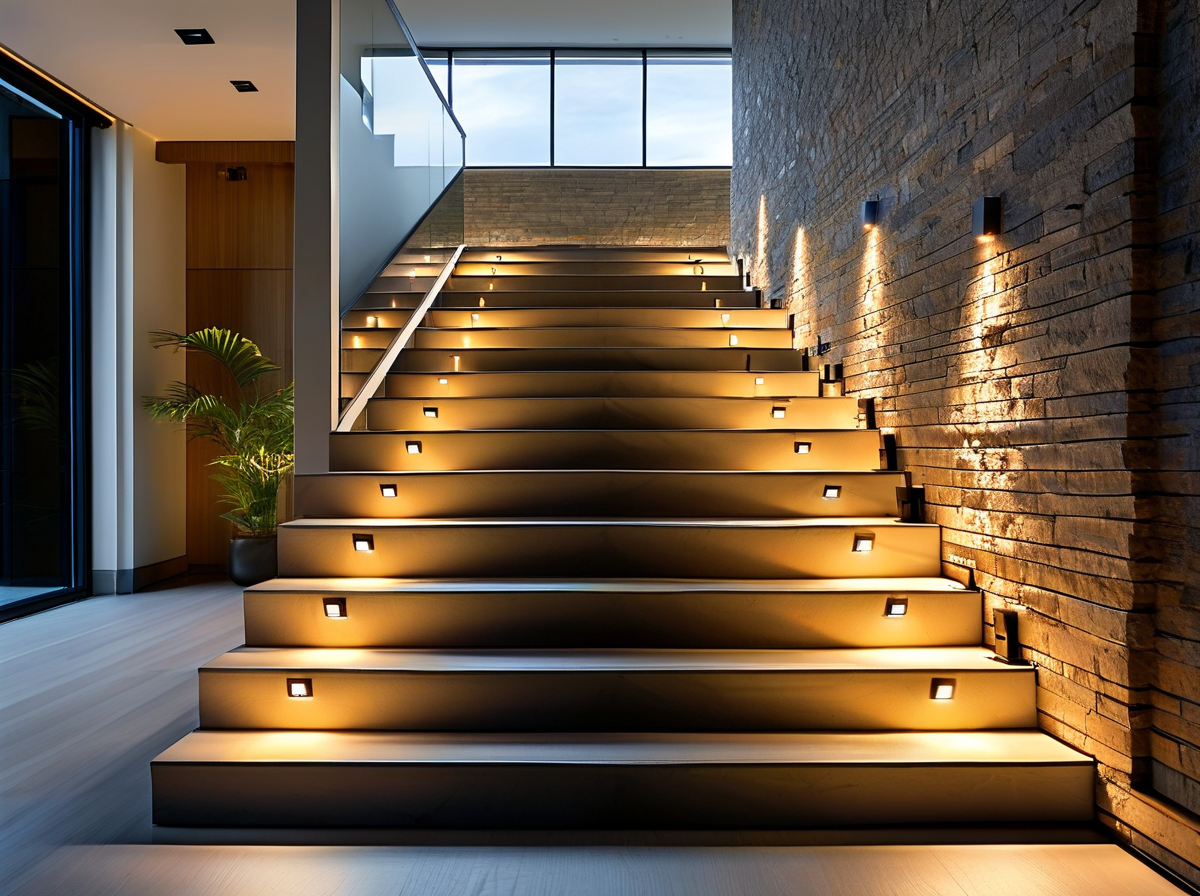
Hardwired stair lights are better when the staircase is part of a remodel, custom home, or premium interior design. Recessed LED step lights can sit flush in the wall or stair riser, giving the stairs a clean architectural look while improving nighttime visibility.
A simple rule: choose battery lights for convenience; choose hardwired lights for a permanent finished appearance.
Which Option Is Better for Outdoor Steps?
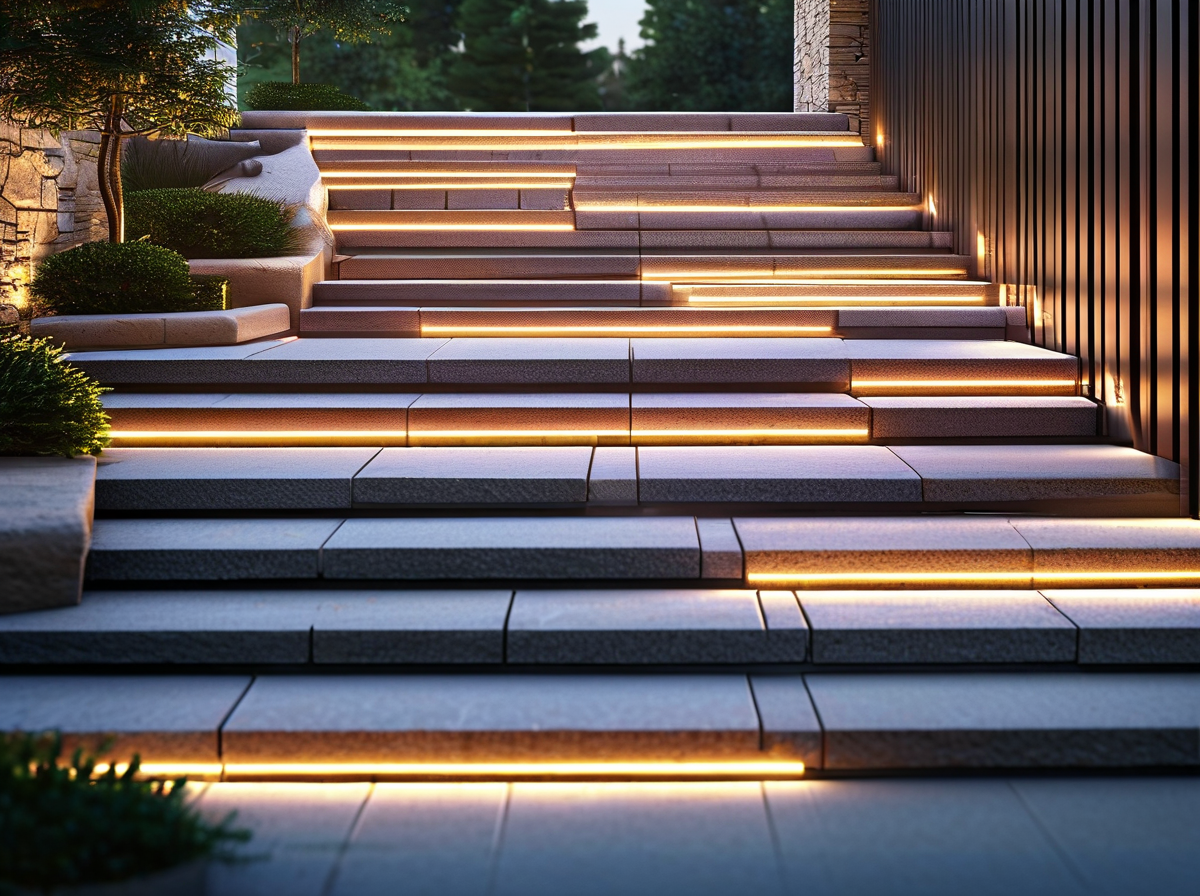
Outdoor steps usually favor hardwired stair lights, especially when the lighting must work every night in rain, snow, heat, and humidity. A properly installed low-voltage hardwired system can provide stable lighting for decks, garden steps, patios, entrances, and retaining walls.
Battery operated outdoor stair lights can still work for small areas, but waterproof quality matters. Look for sealed housings, reliable motion sensors, corrosion-resistant materials, and easy battery access. If the lights are difficult to reach, replacing batteries outdoors becomes inconvenient very quickly.
For permanent exterior stairs, hardwired outdoor step lights are usually the safer and more professional choice.
Cost, Maintenance, and Long-Term Value
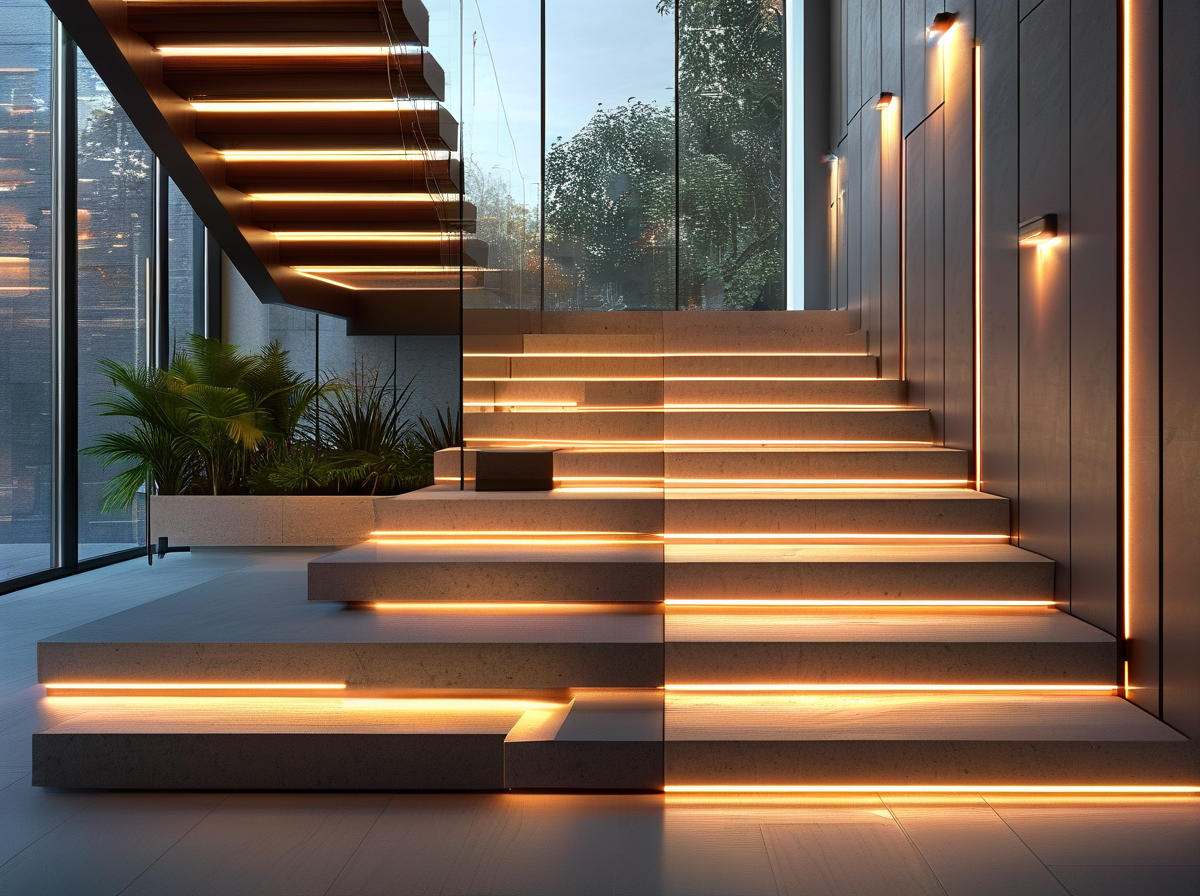
Battery operated stair lights often win on upfront cost because installation is simple. However, the long-term cost includes batteries, charging time, replacement units, and possible performance issues. This is acceptable for smaller projects but less attractive for large staircases.
Hardwired stair lights cost more at the beginning but usually deliver better long-term value. They need proper installation, but once installed, they are easier to manage and can operate reliably for years. For commercial properties, hotels, villas, and outdoor projects, the reduced maintenance is a major advantage.
When comparing cost, do not look only at the fixture price. Consider installation labor, expected usage, battery maintenance, replacement frequency, and the value of a cleaner lighting design.
Final Recommendation: How to Choose the Right Stair Lights
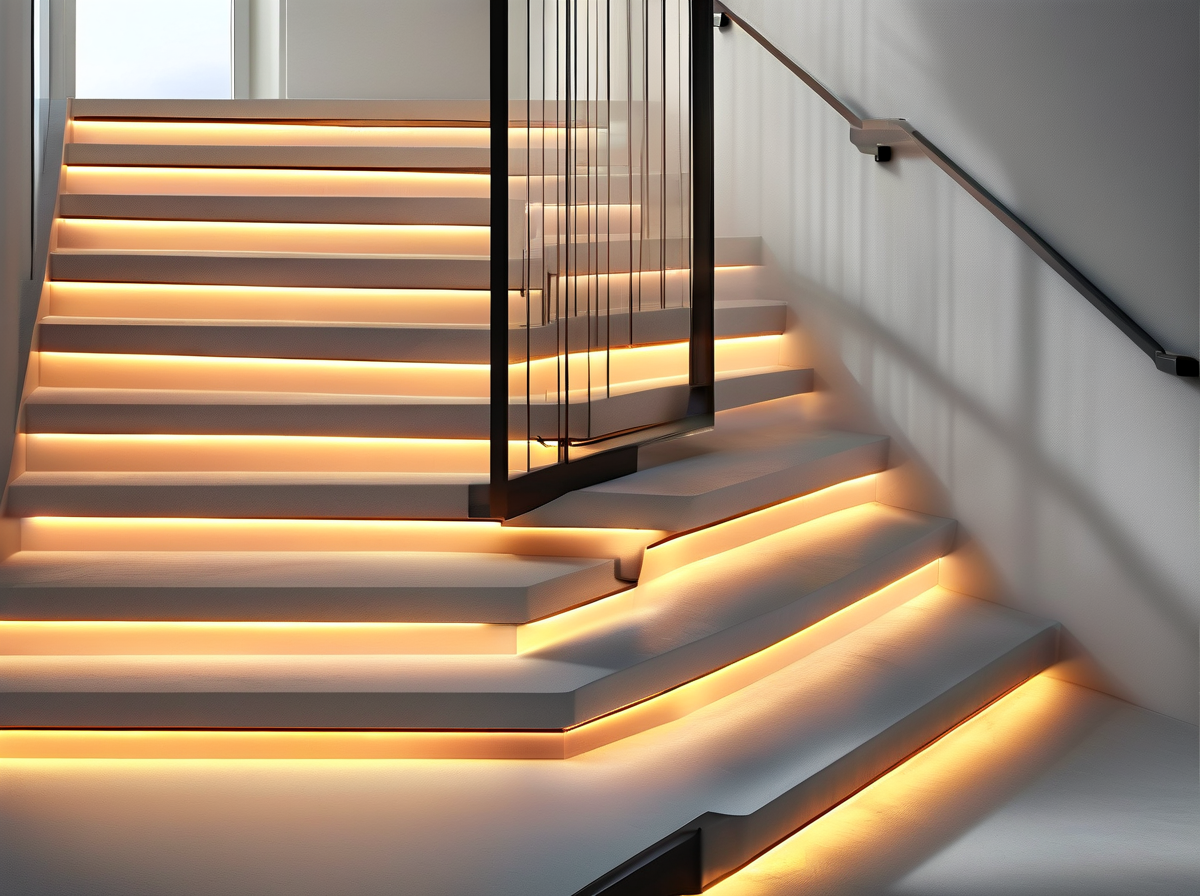
If you want a quick, flexible, low-commitment upgrade, battery operated stair lights are a practical choice. They are easy to install, simple to test, and suitable for many indoor retrofit situations.
If you want a permanent, reliable, professional-looking lighting system, hardwired stair lights are usually better. They provide stronger long-term performance, cleaner integration, and better compatibility with sensors, switches, and outdoor waterproof installations.
For most serious stair lighting projects, especially outdoor steps and new builds, hardwired LED step lights are the stronger investment. For quick DIY safety lighting, battery operated lights still have a clear place.
Related posts
IP Rating for Outdoor Step Lights: How to Choose the Right Waterproof Protection

One wrong IP rating for outdoor step lights can turn a sleek stairway into a maintenance headache, with moisture inviting corrosion, co...
How to Choose the Right Low Voltage Transformer for LED Step Lights
Choosing the right low voltage transformer for LED step lights is one of the most important decisions in any outdoor stair lighting pro...
How to Choose the Right Color Temperature for LED Step Lights
Choosing the right LED step light color temperature is one of the most consequential decisions in any outdoor stair-lighting installati...

LED Step Lights for Brick Walls: Avoid These 5 Mistakes
LED step lights for brick walls fail when drivers are undersized, seals are weak, or recess depth is wrong. Avoid these 5 mistakes and keep your brick wall steps glowing evenly and safely.

Outdoor LED Step Lights for Retaining Brick Walls
Enhance safety and curb appeal with outdoor LED step lights for retaining brick walls. Explore design tips, mounting methods, and retrofit options.

Outdoor LED Step Light Spacing: How Far Apart to Install?
Explore 15 stunning stair lighting ideas for indoor and outdoor steps, from LED tread lights and riser lighting to handrail, deck stair, and pathway lighting concepts.

Upgrade Your Home Safety with Hardwired Indoor LED Step Lights with Motion Sensor
Hardwired indoor LED step lights with motion sensor for safer stairs, better visibility, and a cleaner modern home upgrade.

10 Stunning Porch Steps Lighting Ideas for 2026
Explore 10 stunning porch steps lighting ideas for 2026, from recessed step lights and solar path lights to smart controls, low-voltage design, and safety-first layouts.

Indoor vs. Outdoor Motion Sensor Step Lights: What’s the Difference?
Compare indoor and outdoor wireless motion sensor step lights, including weather resistance, sensor technology, installation, lighting performance, and power options.

15 Stunning Stair Lighting Ideas for Indoor & Outdoor Steps
Explore 15 stunning stair lighting ideas for indoor and outdoor steps, from LED tread lights and riser lighting to handrail, deck stair, and pathway lighting concepts.