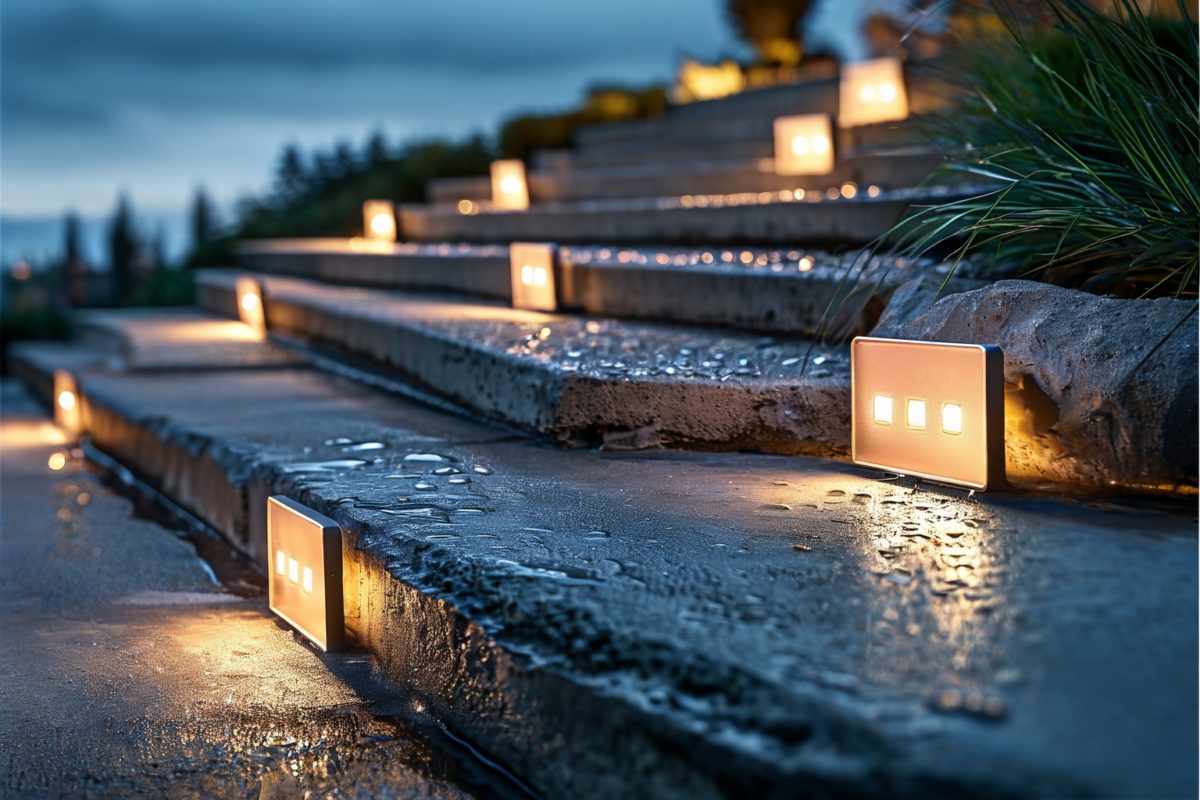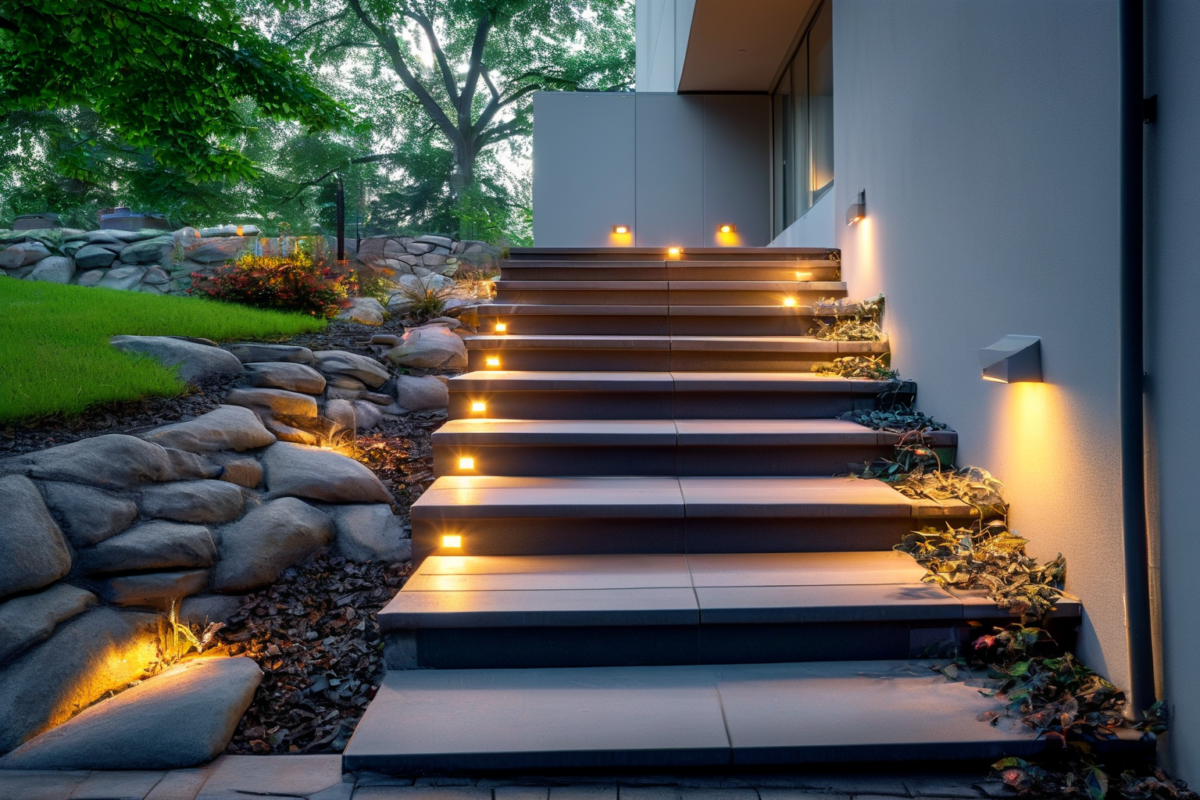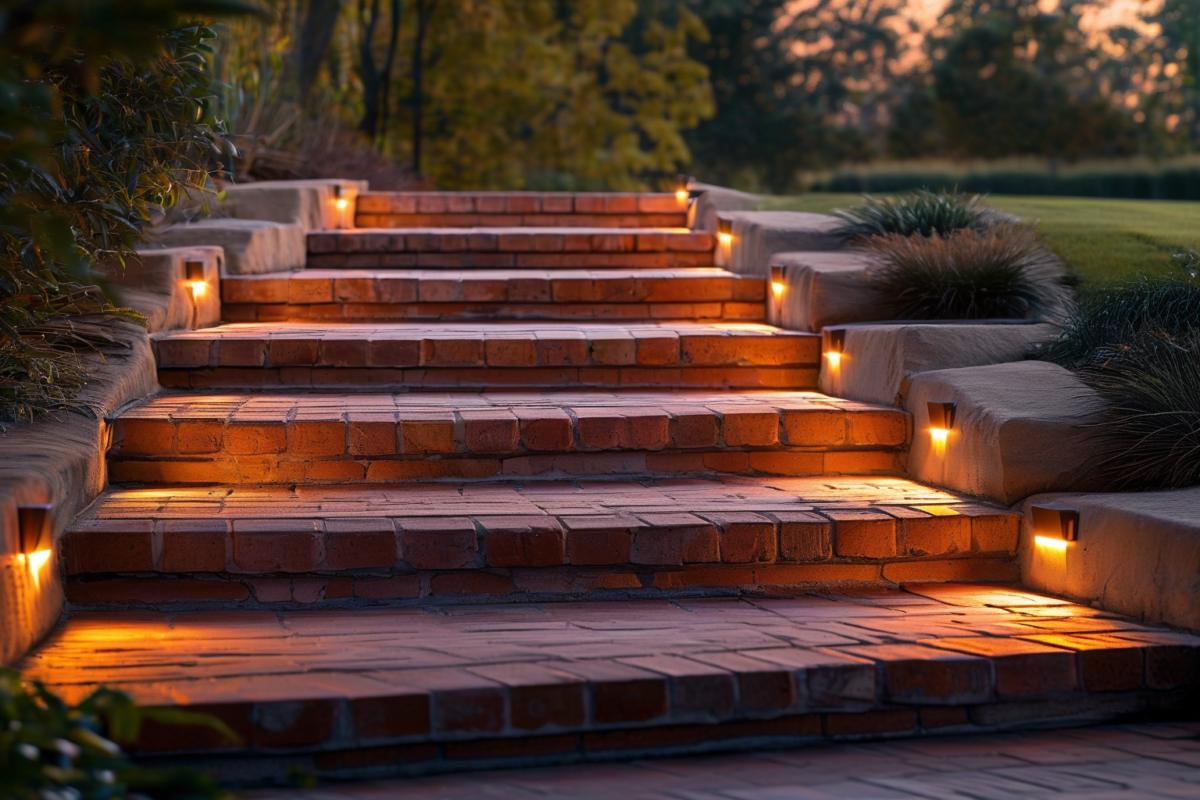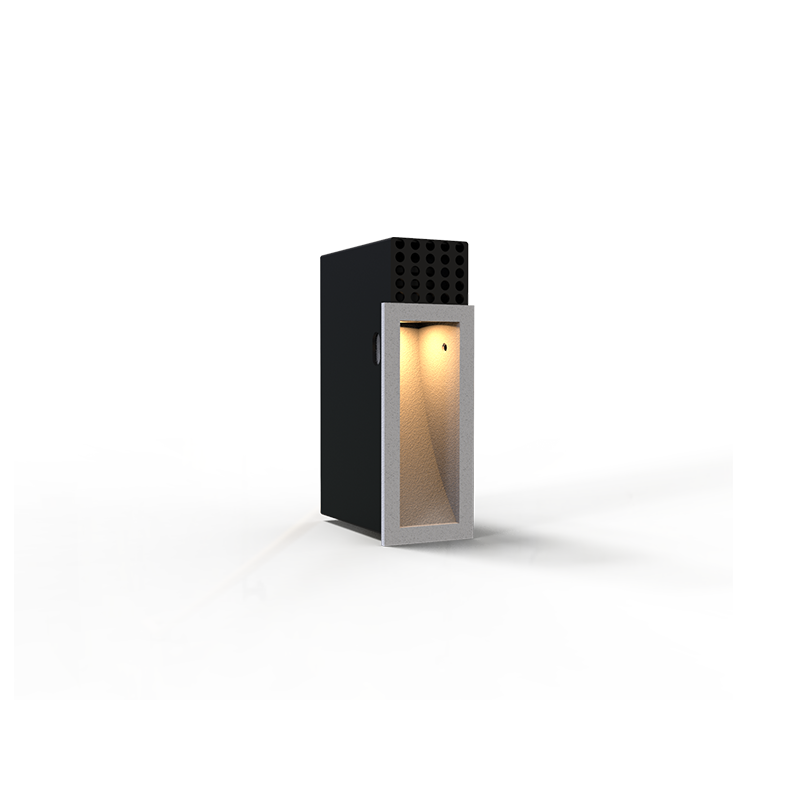
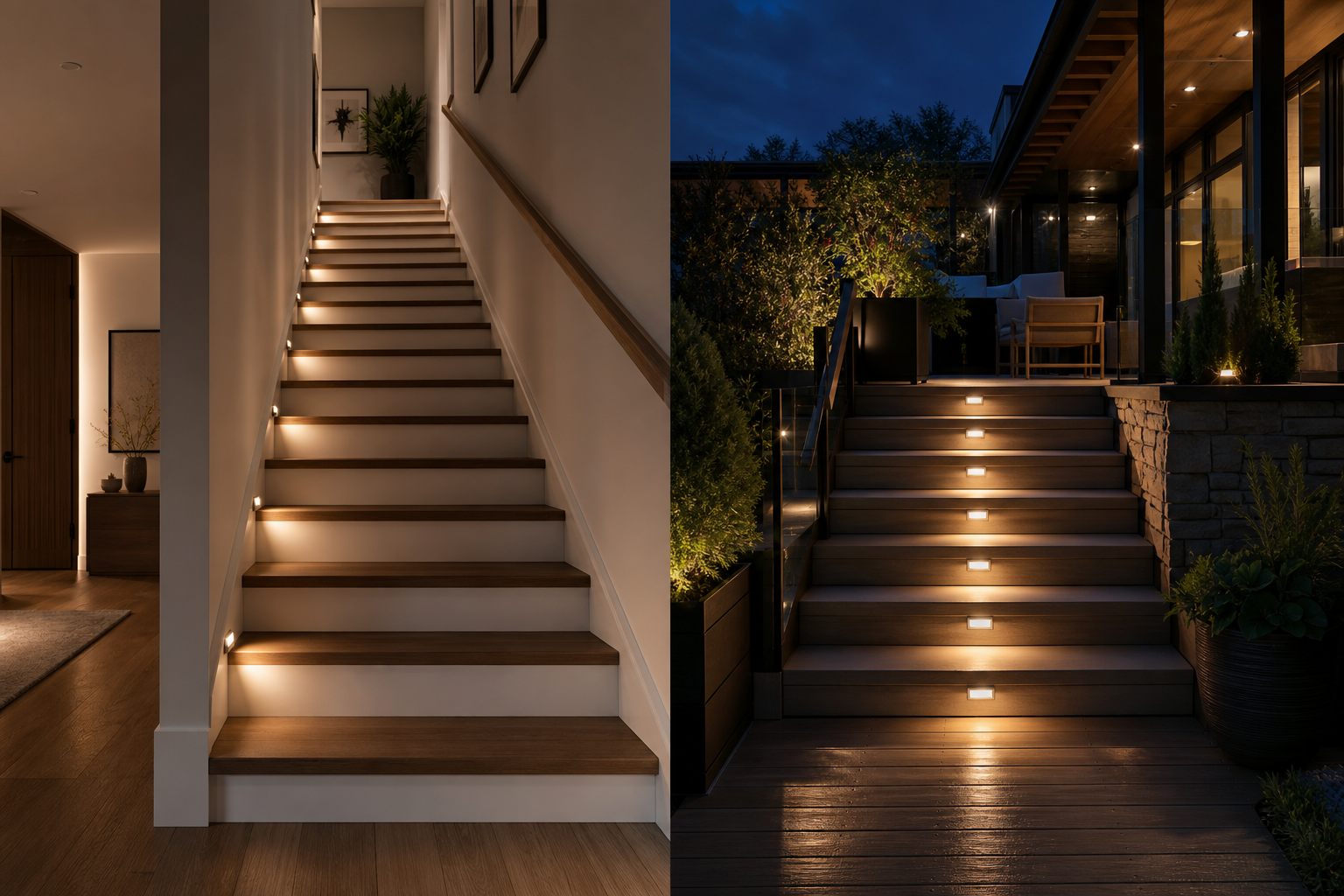
Most people pick wireless motion sensor step lights like they’re grabbing batteries off a shelf, then wonder why rain, dim glow, or dead sensors ruin the vibe halfway through the month.
Indoor versions play by different rules—humidity, wiring, brightness, and build matter—and mixing them up costs time and money. Get clear on what fits your stairs, deck, or hallway before you install.
Quickfire Guide: Wireless Motion Sensor Step Lights
➔ Durability: Prioritize IP65+ models outdoors; indoor fixtures need moisture-safe designs only.
➔ Sensor Type: PIR for motion activation, photocell for dusk-to-dawn, or integrated for smart control.
➔ Installation: Recessed mount indoors for sleek looks; screw-fixed or adhesive outdoors for stability.
➔ Performance: Match beam angle and brightness to step depth; warm white for ambiance, cool white for clarity.
➔ Power: Solar cuts wiring; rechargeable batteries ensure consistent output; DC supply ideal for shaded decks.
Environmental and Durability Considerations
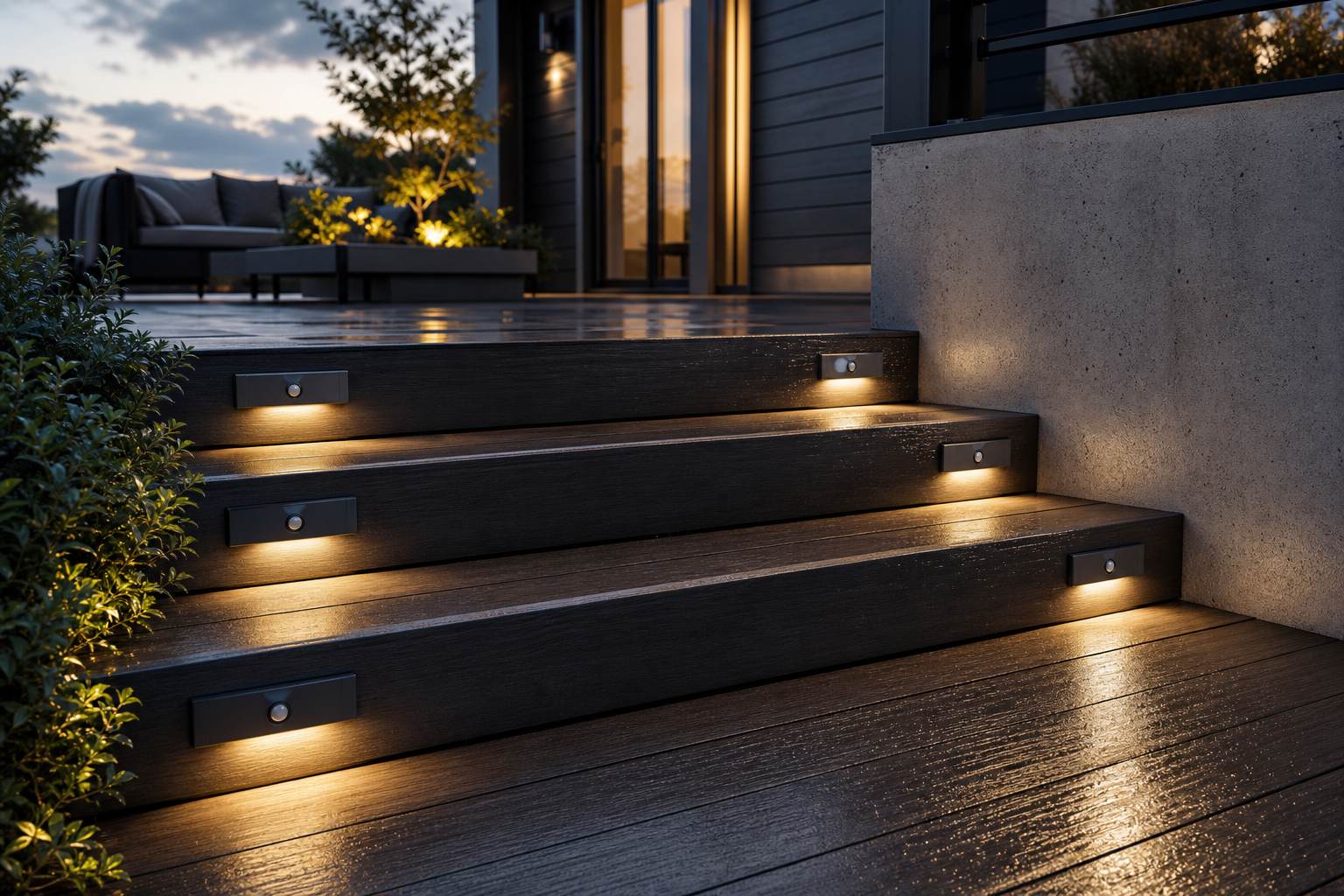
If you’re shopping for wireless motion sensor step lights, the outdoor stuff can feel like a guessing game: rain, dust, sun, then a random cold snap. This cluster keeps it real. You’ll see what actually drives durability in outdoor use, why some “indoor” picks tap out fast, and how IP rating basics help you avoid buying twice. MG Lighting / LEDStepLight.com builds for these conditions, not wishful thinking.
Weather Resistance Unveiled: Outdoor Wireless Motion Sensor Lights
Outdoor wireless motion sensor step lights live or die by weather resistance, not brightness claims. The goal is steady lighting performance across messy environmental factors.
-
Key build choices that matter for outdoor use
-
Housing and seams
-
Look for tight joins that shrug off wind-driven rain; that’s the boring detail that saves you later.
-
Better shells protect wireless technology boards from corrosion and weird sensor glitches.
-
-
Light engine protection
-
A sealed LED module raises durability because moisture can’t creep onto contacts.
-
Heat management still counts; trapped heat cooks parts even when the unit is “sealed.”
-
-
Sensor reliability
-
A decent motion sensor with a protected PIR sensors window avoids false triggers from mist or dusty gusts.
-
Placement matters: aim away from puddle splash zones and direct sprinkler spray.
-
-
If you’re matching products across a porch run, keep the spec targets consistent; mixed ratings in the same stair line is how wireless motion sensor step lights end up looking patchy at night. MG Lighting / LEDStepLight.com keeps the design priorities simple: seal what must be sealed, vent what must breathe, and don’t cheap out on the sensor window.
Can Indoor LED Step Lights Withstand Rain and Humidity?
People ask this after they’ve already bought indoor LED lights and then notice their “covered” stairs still get soaked. Fair.
-
Quick reality check on rain resistance and humidity tolerance
-
Most indoor trims aren’t built for direct wetting, and moisture protection is limited.
-
Material quality varies a lot; thin paint and low-grade screws rust fast.
-
In an indoor environment like a hallway, that’s fine; outdoors, it turns into light degradation you can actually see.
-
1) Look at the label: if it doesn’t call out damp/wet suitability, treat it as indoor-only.
2) Check the gasket: no gasket usually means water finds a way.
3) Be honest about exposure: “under an eave” still gets humidity, mist, and splash.
Here’s a simple way to think about it when comparing wireless motion sensor step lights vs indoor step lights:
| Location scenario | Typical humidity (%) | Splash/direct rain risk (0–10) | Recommended protection |
|---|---|---|---|
| Indoor hallway | 30–55 | 0 | Basic enclosure |
| Covered porch steps | 50–90 | 3 | Damp-rated + sealed edges |
| Open deck stairs | 60–100 | 8 | Wet-rated + higher IP |
If you want the look of indoor minis outside, pick outdoor-rated step lights from MG Lighting / LEDStepLight.com and stop babysitting fixtures after every storm. Wireless motion sensor step lights are only “set it and forget it” when the body is built for water.
IP Rating Essentials for Deck Lighting and Hallway Fixtures
IP rating is just ingress protection in plain terms: how well a light blocks grit and water. For deck lighting, it’s the difference between “still working next season” and “why is it flickering again.”
-
How to read it (without the nerd spiral)
-
The first digit is dust resistance: higher is better if your deck gets windblown dirt or pollen.
-
The second digit is waterproof level: higher is safer for exposed stairs, hose-downs, and heavy rain.
-
Recent guidance in the IEC 60529 framework continues to be the industry baseline for enclosure enclosure standards, and buyers keep leaning on IP codes as the quickest filter for outdoor fixture suitability. — International Electrotechnical Commission (IEC), updated 2025 publications around IEC 60529 use and interpretation
For hallway fixtures, lower ratings can pass because there’s no spray, no standing water, and less grime. Outdoors, don’t bargain-shop the IP code; your wireless motion sensor step lights are only as tough as the weakest seam.
A practical buying shortlist for wireless motion sensor step lights:
-
✓ Deck edges and open stairs: prioritize higher ingress protection
-
✓ Covered entries: still plan for humidity, not just rain
-
✓ Indoors: match the rating to cleaning style and dust load
MG Lighting / LEDStepLight.com keeps IP choices aligned with real installs, so your wireless motion sensor step lights aren’t fine on paper but flimsy on the deck.
Key Components and Technology
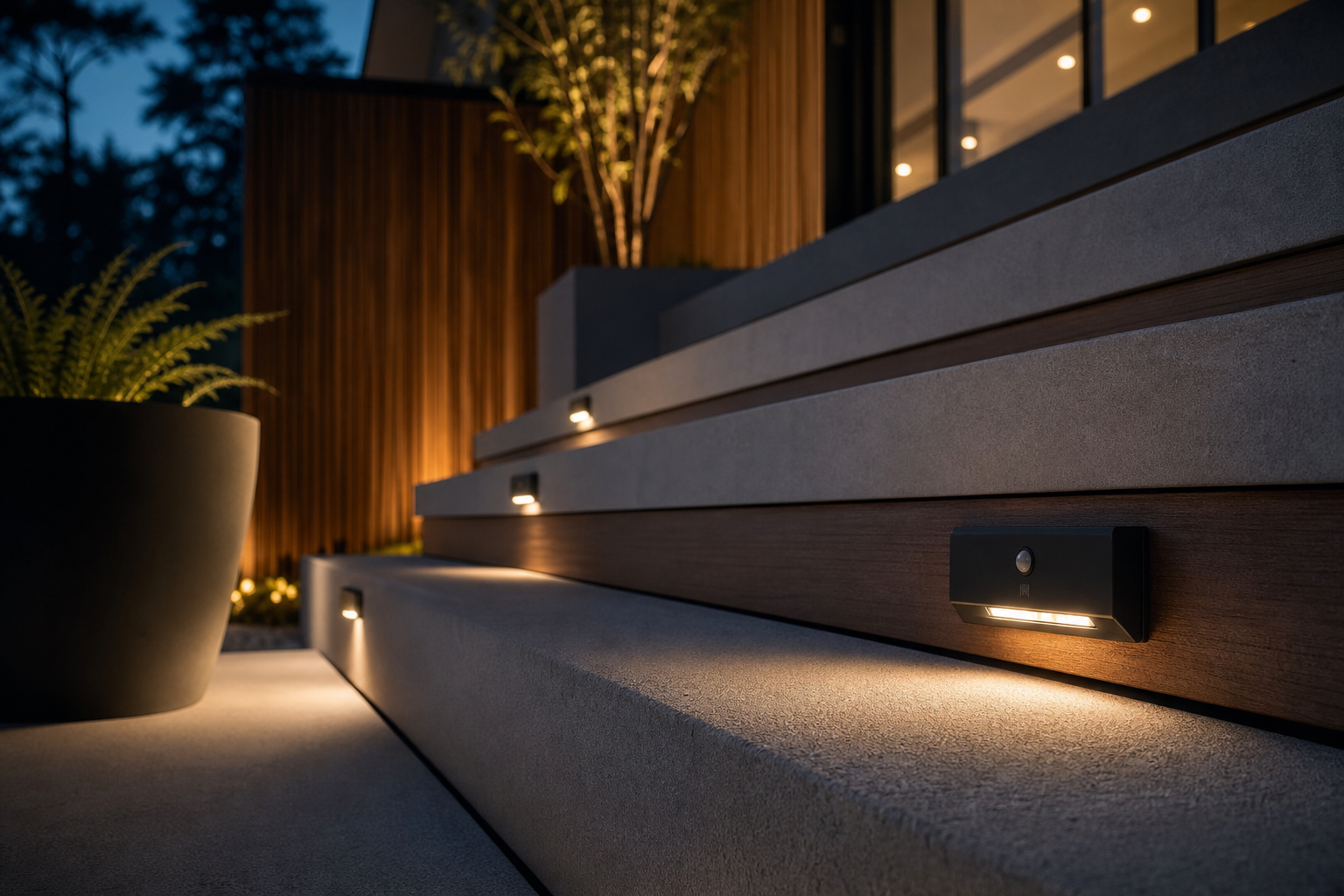
Quick reality check: wireless motion sensor step lights live or die by tiny parts that people barely notice. A good PIR sensor reacts fast; a smart photocell sensor keeps things calm at dawn. Then LED modules handle the look, and the battery pack decides how often you’ll climb back up to fix stuff. MG Lighting / LEDStepLight.com builds around those basics.
PIR Motion Sensor vs Photocell Sensor
-
Triggering mechanism
-
PIR sensor / passive infrared
-
Reads heat shifts, so motion detection is the main play.
-
In wireless motion sensor step lights, it’s the “someone’s here” switch.
-
-
Photocell sensor
-
Tracks ambient light with light detection, so it’s the “it’s dark now” switch.
-
Great for keeping step lights from popping on at noon.
-
-
-
Where each wins
-
motion detection: entries, landings, side gates, and those spots where you want instant light.
-
ambient light control: dusk-to-dawn paths where you want steady glow, not jumpy behavior.
-
-
Real-world combo (common on MG Lighting / LEDStepLight.com builds)
-
Photocell sets the “allowed hours.”
-
PIR handles the “only when needed,” which keeps wireless motion sensor step lights from wasting power.
-
Integrated Sensor Technology in Low-Voltage Architectural Lighting
Integrated control systems can tuck integrated sensors into the fixture, which makes low-voltage lighting feel less like a wiring project and more like snapping blocks together. That’s the sweet spot for architectural lighting in busy homes.
-
Smart lighting behavior you actually notice
1) Photocell gatekeeping at dusk
2) automation rules (timer + dim levels)
3) PIR activity bursts for safety
-
Quick slang-level benefit: fewer “why is this on?” moments, better energy efficiency.
Short, practical callouts for wireless motion sensor step lights and wireless step lighting:
-
Put sensors where feet approach, not where doors swing.
-
Aim for smooth fades; harsh snaps look cheap.
MG Lighting / LEDStepLight.com tends to spec integrated setups when the goal is clean walls, clean installs, and less fiddling later.
LED Module Innovations for Accent Lighting on Steps
-
LED modules have gotten pickier, in a good way.
-
light output is tighter controlled, so a tread reads bright without blasting your eyes.
-
color temperature options let you match warm wood or cool concrete without that weird mismatched patchwork.
-
-
What matters in step lighting
-
Beam shaping for accent lighting:
-
tight cutoffs reduce glare
-
consistent spread keeps step lighting from looking spotty
-
-
heat dissipation: a cooler-running board usually means longer life and less color shift.
-
durability: moisture and shoe scuffs are real; housings and coatings need to take a hit.
-
For wireless motion sensor step lights, efficient LED modules buy time—less drain, fewer battery swaps, less drama. MG Lighting / LEDStepLight.com often pairs lower-watt, higher-efficiency boards with sensor logic so the glow feels intentional, not random.
Battery Pack Comparison: Rechargeable vs Energy Harvesting
-
Power source choices
-
rechargeable batteries
-
predictable runtime, simple charging methods
-
best when you want stable brightness and known battery life
-
-
energy harvesting (often solar)
-
less hands-on maintenance, more sustainable power
-
output depends on placement and season, so expectations matter
-
-
-
Quick numeric gut-check for wireless step lights and wireless motion sensor step lights:
| Option | Typical charge input (W) | Practical notes (1–5) |
|---|---|---|
| rechargeable batteries (USB/low-voltage) | 2–10 | 4 |
| energy harvesting (small solar) | 0.5–3 | 3 |
| Hybrid (solar + recharge fallback) | 1–8 | 5 |
-
What MG Lighting / LEDStepLight.com tends to recommend
-
If the walkway is shaded: lean battery pack + rechargeable batteries.
-
If the site gets solid sun: energy harvesting can cut maintenance, but design for cloudy weeks.
-
And yes—when the goal is “set it and forget it,” wireless motion sensor step lights usually feel best with rechargeable power plus smart dimming.
Installation Methods and Requirements
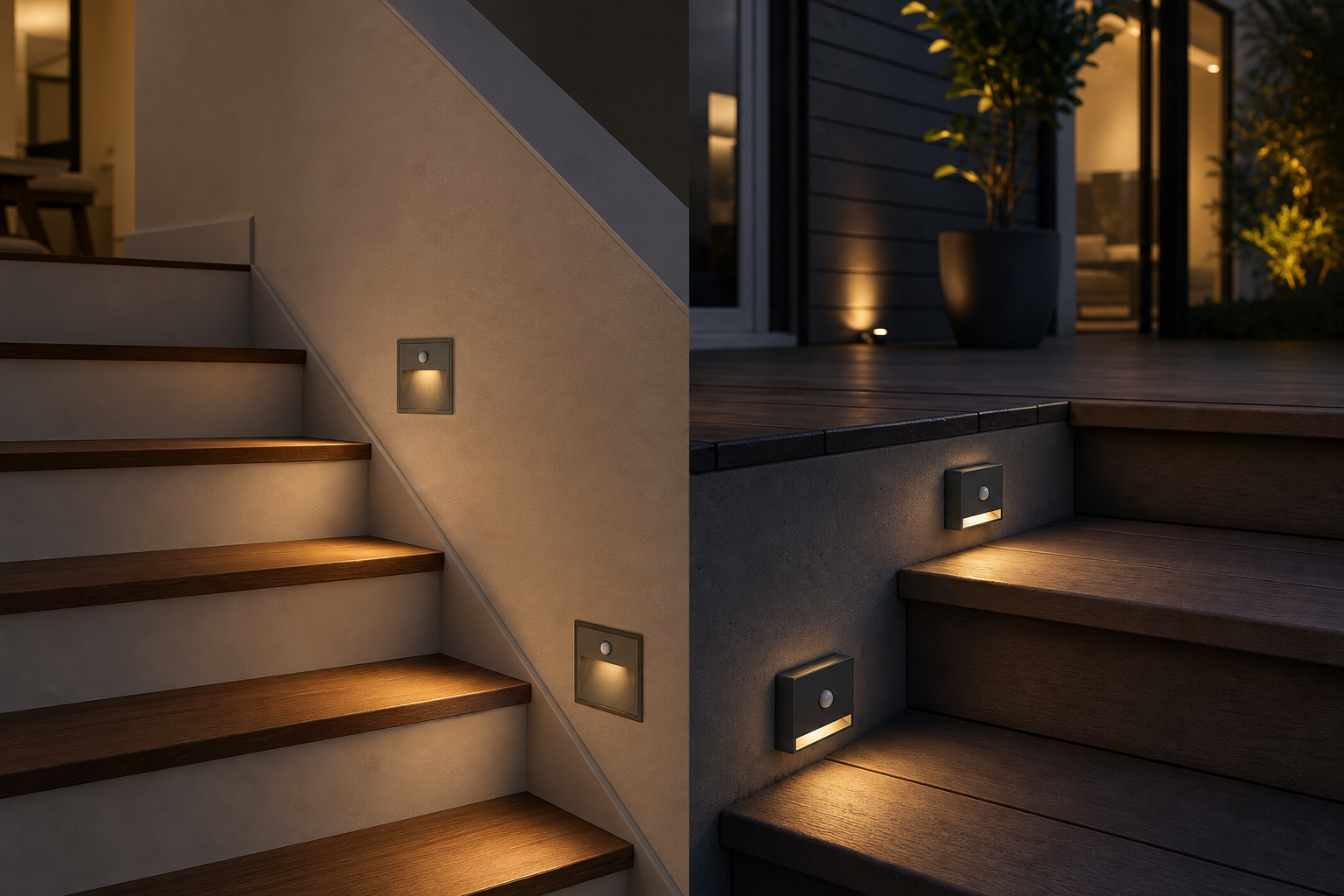
Quick installs can look sharp, or they can look like a weekend “learning experience.” This run-through keeps it practical: pick the right mounting method, keep installation clean, and line up safer walking paths using wireless motion sensor step lights and sensible placement.
Recessed Mount vs Surface Mount for Indoor Stairs
Picking between recessed mount and surface mount is really picking what you’re willing to change on your walls. And what you want to see.
-
Mounting options
-
Recessed mount
-
Installation: cut-in work, wire routing, and patch/trim—slower, but tidy.
-
Lighting fixture look: sits flush, so the step edge reads clean.
-
Stair safety: less snag risk from bump-outs on narrow indoor stairs.
-
-
Surface mount
-
Installation: faster—anchor, connect, test; fewer “oops” moments.
-
Lighting fixture access: simple swaps, handy if you’re testing motion sensor behavior on step lights.
-
-
-
Fit check (the part people skip)
-
Wall depth vs box depth, tread width, and sightlines from top landing.
-
If you’re trying wireless motion sensor step lights, surface units often win on placement flexibility.
-
For product-fit guidance, MG Lighting / LEDStepLight.com can help match cutout size, beam spread, and glare control to real stair dimensions.
Wireless Setup Essentials: Outdoor Pathway Lights
Wireless setup is basically the “no trenching, no headaches” option for outdoor pathway lights. Still, it’s not toss-and-go.
-
A simple installation guide mindset:
-
Confirm battery power type (replaceable vs sealed) and expected runtime.
-
Test connectivity where you’ll actually place the light—near metal fences, it can act weird.
-
Set a clean placement strategy: aim light across the walking line, not into eyes.
-
-
Quick bullets that save you time:
-
Check weather resistance ratings before the first storm does it for you.
-
If you want wireless motion sensor step lights, keep sensors 18–36 inches above grade when possible, so pets don’t trigger nonstop.
-
“Wireless” doesn’t mean “hidden”: leave access to the battery door.
-
wireless motion sensor step lights also work as path markers when you cluster them near turns, gates, and the last two steps at a patio drop.
Screw-Fixed Installation Tips for Porches and Decks
Outdoor mounting fails when the fasteners are wrong, not when the light is “bad.” Treat screw-fixed installation like a mini system: light + surface + mounting hardware.
-
Secure mounting essentials
-
Weatherproof screws
-
Stainless or coated fasteners; avoid cheap zinc in salty air.
-
Match screw length to the backing material, not your mood that day.
-
-
Mounting hardware
-
Pre-drill on hardwood decking to prevent splits.
-
Use isolators or gaskets where outdoor fixtures meet treated lumber.
-
-
-
Practical layouts for porch lighting and deck lighting
-
Put lights where feet land: stair noses, transitions, and seating edges.
-
If you’re mixing in wireless motion sensor step lights, keep wired fixtures for “always-on” zones and wireless units for the spots you only need when someone walks up.
-
MG Lighting / LEDStepLight.com carries stair and deck options that play nicely with both wired runs and wireless motion sensor step lights add-ons.
Adhesive Backing Solutions for Hallway Recessed Lighting Fixtures
Adhesive backing can be legit for hallway lighting, but only when the load is light and the surface is right. That’s the deal.
-
Where easy installation actually works
-
Smooth, clean paint or sealed wood in interior spaces.
-
Lightweight recessed fixtures meant for tape or pad mounting.
-
-
What makes strong adhesion (and what kills it)
-
Good: degreased surface, firm pressure, warm room temp.
-
Bad: dusty drywall, fresh paint, textured walls, humid corners.
-
-
Quick sizing reality check (so it doesn’t peel at 2 a.m.)
| Fixture weight (g) | Adhesive pad area (cm²) | Recommended cure time (hours) |
|---|---|---|
| 120 | 20 | 24 |
| 200 | 30 | 24 |
| 280 | 45 | 48 |
If you’re chasing a clean lighting design line in a long hall, adhesive-mounted trims can pair well with step lights at nearby stair entries—especially wireless motion sensor step lights where you don’t want to crack open walls. MG Lighting / LEDStepLight.com can point you to fixture styles designed for low-profile mounting without drama.
Lighting Performance and Features
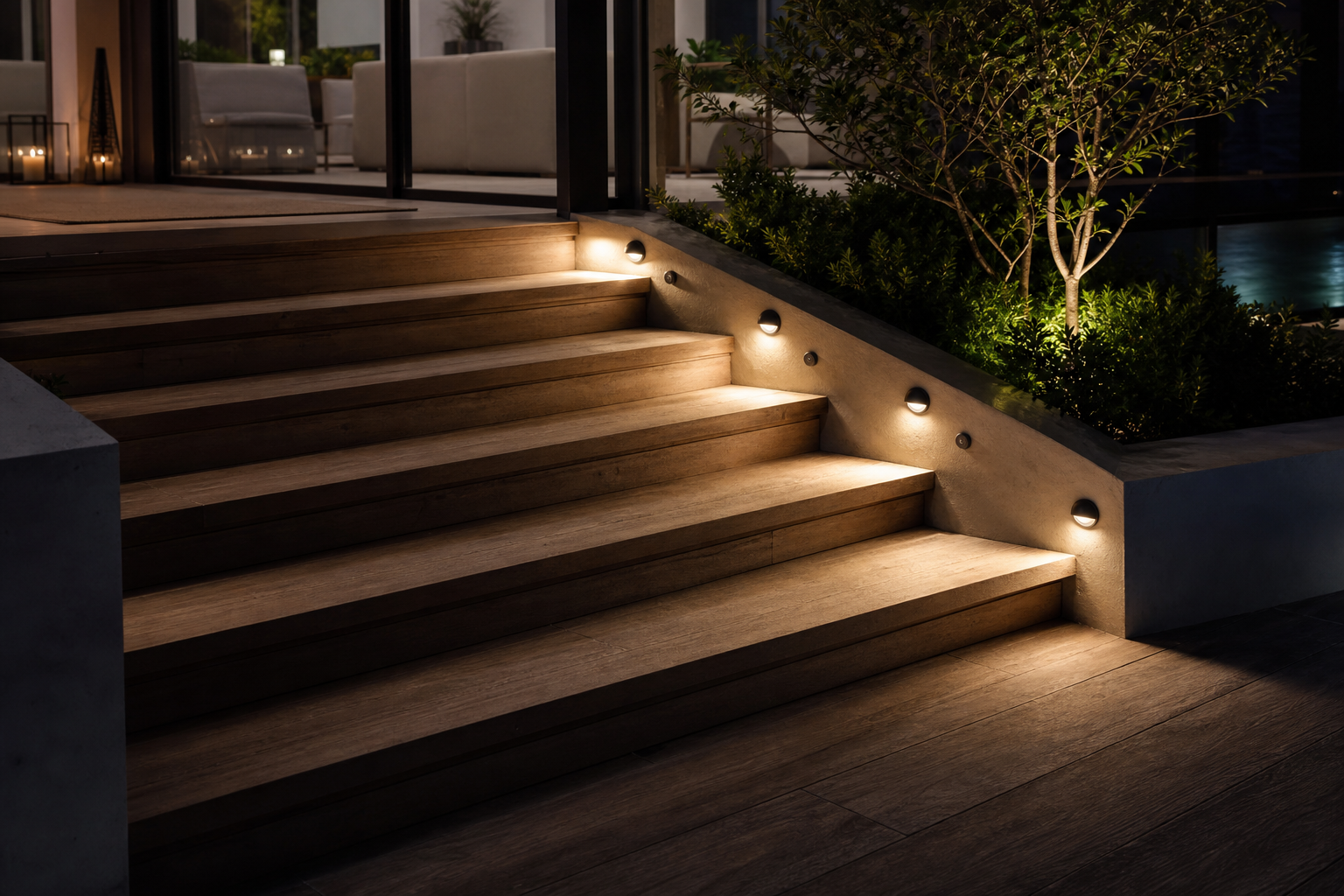
A stair run can feel calm or sketchy depending on how the light lands. This set breaks down warm vs cool color choices, how bright is “bright enough” on steps, and how motion sensing changes the whole vibe at night. You’ll also see how wireless motion sensor step lights fit real homes, not showroom setups, with small tweaks that matter.
Warm White vs Cool White: Choosing the Right Beam Angle
Picking color temperature isn’t just taste; it changes what your eyes catch at 2 a.m. Warm tones (lower Kelvin) hide scuffs but can soften contrast, while cool tones push detail and can expose dust fast. With wireless motion sensor step lights, the smarter move is pairing tone with beam spread so you don’t get bright dots and dark gaps.
-
Light distribution goals
-
For tight staircases
-
Aim for a wider beam spread to wash each tread, not spotlight it
-
Keep light output consistent from top to bottom
-
-
For open stair runs
- Use controlled light distribution to avoid lighting the whole room
-
-
Visual quality checkpoints
-
Color rendering index: higher CRI helps you read edges and flooring color correctly
-
Lumens: don’t chase huge numbers; match lumens to mounting height and finish glare
-
If you’re shopping at MG Lighting / LEDStepLight.com, look for wireless motion sensor step lights that list both Kelvin and beam angle clearly, since that combo is what keeps things even.
How Brightness Level Impacts Safety Lighting on Steps
On steps, “cute and dim” can turn into “whoops” pretty quick. You want enough illumination intensity to outline each nosing without blasting your eyes with glare. Wireless motion sensor step lights help because they can run low most of the time, then pop up when needed.
Here’s a quick, practical way to think about lux targets and what they do for step visibility:
| Location use-case | Suggested lux on tread | Practical effect |
|---|---|---|
| Night pathway to bedroom | 30 | Clear visibility without waking everyone |
| Kid/pet traffic stairs | 50 | Better edge definition, fewer missed steps |
| Older adults / low vision | 75 | Stronger light levels, safer footing |
| Outdoor steps, rain-prone | 100 | Cuts shadowing, improves contrast |
Quick checks that keep it real:
-
If your eyes squint, you’ve got glare—lower output or change aiming.
-
If tread edges disappear, raise light levels a notch or widen the beam.
-
If you’re measuring, foot-candles ≈ lux ÷ 10.76, handy for older spec sheets.
Yes, wireless motion sensor step lights can be bright; the trick is making the brightness useful, not annoying.
Motion-Activated Ambient Illumination for Interior Staircases
Motion lighting works when it feels natural, like the house noticed you. With wireless motion sensor step lights, dialed-in motion detection keeps the stairs friendly while saving power, and good ambient light control stops the “why did it turn on at noon?” problem.
-
Sensor setup that actually behaves
-
Sensor range
-
Short runs: keep range tight so it doesn’t trigger from the couch
-
Long halls: extend range, but aim away from doorways
-
-
Light sensitivity
- Set it so daylight doesn’t trigger, but dusk still does
-
-
Timing that fits real life
-
Activation delay
-
10–30 seconds works for most interior staircase lighting
-
Longer delays suit slower walkers and late-night trips
-
-
Occupancy sensor placement
- Low on the wall reduces false hits from ceiling fans
-
For a clean install, MG Lighting / LEDStepLight.com also pairs nicely with wireless motion sensor step lights when you want motion sensor step lights that look built-in, not bolted on.
Power Sources and Efficiency
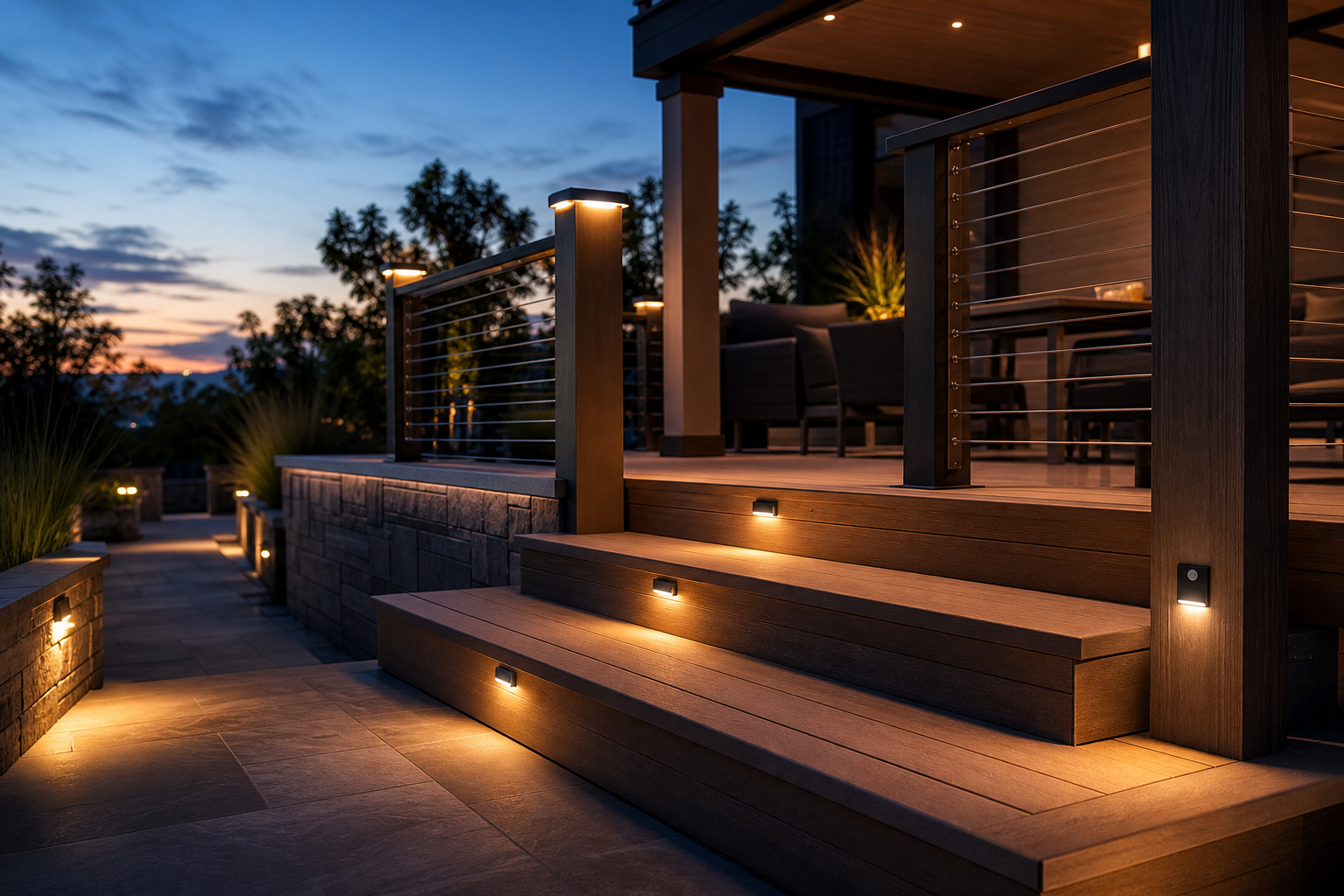
Smart lighting choices often come down to power. This cluster breaks down how modern step and pathway lighting stays bright without wasting energy, mixing everyday talk with real-world performance notes. Expect practical insight that fits decks, stairs, and walkways without the headache.
Solar Powered vs DC Power Supply for Deck Motion Sensor Lights
-
solar power keeps deck lights simple, cutting cords and speeding up installation.
-
DC power supply handles shade better and gives steady output for a motion sensor setup.
-
Both options aim at solid energy efficiency and strong weather resistance.
-
Sun-facing decks favor solar.
-
Covered decks favor DC.
-
Mixed layouts sometimes blend both.
When wireless motion sensor step lights sit under trees or overhangs, solar panels struggle. DC-fed step lights stay reliable, triggering the motion sensor without delay. Many builders working with MG Lighting / LEDStepLight.com pick DC for consistency, then add solar where sunlight is generous. Short story: match power to exposure, not hype.
Battery Operated Wireless Connectivity in Pathway Lights
✓ battery operated designs skip trenching
✓ wireless connectivity supports quick layout changes
✓ pathway lights stay flexible year-round
-
Motion kicks in fast.
-
battery life depends on traffic.
-
maintenance stays light with quality cells.
A 2024 lighting outlook from the International Energy Agency noted that low-power wireless outdoor lighting is growing fastest in residential retrofits, mainly due to reduced install time and user control.
For renters or quick upgrades, wireless motion sensor step lights shine here. Drop them where needed, pair them, walk away. MG Lighting / LEDStepLight.com often recommends this route for paths that change with seasons.
Energy Efficient Low Voltage Power for Indoor and Outdoor Use
-
energy efficient by design
-
low voltage improves safety
-
Works across indoor lighting and outdoor lighting
1) Power supply steps down current
2) LEDs sip power, cutting power consumption
3) Lower heat extends lifespan and trims installation cost
Nested choices matter:
-
Indoors
-
stairs
-
hall transitions
-
-
Outdoors
-
decks
-
paths
-
Low voltage systems pair perfectly with wireless motion sensor step lights, motion step lights, and sensor lights used daily. The same logic supports stair lighting inside and out, a balance MG Lighting / LEDStepLight.com builds around for long-term comfort and calm.