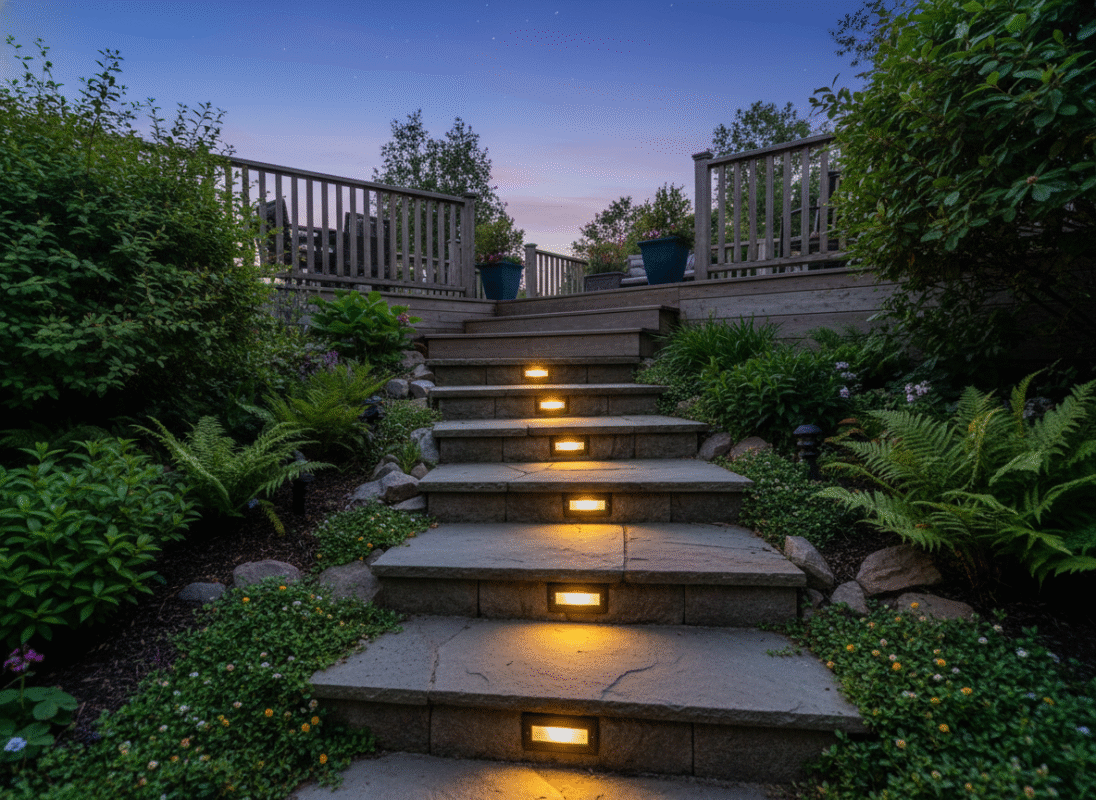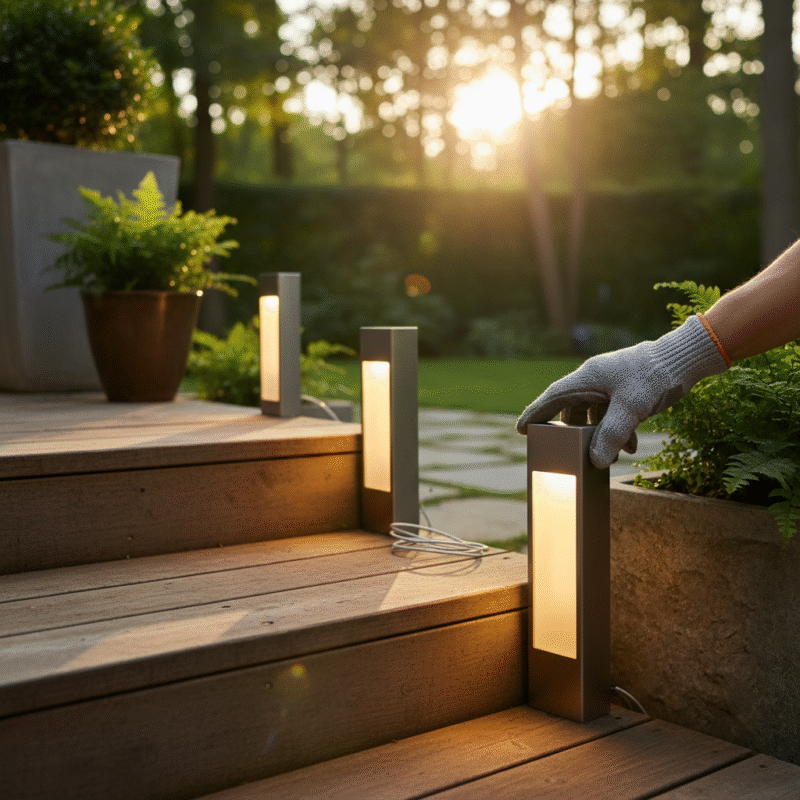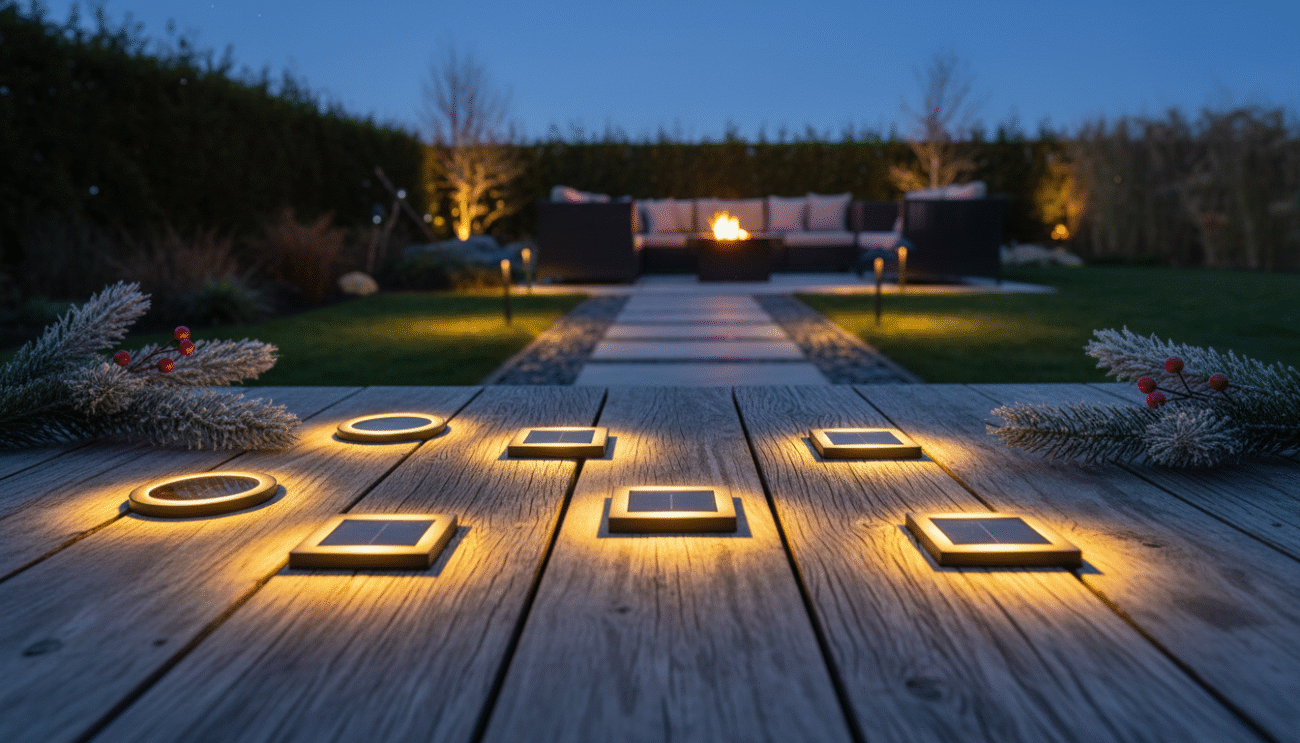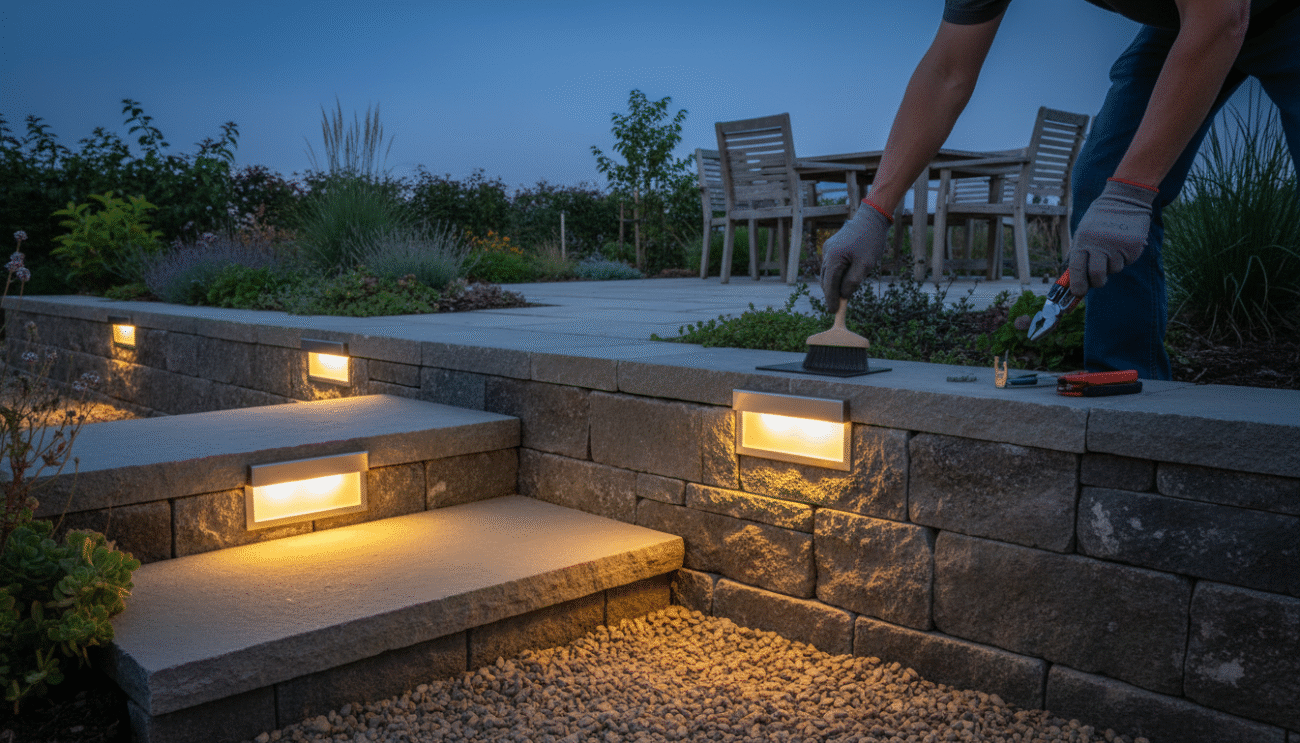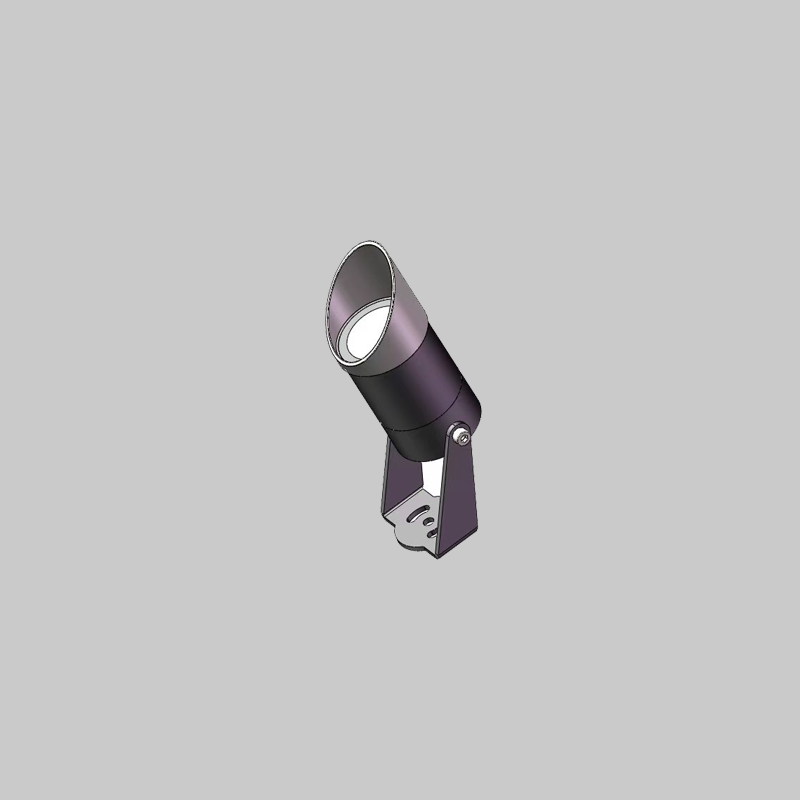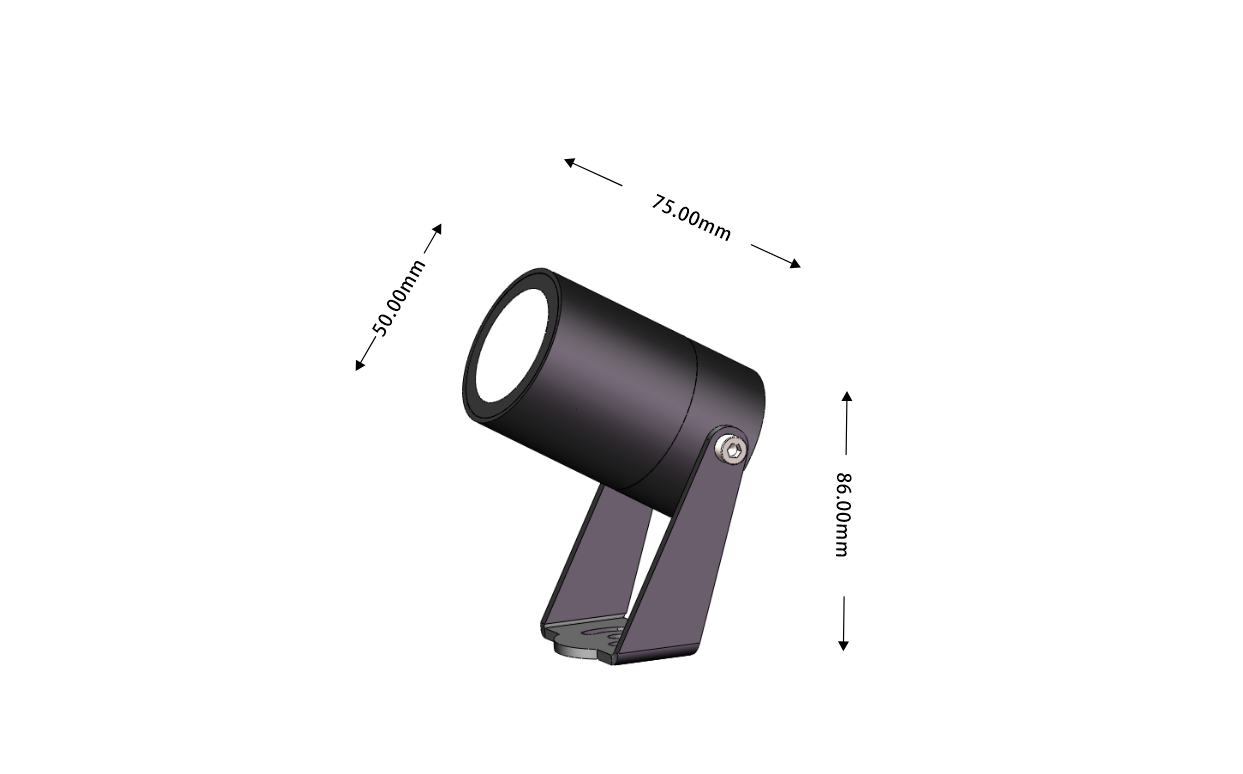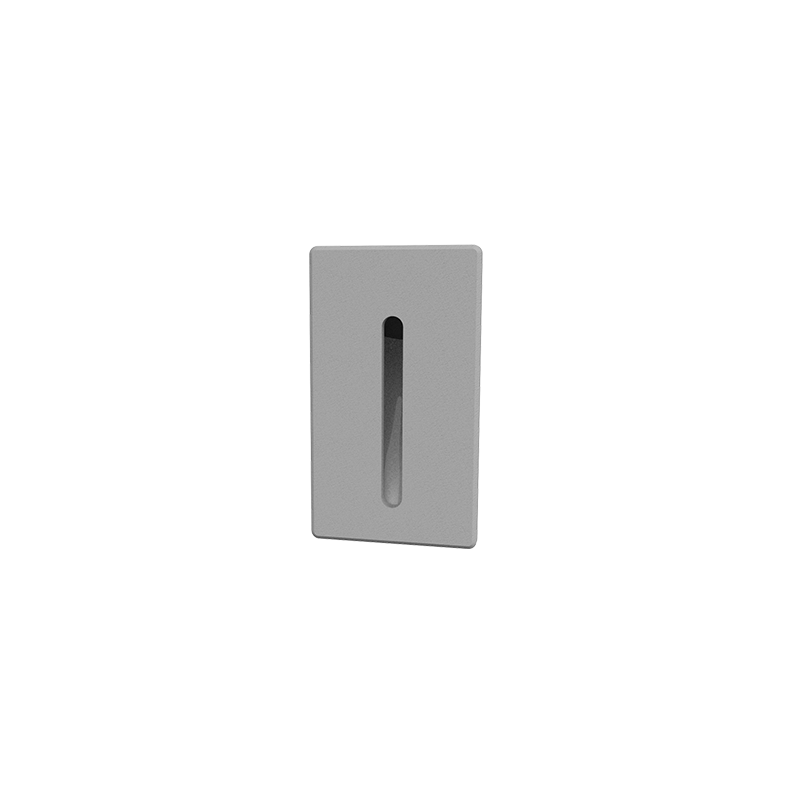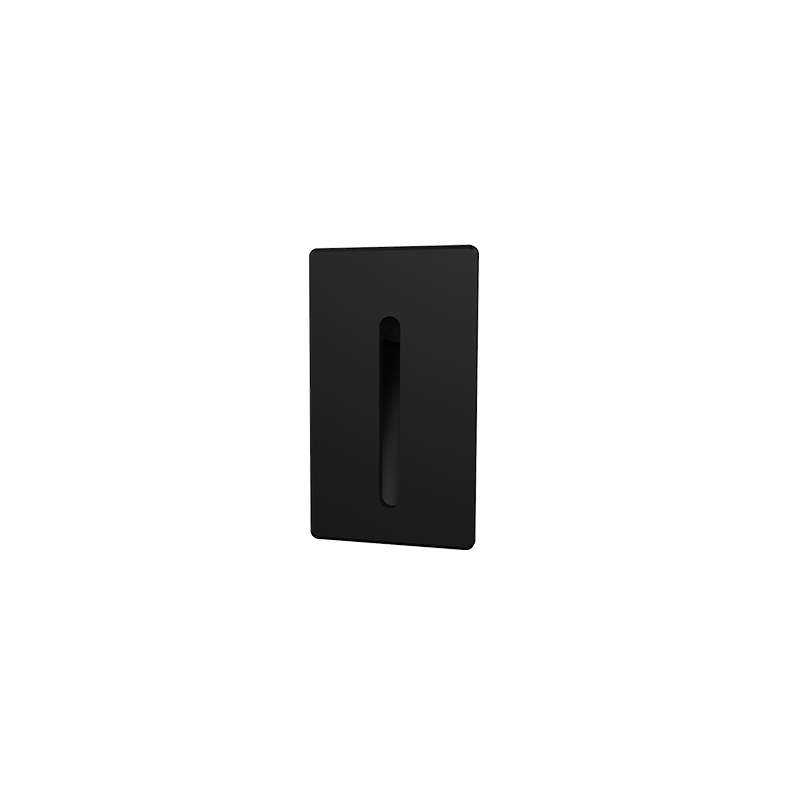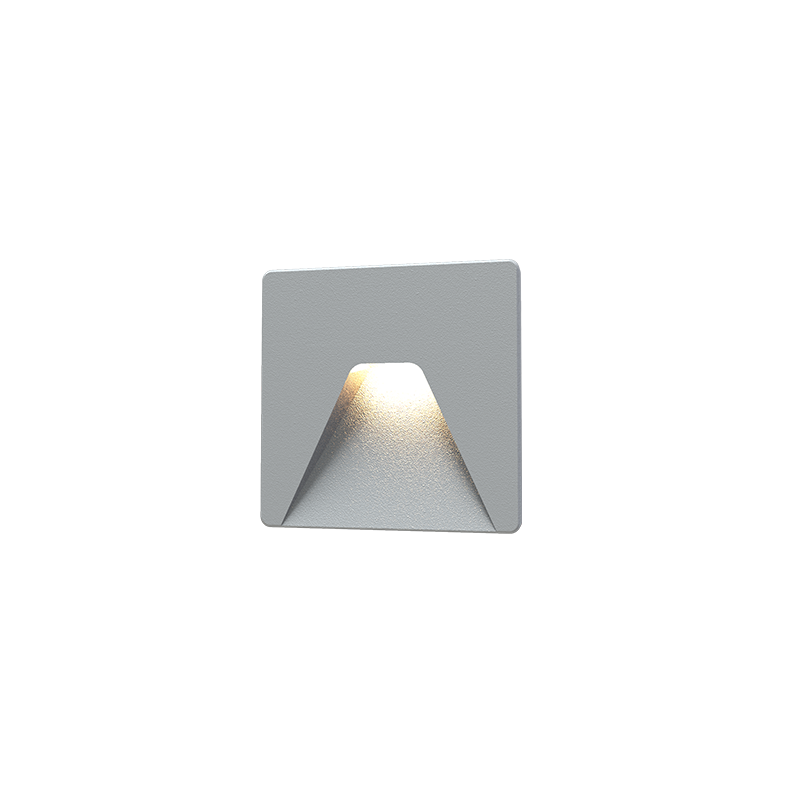
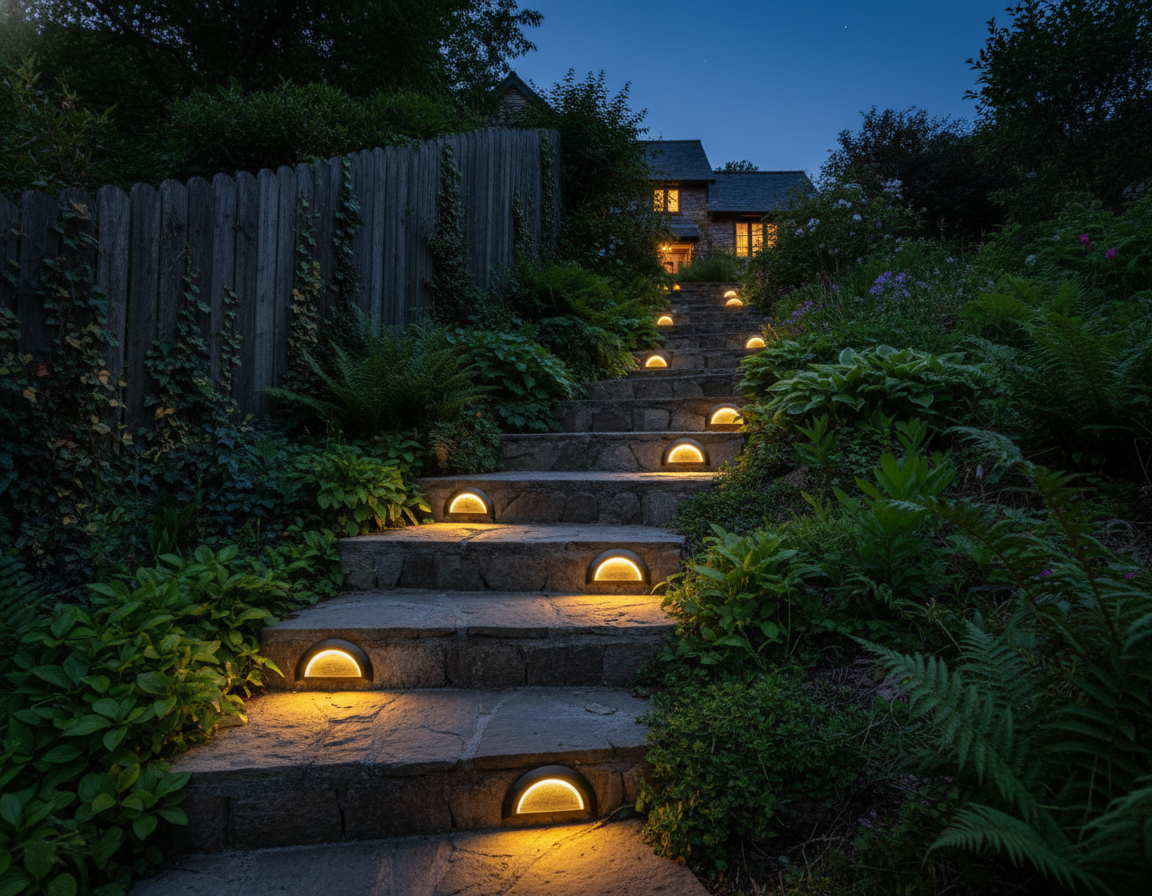
You don’t need to run wires or rely on plug-in fixtures to light up stairs safely. You can light stairs without electricity by choosing simple options like outdoor solar stair lights or glow-in-the-dark strips. Solar lights offer easy installation, and you won’t have to worry about tangled cords. They use sunlight, so you save money and help the planet at the same time. These lights also mean less maintenance for you—no bulbs to replace or electrical faults to fix.
Key Takeaways
- Solar stair lights are cheap and good for the environment. They light up your stairs without using electricity.
- Pick outdoor solar stair lights for better results. They charge faster and shine brighter when they get a lot of sunlight.
- You can use motion-activated solar lights to save energy. These lights only turn on when someone is there, so the battery lasts longer.
- Put your solar lights in the right place to make your stairs safer and easier to see. Clean the area and measure the space before you install them.
- Clean the solar panels often to help your solar stair lights last longer and work better.
Solar Stair Lights for Stairs
Why Choose Solar Stair Lights?
You want to light up those stairs without running wires or stressing about high energy bills. Outdoor solar stair lights make it simple. They soak up sunlight during the day and turn on automatically once it gets dark. No plugging in, and you won’t need to swap out batteries all the time. Most folks go with solar because it saves cash and is better for the planet. Plus, it’s nice knowing your steps are safer when the sun goes down.
Here’s why you might pick solar stair lights over battery-powered ones:
- They cut down on electricity costs by tapping into the sun’s energy, which also lowers your carbon footprint.
- You get steady light, so you’re less likely to trip on dark steps.
- There’s hardly any upkeep compared to battery-powered options.
- Lots of solar lights look pretty sleek and add a nice vibe to your home.
- They don’t waste power since they only run on sunlight.
- Your steps and walkways end up much safer at night.
Wondering how long these things last? Solar stair lights usually hold up for one to five years. It really depends on the quality, the weather, and how well you look after them. Give ’em a clean every now and then, and you can stretch that lifespan even further.
You’ll also save money over time. Check out this table to see how outdoor solar stair lights stack up against traditional electric stair lighting over five years:
|
Lighting Type |
Total Cost Over 5 Years |
Energy Costs |
Maintenance Costs |
|---|---|---|---|
|
Solar Stair Lights |
$4,800 |
$0 |
$1,000 |
|
Traditional Electric |
$8,800 |
$1,200 |
$800 |
As you can see, solar lights cost way less in the long run—especially since you’re not paying for electricity.
Solar-Powered Motion Activated Stair Lights
You don’t always need your lights on all night. Solar-powered motion activated stair lights only kick on when someone walks by. That saves energy and helps the battery last longer. They’re smart because they light up your steps exactly when you need them.
Here’s a quick look at how motion activated lights compare to always-on solar lights:
|
Feature |
Motion Activated |
Always On |
|---|---|---|
|
Energy Use |
Low – only on when needed |
Higher – runs all night |
|
Battery Life |
Longer – minimal usage |
Shorter – drains faster in winter |
If you want to save even more power, motion activated lights are a solid pick. They also help the battery get through cloudy days or long winters.
Indoor and Outdoor Use
You can use solar stair lights both inside and outside, but they really shine outdoors. When they’re outside, these lights get direct sunlight, so they charge faster and glow brighter at night. Indoors, they don’t get as much light, so they might not perform as well. Indoor lighting is way less intense than sunlight, which means the solar panels take longer to charge. Outdoor lights are built to handle strong sun and all kinds of weather. Indoor lights need special panels to make the most of weaker light from bulbs.
Here are a few differences between indoor and outdoor solar stair lights:
- Indoor lighting can be over 1,000 times less intense than direct sunlight, so indoor solar panels charge a lot slower.
- Outdoor solar stair lights are made for bright sunlight, while indoor ones need panels that work with artificial light.
- The color of the light matters too. Outdoor panels work with all the colors in sunlight, but indoor panels do better with certain types of bulbs.
If you’re looking to light up stairs outside, outdoor solar stair lights are your best bet. They’re tough, weatherproof, and give you the brightness you need. For inside, you might need to look for special led stair lights that work with indoor lighting.
How Solar Stair Lights Work
Solar Charging and Battery Life
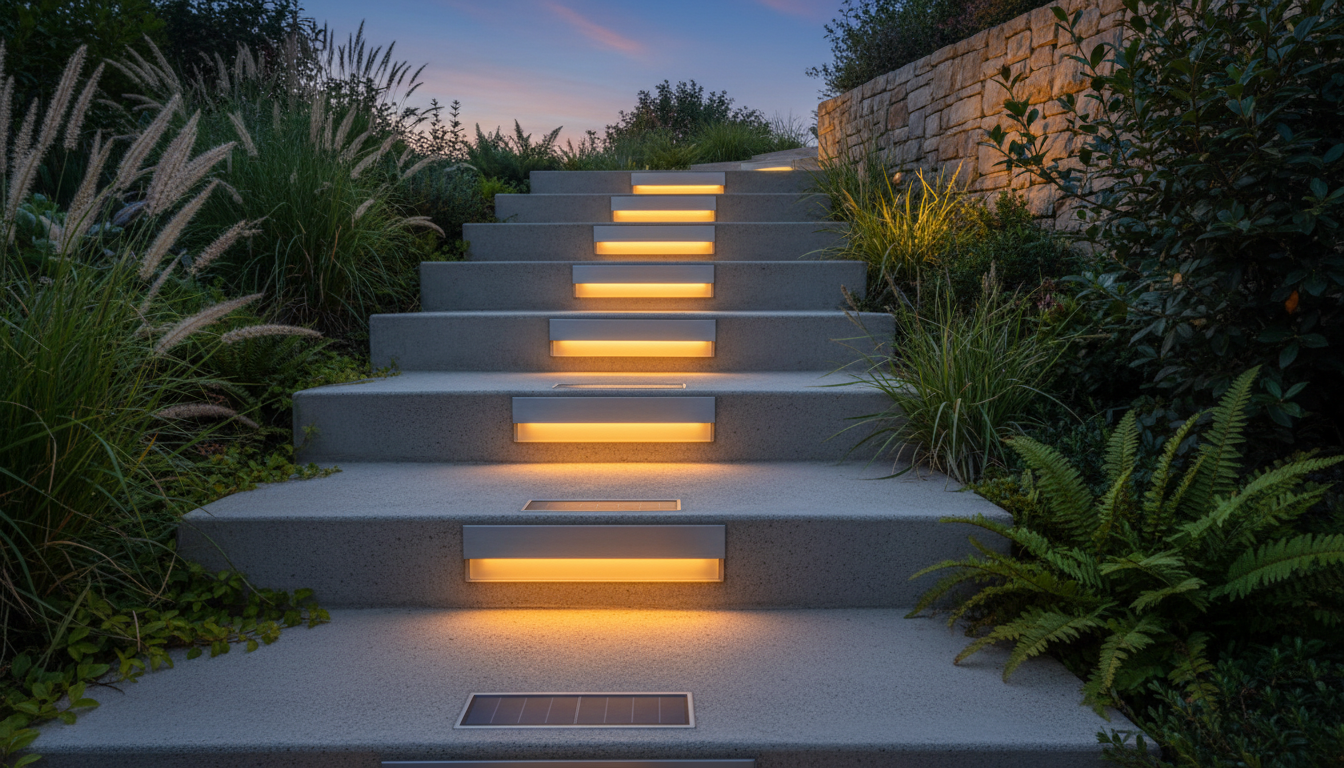
Solar stair lights get their power from sunlight during the day. The solar cells inside each light collect energy from the sun, turning it into electricity. That electricity goes into a battery, which stores the power until nighttime. When it gets dark, the lights use that stored energy. Your stairs light up without needing to plug anything in. It’s a smart way to go and it’s good for the planet too.
You might be wondering how long these batteries last. The battery type in your led stair lights makes a big difference. Here’s a table showing how long common batteries last:
|
Battery Type |
Average Lifespan |
|---|---|
|
Lead-Acid Batteries |
3-5 years |
|
Lithium-Ion Batteries |
5-15 years |
|
NiCd Batteries |
2-5 years |
|
NiMH Batteries |
2-5 years |
|
Flow Batteries |
Up to 20 years |
Motion Sensor Features
Lots of solar stair lights come with motion sensors built right in. These sensors are all about saving energy. The lights only kick on when someone walks by, so your steps get bright exactly when you need ’em. That also means the battery lasts a whole lot longer. Different lights use different kinds of sensors, and the table below breaks down how they work:
|
Sensor Type |
Description |
Detection Range |
|---|---|---|
|
PIR (Passive Infrared) |
Finds infrared heat from people, good for dry indoor places. |
120° sector, up to 5m |
|
Microwave Radar |
Uses waves for 360° detection, works through walls. |
Up to 8m |
|
Advanced Presence |
Uses many sensors for real-time movement and presence. |
Continuous monitoring |
If you want your solar stair lights to react fast, go with ones that have advanced presence sensors. They’ll keep your stairs safe and well-lit the second you walk past.
Weather Resistance
Solar stair lights are built to handle the outdoors. They work in rain, snow, or on those scorching hot days. But weather can mess with how well the batteries charge and perform. Here are a few things to keep in mind:
- Solar lights use rechargeable batteries that store energy during the day for nighttime use, but less sunlight can mess with charging.
- Cloudy days or shade can really cut down on battery charge.
- Extreme heat or cold can make batteries wear out faster and not work as well.
Tip: Put your solar lights where they’ll get plenty of sun during the day. That way the batteries charge fully, and your stairs stay bright all night.
How to Install Stair Lights Outdoor?
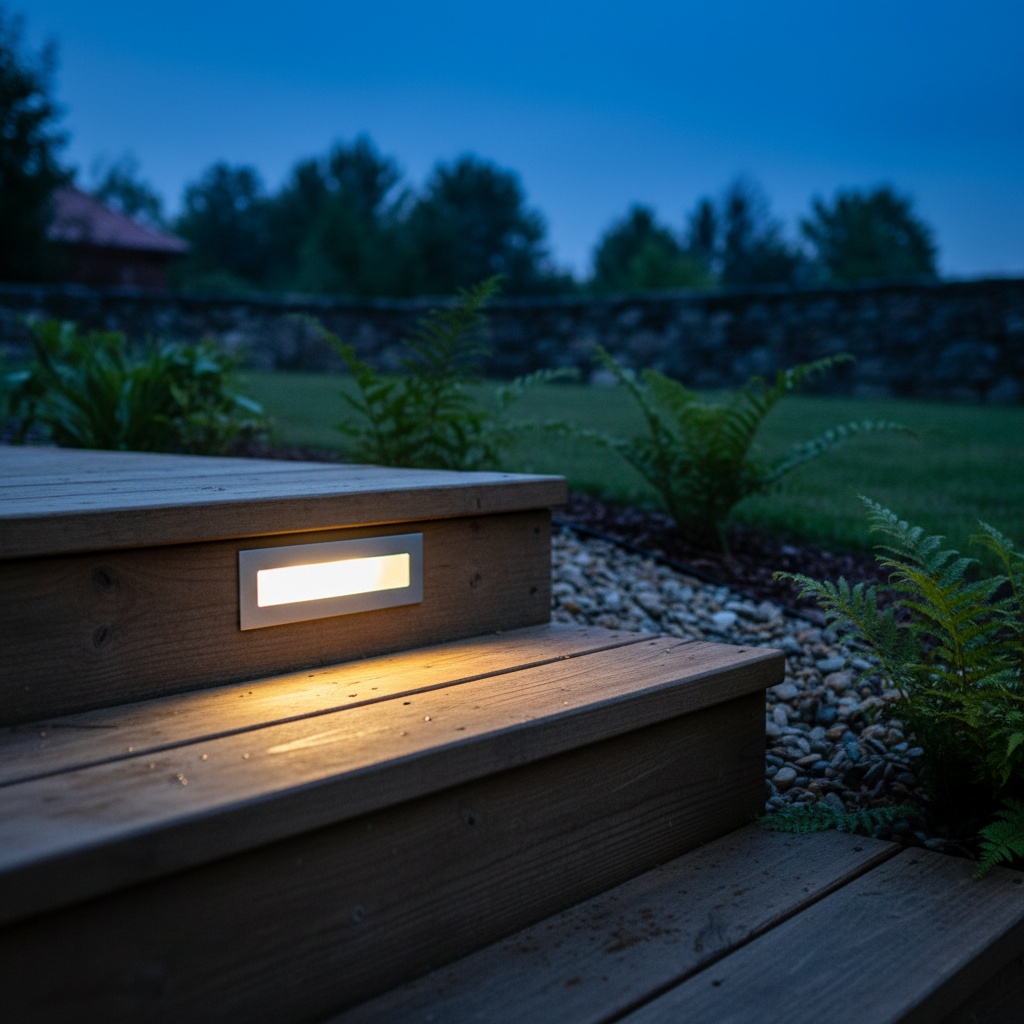
Lighting your stairs with solar lights is a smart way to boost safety and style. You don’t need to be an expert to get great results. Let’s walk through the steps together so you can enjoy bright, reliable lighting every night.
Preparing the Stairs for Installation
Before you start, you’ll want your lights to stick well and last a long time. Here’s a simple checklist to get your stairs ready:
- Clean the Area: Wipe away dirt, dust, and any loose debris from where you plan to place each light. A clean surface helps the adhesive or screws hold tight.
- Measure Distances: Use a tape measure to space your lights evenly. Most people find that 6 to 12 inches between each light looks best and gives good coverage.
- Check the Level: If you’re mounting lights on a wall or vertical surface, grab a level tool. This keeps your led stair lights straight and looking sharp.
Tip: Take your time with these steps. A little extra care now means your led stair lights will stay put and shine bright for years.
Mounting and Placement Tips
You’ve got a few options for attaching your solar stair lights, and the best method depends on your stair material. Here’s a quick guide:
|
Stair Material |
Mounting Technique |
|---|---|
|
Wooden Risers |
Use the screws that come with the lights. |
|
Other Surfaces |
Try strong exterior double-stick tape. |
If you use screws, make sure you drill pilot holes first. This helps prevent wood from splitting. For tape, press the light firmly for at least 30 seconds to get a good bond.
When you decide where to put each light, think about safety and style. Place lights where people step most often. Corners and the top and bottom of the stairs are smart spots. You want to avoid shadows and dark patches.
Note: If you use led stair lights with motion sensors, make sure nothing blocks the sensor’s view. This way, the lights turn on right when you need them.
Maximizing Sunlight Exposure
Solar lights need plenty of sun to do their thing. Here’s how to help ’em soak up the most energy:
- Pick spots that get a ton of sunlight during the day. Stay away from shady areas under trees or overhangs.
- Use a compass or your phone to find south. Point the solar panels that way for the strongest charge.
- Keep an eye out for anything blocking the sun, like fences or bushes. If you can, go for a west-facing spot to grab those afternoon rays.
The more sun your lights get, the longer and brighter they’ll shine at night. If you’re wondering how to light stairs without running wires, solar stair lights are your answer.
With these steps, you can install your solar stair lights quick and easy. You’ll get safer steps and a welcoming glow every night.
Choosing Solar Stair Lights
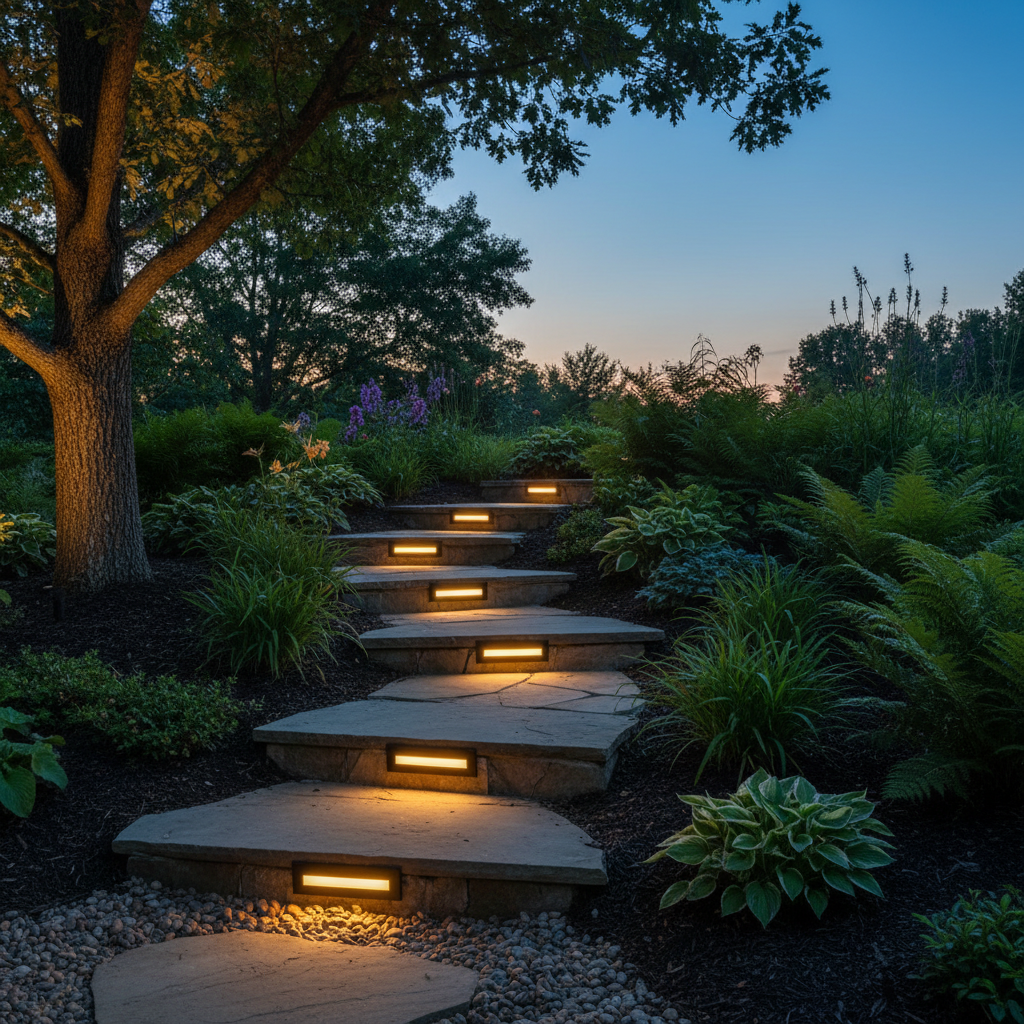
Brightness and Coverage
You want your stairs to feel safe and look great at night. The best way to light a staircase is to pick solar stair lights with the right brightness and coverage. Brightness is measured in lumens. For most stair lighting, you need about 100 to 200 lumens for each step. Got a porch or want extra light? You might need up to 400 lumens. Floodlights for outdoor stairs can go even higher.
Here’s a quick look at recommended brightness levels:
|
Lighting Type |
Recommended Lumens |
|---|---|
|
General Staircase Lighting |
100 lumens per square foot |
|
Porch Lights Near Stairs |
200-400 lumens |
|
Floodlights for Outdoor Stairs |
700-1300 lumens |
Design matters too. You want lights that match your style and cover every step. The best way to light a staircase is to space the lights evenly. That helps you avoid dark spots and keeps everyone safe.
Tip: Place lights where people step most often. Corners and landings need extra attention.
Battery Capacity
Battery life matters a lot if you want your lights to stay on all night. The best way to light a staircase is to grab solar lights with solid batteries. Most solar stair lights run on lithium-ion batteries. After a full charge, these can last anywhere from 6 to 12 hours. You’ll want batteries that charge up in about 6 to 8 hours of sunlight.
Here’s a quick look at a common battery type:
|
Battery Type |
Voltage |
Capacity |
|---|---|---|
|
2-li-ion 14500 |
3.7v |
N/A |
If you’re in a spot where clouds hang around a lot, go for lights with bigger batteries. That way, your stair lighting stays bright even when the sun’s hiding.
Sensing Range
Motion sensors save energy and make your stairs safer. The best way to light a staircase is to use lights with sensors that cover the whole step. Some sensors can see up to 8 meters away. Others are better for tighter spaces. You want sensors that react fast when someone walks by.
Here’s what to check:
- Look for a wide detection angle, like 120° or more.
- Make sure nothing blocks the sensor’s view.
- Pick weatherproof lights if they’re going outside.
If you’re wondering how to light stairs without wires, solar lights with good sensors are a smart move. You get bright steps only when you need ’em.
Note: Always check the sensing range before you buy. It helps you find the best way to light a staircase for your home.
Pros and Cons of Solar Stair Lights
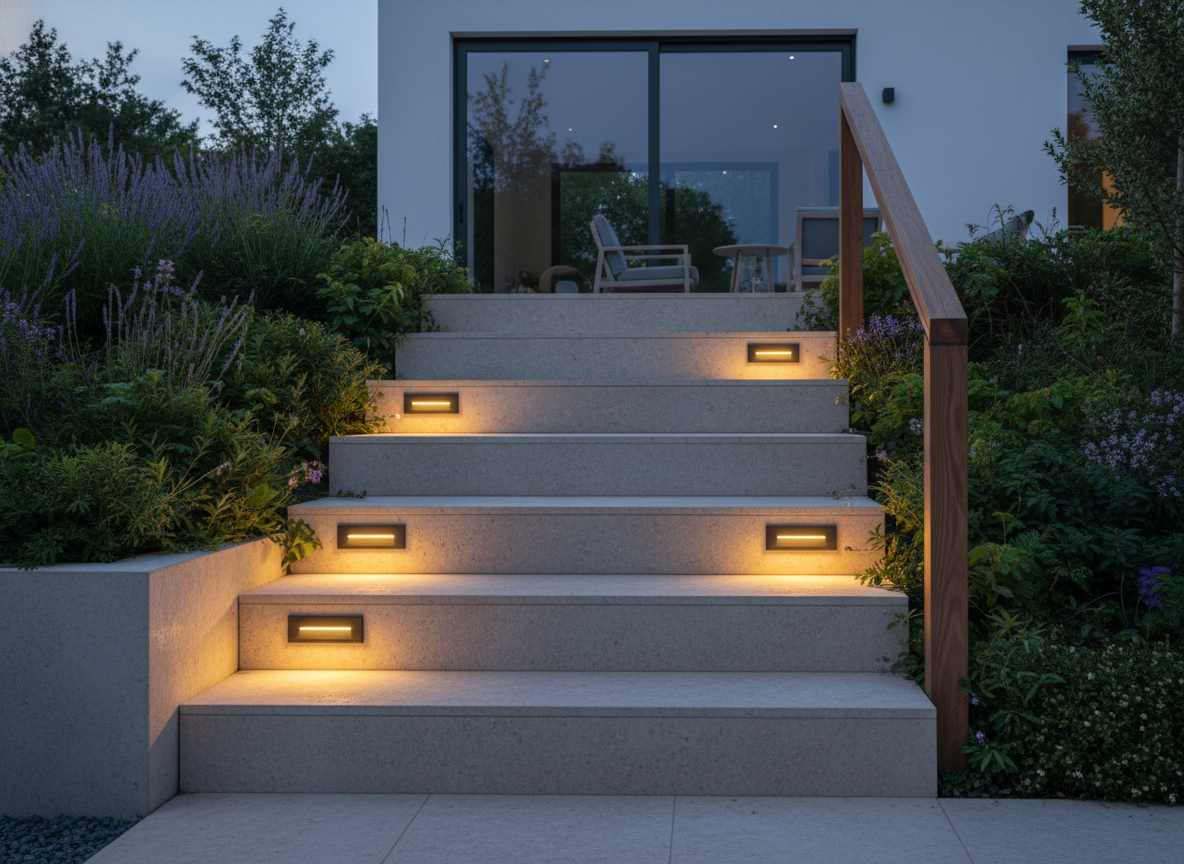
Why Solar Stair Lights Are a Smart Choice
Ever wonder why so many people are putting solar stair lights on their steps? There’s a good reason—they just make life easier. These lights come with a bunch of perks that really help when you’re trying to light up your stairs.
- Reliable Illumination: With solar stair lights, you can actually see every step after dark. No more worrying about tripping or missing a stair when you’re going up or down.
- Eco-Friendly: They run on sunshine, so you’re not paying for electricity. Plus, you’re doing your part to shrink your carbon footprint.
- Easy Installation: No wiring, no electrician needed. Most solar stair lights just stick on or screw in with basic tools you already have.
- Low Maintenance: Once they’re up, you’re pretty much done. No swapping out bulbs or messing with wires—just wipe the panels clean every now and then.
- Cost Savings: Over time, you’ll save cash since there’s no power bill or constant repairs to worry about.
Tip: Want a fast way to upgrade your stairs? Solar stair lights are one of the simplest fixes for adding safety and a bit of style.
Drawbacks to Keep in Mind
Solar stair lights aren’t perfect. Before you buy, it’s smart to know some common downsides.
- Dependence on Sunlight: These lights need sun to charge. If your stairs are shaded or you live somewhere cloudy, they might not work as well.
- Weather Issues: Rainy days and winter can hurt performance. Less sun means dimmer lights or shorter run times.
- Material Quality: Some solar stair lights use cheap plastic or thin metal. Those can break or fade fast when hit by wind, rain, or snow.
- Limited Brightness and Design Choices: You’ll find fewer options for brightness or style compared to wired lights. Some models just don’t shine as bright as you’d like.
- Expansion Challenges: If you want to light a big staircase or connect lots of lights, solar options can be tricky to link together.
Note: Always check the product details before buying. Look for sturdy materials and strong batteries if you want your lights to last.
You can light stairs without electricity and make your home safer at night. Solar stair lights give you an easy setup, energy savings, and a style boost. When picking your lights, keep these tips in mind:
- Choose the right type, like path or deck lights, for your stairs.
- Check the brightness so every step is clear.
- Look at how much sun your stairs get each day.
- Pick lights that last and stand up to the weather.
- Enjoy lower bills and help the planet with solar power.
Try solar stair lights and see how simple it is to brighten your steps.
FAQ
How long do solar stair lights stay on at night?
Most solar stair lights shine for 6 to 12 hours after a full day of sun. Cloudy days can shorten that. You’ll get the best results when you place them where they get direct sunlight.
Can I use solar stair lights in winter?
Yes, you can use them in winter. Cold weather doesn’t hurt the lights. But shorter days and less sun may make them dimmer or run for less time. Just clean snow off the panels for better charging.
Do I need to turn solar stair lights on and off?
Nope, no need to flip a switch. Most solar stair lights kick on automatically at dusk and shut off at dawn. If you’ve got motion sensor models, they’ll only light up when you walk by—saving that battery power.
What if my stairs don’t get much sunlight?
Got shady stairs? Here’s what you can try:
- Move the lights to a sunnier spot if you can.
- Look for solar stair lights with bigger solar panels.
- Pick models that come with larger batteries.
Tip: Rechargeable batteries help your solar stair lights last longer on cloudy days.